Emergency Guides
What to Do When Your Furnace Quits on a Carlisle Winter Night
Four checks to make once, three things never to do, and how to tell whether this is a 2 a.m. call or a morning appointment.
By HVAC Carlisle PAPublished Updated 7 min read
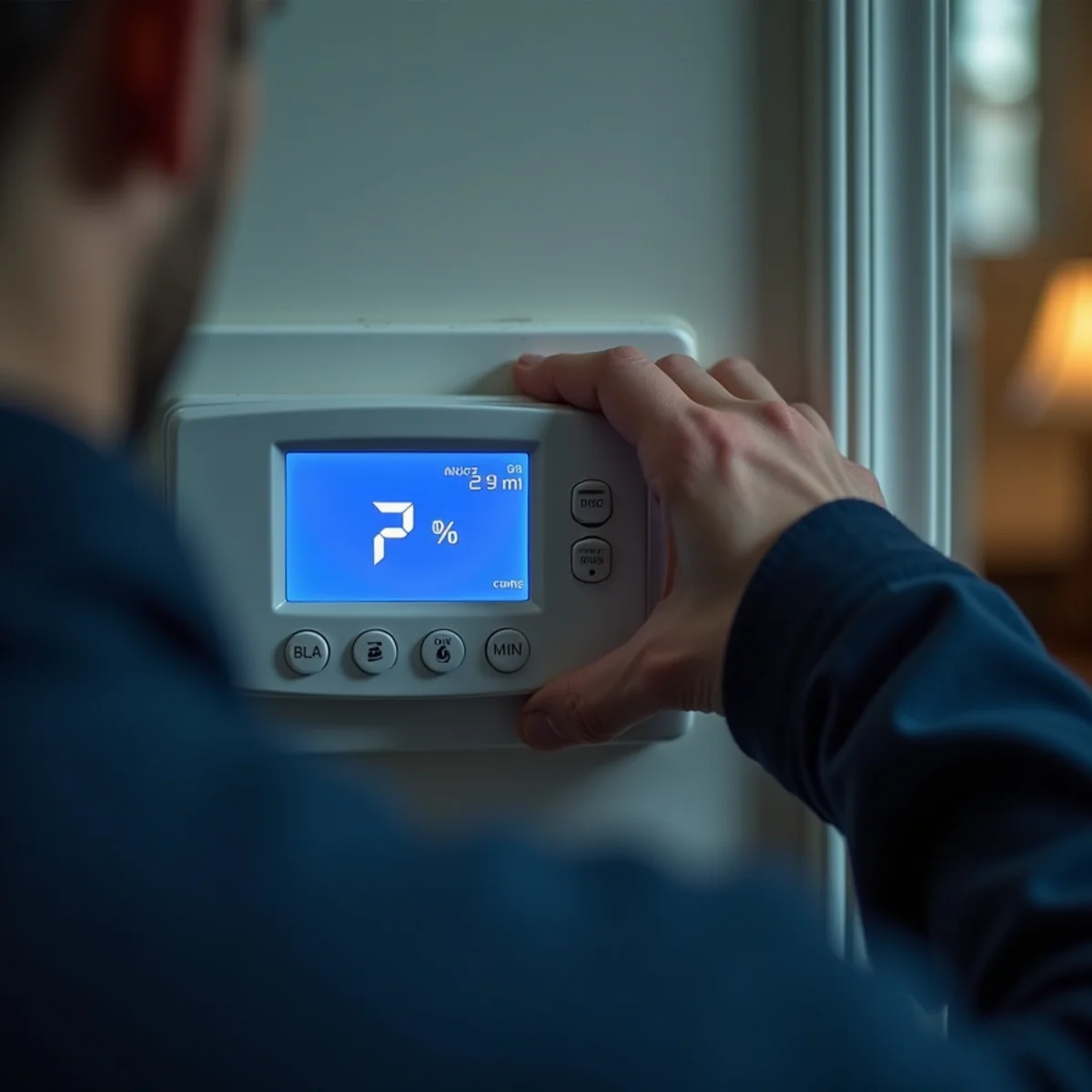
It is 9 p.m., the thermostat reads 61°F and falling, and the furnace is not running. January normals in Carlisle put the overnight low around 21°F, and on a clear night with cold air draining off South Mountain and Blue Mountain onto the valley floor it goes lower than that.
Here is what to do, in order, and — just as importantly — what not to do.
Need this handled rather than explained?
Same-day emergency service across Cumberland County. Licensed technicians dispatched from Carlisle, with written options before any work begins.
First: is this a safety situation?
Before you troubleshoot anything, rule out the conditions that mean you should be outside rather than in the basement.
- A carbon monoxide alarm sounding — leave the building with everyone and every pet, and call 911 from outside
- A gas or rotten-egg smell — leave, do not touch light switches, and call the utility from a safe distance
- Smoke, a burning smell, or visible flame outside the burner compartment
- Sparking, scorching, or the smell of hot electrical insulation
If none of those apply
Move on to the four checks below. Do each one once.
The four checks — once each, then stop
- Thermostat. Is it set to HEAT, is the setpoint above the current room temperature, and does the display work? If it takes batteries, replace them. A dead thermostat looks exactly like a dead furnace.
- Filter. Look at it without pulling panels or reaching near moving parts. A filter so loaded it bows inward can restrict airflow enough to trip the high limit and shut the burner down.
- Service switch. There is usually a switch that looks like a light switch on or near the furnace, sometimes at the top of the basement stairs. Plumbers, electricians, and helpful relatives turn these off. Check it.
- Breaker. Find the HVAC breaker and check it once. If it has tripped, reset it one time. If it trips again, stop — that is an electrical fault and resetting it repeatedly is genuinely dangerous.
Photograph the error code before you touch anything else
Most furnaces built in the last twenty-five years have a small LED behind a panel window that flashes a fault code. It might be a repeating pattern of blinks, or on newer units a two-digit code on a display.
That code is the single most useful thing you can give a technician on the phone. It narrows the diagnosis before anyone gets in the van, which frequently means the right part is on the truck when we arrive.
Take a photo of it. Then stop resetting the furnace, because a reset clears it.
Why repeated resets make things worse
A furnace that locks out has been shut down by a safety control that did its job. Cycling power over and over does not fix the underlying fault — it just repeats the failed startup sequence.
On an oil unit, repeated resets can flood the combustion chamber with unburned fuel, which is a genuine hazard and turns a nozzle replacement into a much bigger job. On a gas unit, repeated cycling stresses the igniter, the gas valve, and the control board.
Reset once. If it locks out again, leave it alone and call.
The cold-snap failure most Carlisle homeowners have never heard of
If you have a high-efficiency furnace — PVC pipes out a sidewall instead of a metal flue up a chimney — there is a specific failure that strikes almost exclusively on the coldest nights.
Condensing furnaces produce liquid water, more than a gallon on a cold day, and that condensate has to drain. Where the drain line runs through an unheated crawlspace or exits through a sidewall, it can freeze solid. The condensate backs up, a pressure or float switch trips, and the furnace shuts down.
It is one of the most common lockouts we see during a Cumberland Valley cold snap, and once the line is insulated, re-routed, or heat-traced, it stops happening. If your furnace only ever quits on the coldest nights, this is very likely why.
Protecting the house while you wait
- Open cabinet doors under sinks on exterior walls so room heat reaches the supply lines
- Run a pencil-width trickle from the fixture farthest from the water main
- Close off unused rooms and consolidate everyone into one or two interior spaces
- Close curtains and blinds at night to slow heat loss through glass
- Use only UL-listed electric space heaters, plugged directly into a wall outlet, with three feet of clearance from anything combustible
What never to use for emergency heat
Every winter, people in Pennsylvania die from carbon monoxide poisoning caused by improvised heating. Never use a gas range or oven, an unvented outdoor propane heater, a charcoal grill, or a generator indoors or in an attached garage — including with a door cracked open. A properly maintained and correctly vented fireplace or wood stove is fine; none of the others are.
Is this a tonight call or a morning call?
Call tonight if the outdoor temperature is at or below freezing, if there is an infant, an older adult, or anyone medically vulnerable in the house, or if the indoor temperature is already below about 60°F and dropping.
It can usually wait until morning if the overnight low is mild, you have a working secondary heat source, and everyone in the house is healthy. We will tell you honestly which situation you are in when you call — an after-hours premium should buy you something real.
What to tell the dispatcher so the right parts arrive
The difference between a one-visit repair and a two-visit repair is usually decided on the phone. A technician who knows the make, the model and the fault code can load the van accordingly; one who knows only that the heat is off is guessing.
The data plate is inside the front panel or on the side of the cabinet. Photograph it rather than reading it out, because model numbers in this trade are long and one transposed character sends the wrong part.
- Make, model and serial from the data plate — a photo is faster than reading it aloud
- The flash-code pattern at the control board, counted twice to be sure
- What the system does when it tries to start: silence, a click, a hum, ignition then shutdown
- How long it has been off and what the house temperature is now
- Anything that changed recently: a power cut, other trades in the house, a new filter, a thermostat swap
- Who is in the house, because that changes where you sit on the priority list
Before the technician leaves, ask these
A no-heat call at night is a bad moment to absorb information, which is exactly why it is worth asking a few fixed questions before the van pulls away. Written answers are better than remembered ones.
The most important is the last one. A component that failed because of an underlying condition will fail again, and the difference between a repair and a recurring bill is whether anybody looked for the cause.
- What failed, and what was the readings that showed it
- Is this repair a fix or a stopgap until something larger is addressed
- What warranty covers the part and the labour, and for how long
- Was the combustion set with an analyser afterward, and can I see the numbers
- Did anything else look marginal that I should plan for rather than react to
- What caused the failure — not just what part broke
Related services and areas
Frequently asked questions
It depends heavily on the outdoor temperature, wind, and how well the house is insulated. A well-built house at 20°F outdoors might lose 1–2°F an hour; a leaky one can lose considerably more. Plumbing on exterior walls becomes a concern once indoor temperatures fall below about 55°F sustained.
No. The thermostat is a switch, not a throttle — setting it to 90°F does not make the furnace produce more heat or start faster. All it does is guarantee the system runs continuously once it does start, and risks you forgetting to set it back.
Usually the burner is not lighting or has shut down while the blower continues, which often points to a high limit trip from restricted airflow, a flame-sensing failure, or an ignition problem. Check the filter first. If it is clean and the problem continues, it needs diagnosis.
Complete silence usually means power rather than the furnace itself. Check that the service switch beside the unit, which looks like a light switch and is very often flipped by accident during other work, is on. Check the breaker, and reset it fully off before back on rather than nudging it. Check that the thermostat has working batteries and is actually calling for heat. Finally check the front panel is properly seated, because a door safety switch will prevent operation if it is not. Those four account for a large share of dead-silent calls and cost nothing to rule out.
Repair it and decide later, unless there is a documented safety condition. A no-heat night is the worst possible circumstance in which to compare equipment, efficiency, installers and financing, and decisions made under that pressure are consistently more expensive than the same decision made in October. If the repair restores safe operation, take it, get through the season and plan properly. The one exception is a confirmed cracked heat exchanger or a genuine combustion hazard, where the appliance comes out of service regardless of the calendar.
Ask for the evidence and keep it. That means camera footage of the crack, or combustion readings showing carbon monoxide in the supply air, or a documented failed pressure test — something objective rather than an opinion. Also ask for the manufacturer parts-warranty status, because on some units a heat exchanger is still covered and a repair is genuinely available. A cracked heat exchanger is a real and serious condition, and it is also the easiest claim in the trade to make without proof. A contractor who cannot document it should not mind you seeking a second opinion with the same evidence in hand.
Talk to a licensed Carlisle technician
HVAC Carlisle PA has served Carlisle and Cumberland County since 2007. We test before we recommend, we put options in writing, and we answer the phone at 2 a.m.
HVAC Carlisle PA · 122 Beech St, Carlisle, PA 17013 · +1 (327) 210-5999