
Medium priority service · Carlisle, PA
Ductless Mini-Split Installation in Carlisle, PA
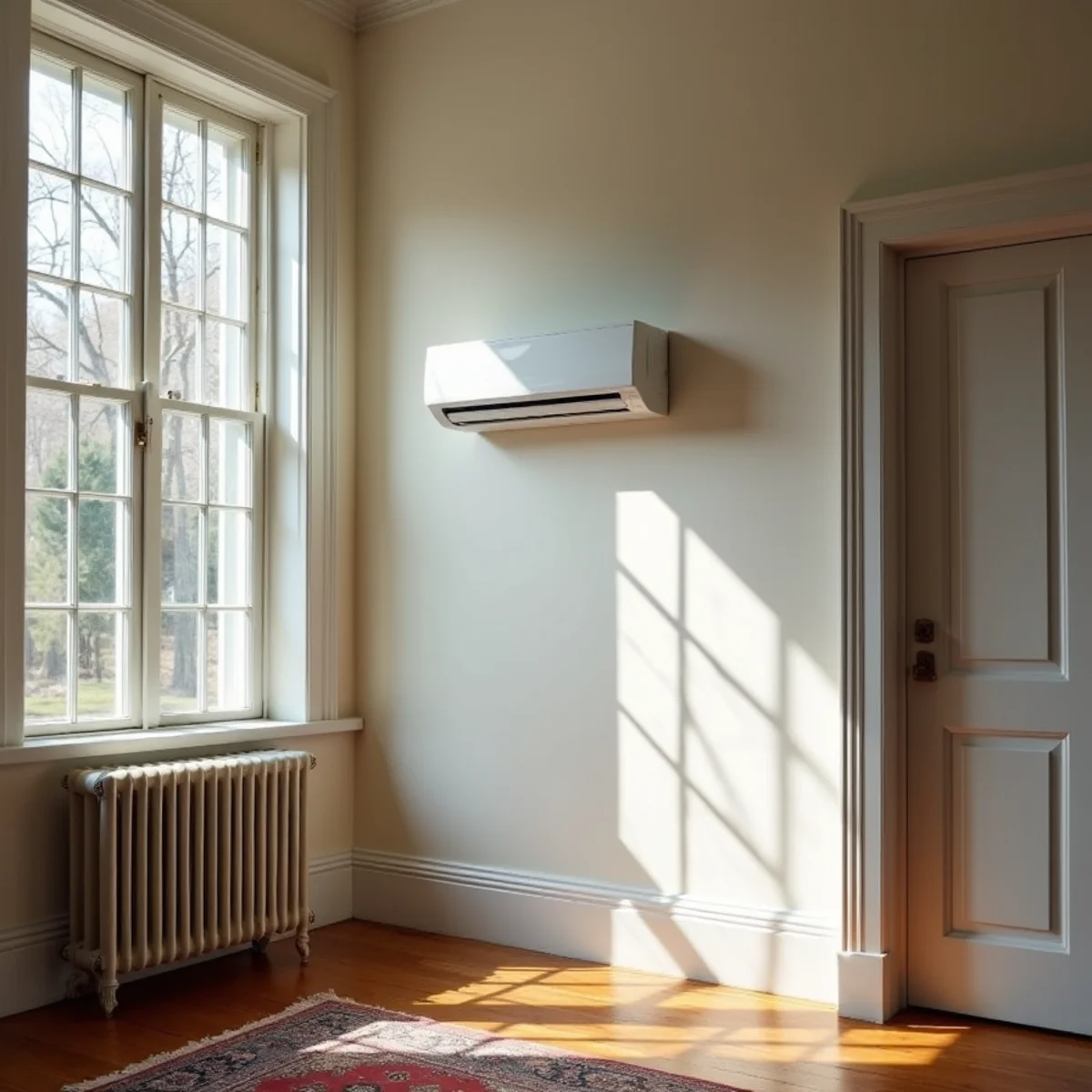
A large share of Carlisle Borough has no ductwork and never will. The brick rowhomes on East Pomfret and East South Street, the Federal and Victorian townhouses around the Square, and the Mooreland colonials were built around radiators. There is no soffit space, no chase, and no willingness — quite rightly — to open plaster walls to run trunk lines.
Same-day emergency service across Cumberland County 4.9/5 from 214+ reviewsLicensed & insured
- 4.9 ★
- 214+ local reviews
- 18 yrs
- Serving Cumberland County
- 24/7
- Emergency dispatch
- 100%
- Satisfaction guarantee
Ductless mini-splits are the answer for those houses. An outdoor compressor connects to one or more indoor heads through a three-inch penetration carrying refrigerant lines, a condensate drain, and control wiring. Each head is its own zone with its own thermostat.
They also do something central systems cannot: heat and cool individual rooms independently, which is precisely what a three-story rowhome with a hot top floor and a cold north-facing back room actually needs.
When a mini-split is the right tool
- A house with radiators or steam heat and no way to add central air
- One room that has never worked — a converted attic, a sunroom, a bonus room over a garage
- An addition that was never properly tied into the existing system
- A third floor that is unusable in July
- A finished basement or home office needing independent control
- Rental units where per-unit metering and control matter
- A garage or workshop that needs conditioning without extending the house system
- Wanting to reduce oil or propane use without a whole-house conversion

Recognise any of these? Do not wait for it to get worse.
Same-day emergency service across Cumberland County. Licensed technicians, 214+ local reviews, and written options before any work starts.
Single-zone or multi-zone?
A single-zone system pairs one outdoor unit with one indoor head. It is the most efficient configuration, the simplest to service, and the right answer when you have one problem room.
A multi-zone system runs two to five heads off a single outdoor unit. It saves outdoor space and one set of electrical, which matters on a tight rowhome lot where there is exactly one place a condenser can go.
The trade-off is honest and worth knowing: multi-zone systems modulate less gracefully at low load, and if the outdoor unit fails, every zone goes down together. Where the yard and the panel allow it, two single-zone systems often outperform one two-zone system. We tell people that even though it is sometimes the less expensive sale.
Head styles for houses where aesthetics matter
- High wall — the standard, least expensive, most efficient, and easiest to service. Visible, which some homeowners in historic houses dislike.
- Floor-mounted console — sits low like a radiator, which reads as far more appropriate in a period room and is easier to reach for filter cleaning.
- Ceiling cassette — recessed into the ceiling with a flush grille. Excellent where there is an accessible floor or attic cavity above.
- Slim ducted / concealed — a small air handler hidden in a closet, soffit, or knee wall feeding two or three short duct runs to ceiling registers. This is the option that makes mini-splits work in historic homes where a visible head on the wall would be unacceptable.
Installation quality is everything on these systems
Mini-splits are unforgiving of sloppy work in ways that central systems will tolerate for years. Three things separate a system that runs quietly for fifteen years from one that fails in four.
First, evacuation. The line set and indoor coil must be pulled to a deep, measured vacuum — verified with a micron gauge, not by watching a needle for two minutes. Moisture left in a system with modern refrigerant oils causes acid formation and compressor failure.
Second, flare connections. Every flare must be cut square, deburred, formed with the correct tool, oiled, and torqued to specification. Overtightened flares crack. Undertightened flares weep. Both leak refrigerant slowly enough that nobody notices until the system stops heating in the third winter.
Third, condensate. Indoor heads drain by gravity through a small line with almost no fall. It has to be sloped continuously, insulated where it passes through unconditioned space, and terminated somewhere sensible — not left to drip down a brick facade and stain it, which is the most common cosmetic complaint we get called to fix on other people’s installs.
Historic district considerations
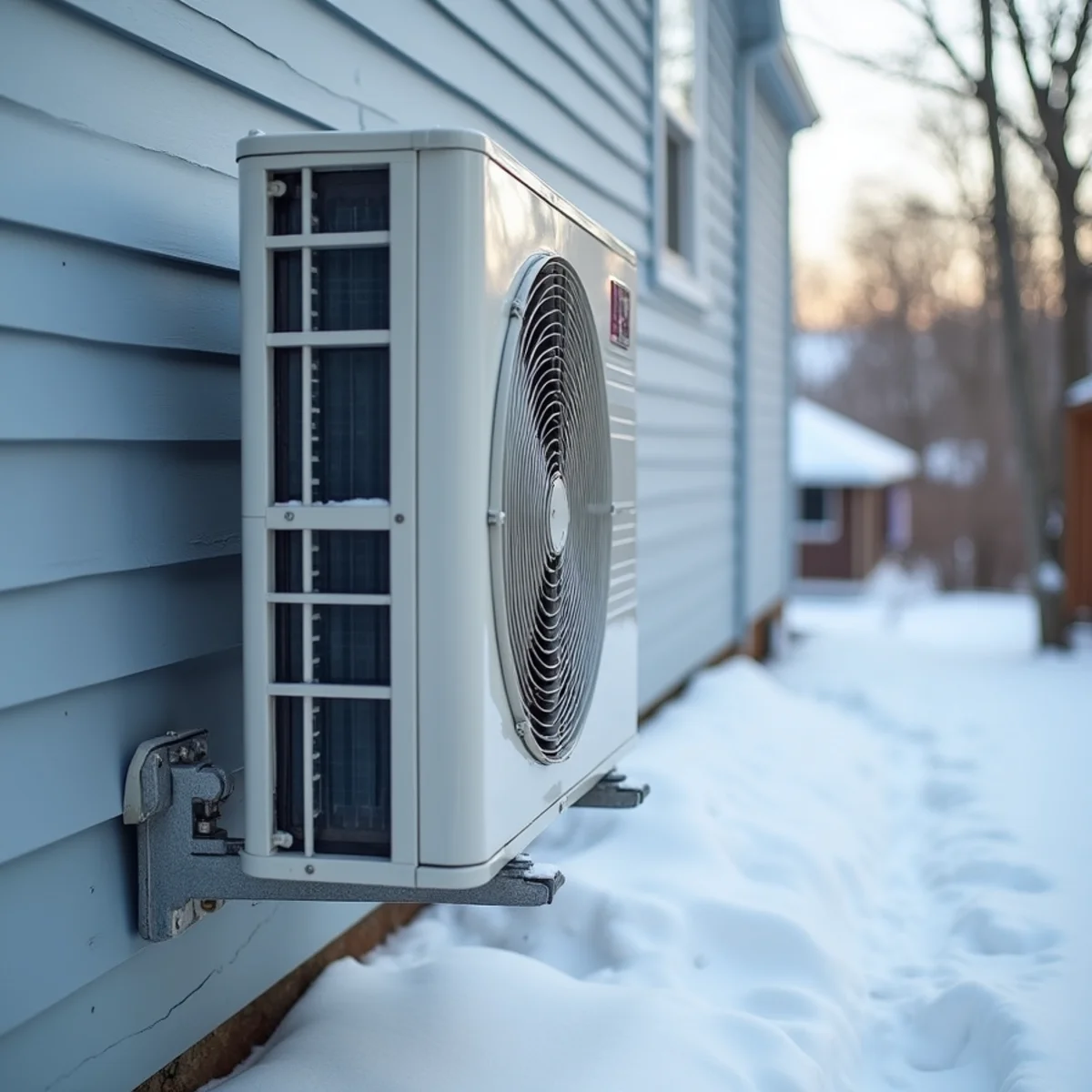
Outdoor unit placement in the Historic District needs thought before it needs a permit. We site condensers in side yards, rear yards, and behind screening rather than on a street-facing elevation, and we mount them on risers so meltwater and snow do not build under the coil during a Carlisle freeze-thaw.
Line-set covers matter too. A bare line set stapled to a brick wall looks like what it is. Paintable line-hide run along a mortar line or tucked behind a downspout is nearly invisible from the sidewalk and costs very little more.
If your property is subject to historic district review, verify the requirements for exterior equipment before installation. We will lay out the placement plan so you have something concrete to submit rather than a vague description.
Cold-weather performance, and reading the specification honestly
A heat pump does not have one capacity, it has a capacity that falls as the outdoor temperature drops. The headline figure on a datasheet is measured in mild conditions, and the number that matters here is the rated capacity at a genuinely cold outdoor temperature, which manufacturers publish separately in the engineering data.
Cold-climate models hold their output far better at the low end than standard ones, and that difference is what decides whether a ductless system carries a room through a Cumberland Valley January or hands the job to whatever backup exists. It is also the difference the sales literature is least likely to make obvious.
We size from the low-temperature performance tables for the specific model rather than from the nominal rating, and we tell you what capacity you will actually have on the coldest nights. If that means recommending a larger head or a different model than the headline number suggests, we would rather have that conversation before the install than in February.
Multi-zone sizing, where most of the mistakes happen
The common error on multi-zone systems is adding up the heads and buying an outdoor unit to match. It seems sensible and it produces a system that runs badly, because the zones do not all call at once and the outdoor unit has a minimum output below which it cannot modulate.
When only one small head is calling, an oversized outdoor unit cannot turn down far enough to match it. It short-cycles, which is noisy, hard on the compressor and poor at dehumidifying, and it does this in exactly the mild conditions where the system should be at its most efficient.
Correct sizing accounts for how the zones are actually used, the diversity between them, and the minimum modulation of the outdoor unit. Occasionally the right answer is two smaller outdoor units rather than one large one, and occasionally it is fewer heads serving larger areas. Both are unusual recommendations and both come from doing the calculation rather than the addition.
- Outdoor unit sized for realistic simultaneous demand, not the sum of the heads
- Minimum modulation checked against the smallest single zone likely to call alone
- Line-set lengths and lifts kept within the manufacturer limits, which affect capacity
- Head capacity matched to each room from a load calculation, not by room count
- Zones grouped so rooms with similar schedules and exposure share a system
Our mini-split installation process
- 1
Room-by-room load calculation
Each zone sized individually. Oversized heads short-cycle and do not dehumidify — the most common mini-split mistake.
- 2
Head style and placement
Wall, floor console, cassette, or concealed ducted, chosen for the room and the house.
- 3
Outdoor siting and electrical
Riser-mounted, screened where appropriate, with a dedicated circuit and panel capacity verified.
- 4
Line-set routing
Planned for the shortest sensible path with line-hide, then core-drilled and properly sleeved and sealed.
- 5
Flare, pressure test, evacuate
Torqued flares, nitrogen pressure test, then a deep vacuum verified with a micron gauge.
- 6
Commission and train
Charge verified, condensate slope confirmed, and a walkthrough of the remote, filter cleaning, and winter operation.
What drives mini-split cost
We do not publish flat prices, because a price without a diagnosis is a guess. What we can do is tell you exactly what moves the number so you can compare quotes on scope rather than on a headline figure.
- Number of zones and total capacity
- Head style — wall units are least expensive; concealed ducted and cassettes cost more to install
- Line-set length and routing difficulty, including core drilling through masonry
- Electrical work and whether the panel has capacity for a new dedicated circuit
- Cold-climate performance tier, if the system is carrying heating load through a Carlisle winter
- Condensate routing, and whether a small pump is required for a low-mounted head
- Exterior finish work — line-hide, screening, and riser mounting
A note on the ranges we quote elsewhere on this site
Any dollar figures published here are Pennsylvania statewide planning proxies for budgeting purposes — not confirmed Carlisle quotes. Final pricing requires a site assessment, and we put every line item in writing before you approve anything.


Why Carlisle homeowners pick us for ductless mini-splits
Micron gauge on every install
The line set and coil pulled to a deep, measured vacuum — not a needle watched for two minutes. Moisture left in a modern refrigerant system forms acid and takes the compressor out years early.
Flares cut, deburred, torqued
Every connection formed with the right tool and torqued to specification. Over-tightened flares crack and under-tightened flares weep, and either leaks slowly enough that nobody notices until the third winter.
Head style chosen for the room
Floor consoles sit low like a radiator in a period room; concealed ducted heads disappear into a closet and feed slim ceiling registers. A high-wall unit is fine in a back bedroom and often wrong in a front parlour.
Condensate routed, not dripped
Continuously sloped, insulated through unconditioned space and terminated somewhere sensible — not left to stain a brick facade, which is the most common thing we get called to fix on other people's installs.
Sized from the cold-weather tables
Nominal ratings are measured in mild conditions — we size from published capacity at genuinely cold temperatures, so February is not a surprise.
18 years serving Cumberland County · 214+ reviews · EPA Section 608 Universal certified technicians · NATE-certified service technicians · PA Home Improvement Contractor — registration number available on request · 100% satisfaction guarantee on every repair and installation
Where we provide ductless mini-splits
Ductless is how we cool the parts of Carlisle that have no ductwork and never will. The Historic District townhouses around the Square, the brick rowhomes on East Pomfret and East South Street in Old Town Row, and the Pomfret Street blocks are all radiator houses where a trunk line has nowhere to go.
We travel for the same work: Camp Hill's stone and Tudor homes, the Victorian core of Middletown, Gettysburg's protected historic district and the industrial-era rowhomes of York and Harrisburg. Same constraint, same solution, same care about what goes on the outside wall.
Frequently asked: ductless mini-splits in Carlisle
Pennsylvania planning proxies put ductless systems around $3,500–$9,500 installed, which spans a single-zone wall unit at the low end to a multi-zone system with concealed ducted heads at the high end. Line-set routing, masonry core drilling, and electrical work move the number, so we quote after seeing the house.
A cold-climate model can carry substantial heating load well below freezing. Whether it can carry your whole house depends on the layout — mini-splits condition the rooms they are in, and heat does not travel well through closed doors and up stairwells. In houses with a working boiler, the usual configuration is mini-splits for cooling and shoulder-season heating with the boiler covering deep cold.
Indoor heads are among the quietest equipment in the trade, typically in the 19–30 decibel range on low fan — quieter than a refrigerator. The outdoor unit is comparable to a standard condenser and quieter than most. Placement matters more than the rating: directly under a bedroom window is a poor location regardless of the specification sheet.
It does not have to. Floor-mounted consoles sit low like radiators and read appropriately in a period room. Ceiling cassettes disappear into a ceiling. Concealed ducted heads hide entirely in a closet or knee wall and feed small ceiling registers — that is the option we use most in the Historic District. Outside, we route line sets in paintable covers along mortar lines and site condensers away from street elevations.
Filters in the indoor heads should be rinsed monthly during heavy use — it takes two minutes and is the single biggest factor in longevity. Beyond that, an annual professional cleaning of the indoor coil and blower wheel and a check of the condensate drain. Mini-split blower wheels can accumulate biological growth in humid conditions, and that requires proper cleaning, not a filter rinse.
Almost certainly because the outdoor unit is too large for that single zone to modulate down to. Multi-zone systems are frequently sized by adding up the connected heads, but the zones rarely all call at once, and every outdoor unit has a minimum output. When one small head calls on a mild day, an oversized unit cannot turn down far enough, so it runs briefly, satisfies, stops and repeats. That is hard on the compressor, poor at removing humidity and audible. It is a sizing and configuration problem rather than a fault, which is why it needs to be got right before installation.
It can, provided it is specified from cold-weather performance data rather than nominal ratings, and provided you accept how it distributes. The capacity question is answerable: a cold-climate model sized against published output at low outdoor temperatures will carry a well-insulated house through a Cumberland Valley winter. The distribution question is the one people underestimate, because heads heat the rooms they are in and doors left closed create cold rooms. Houses with open plans do well on ductless alone; houses with many small closed rooms usually need either more heads than expected or a supplementary source.
Related services
Often needed alongside ductless mini-splits
Heat Pumps
Cold-climate heat pumps designed around a real 21°F design night — with backup heat and defrost behavior explained before you buy.
Learn moreAC Installation
Load-calculated central air sized for latent load — so the house is dry at 75°F, not clammy at 72°F.
Learn moreBoiler Repair
Cast-iron, steam, and modern condensing boilers. Zone valves, circulators, aquastats, and radiator balance done properly.
Learn moreFurther reading
Guides on this topic
- Uneven Heat in Carlisle's Twins & Rowhomes: Ductwork Fixes That WorkThe answer is almost never a bigger furnace. It is usually a missing return, a crushed run, or a stairwell.
- Carlisle Historic District HVAC: Boiler & Radiator Care for 1800s HomesThese houses have been heated four different ways. Here is how to work with what they have instead of against it.
Carlisle neighborhoods we serve
Need ductless mini-splits in Carlisle?
Same-day emergency service across Cumberland County. Call and speak to someone who can dispatch a licensed technician, or request a free written estimate and we will call you back.
214+ reviews · 18 years local · Licensed & insured · 100% satisfaction guarantee on every repair and installation
HVAC Carlisle PA122 Beech St, Carlisle, PA 17013
+1 (327) 210-5999