

Neighborhood · Neighborhood service area
HVAC Services in Old Town Row, Carlisle
The rowhome blocks along East Pomfret and East South Street are among the tightest housing in Carlisle — 19th-century brick, two and three stories, narrow footprints, shared party walls, and basements you reach by a stair that was not built for carrying equipment.
Same-day emergency service across Cumberland County 4.9/5 from 214+ reviewsLicensed & insured
- 4.9 ★
- 214+ local reviews
- 18 yrs
- Serving Cumberland County
- 24/7
- Emergency dispatch
- 100%
- Satisfaction guarantee
From our shop it is three to five minutes, and we are in these blocks constantly. They are also where the physical constraints of the trade bite hardest: there is nowhere to put ductwork, limited room for an outdoor condenser, and no tolerance for damaging plaster that has been there since before the Civil War.
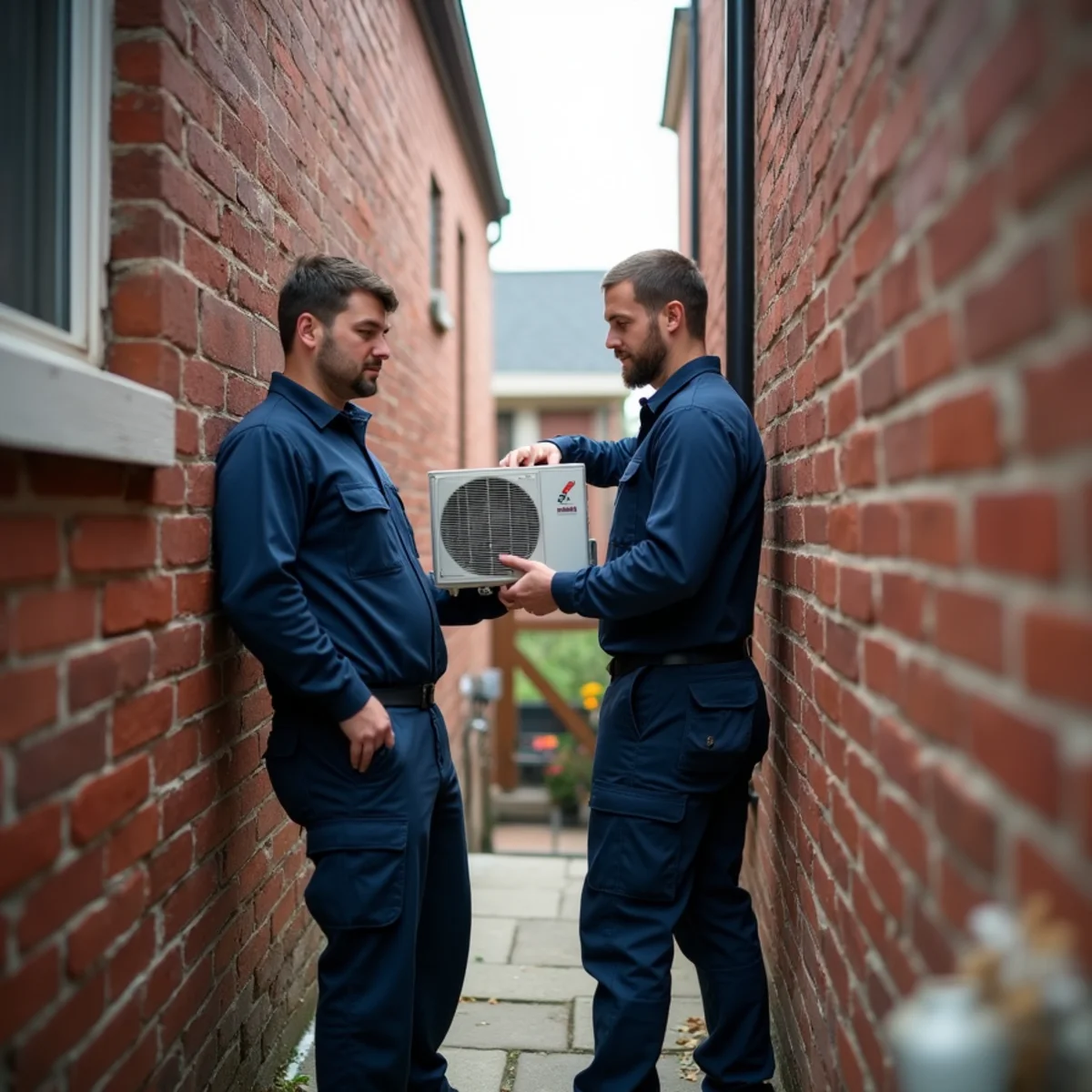
Ductless mini-splits solved this neighborhood. A three-inch penetration through a brick wall, a line set run behind a downspout, and a floor console that sits low like a radiator gives you cooling and shoulder-season heating without opening a single wall.
Narrow, tall, shared-wall, and mostly hydronic
A typical Old Town Row house is 16 to 20 feet wide, two rooms deep, and two or three stories tall. Two exterior walls instead of four means the calculated load is genuinely small — often far smaller than an installer assumes, which is why oversized equipment is such a recurring problem here.
Heat is usually hydronic: a hot water or steam boiler with cast-iron radiators. Many of these systems work well and deserve maintenance rather than replacement. Cooling, where it exists at all, is usually window units.
The other recurring issue is stack effect in a tall, narrow volume. Heat rises to the third floor, the first floor stays cool, and a single thermostat cannot serve both. Per-floor ductless zones handle it in a way a central system in this footprint never could.

3–5 minutes east from the shop from our shop to the Old Town Row blocks
Same-day emergency service across Cumberland County. Call and describe the symptom — we will tell you honestly whether it needs a truck tonight or a scheduled visit.
Local work: East Pomfret and East South Street
A three-story rowhome on East South Street wanted air conditioning without losing the plaster. There was no chase, no soffit, and a rear yard about twelve feet deep.
We installed a three-zone ductless system: a floor console in the front parlor where a wall unit would have looked wrong, a concealed ducted head in a second-floor closet feeding two bedrooms through short runs, and a wall unit on the third floor. The condenser sits on a riser in the rear yard behind screening, and the line sets run in paintable covers along a mortar line where they are essentially invisible from the sidewalk.
The boiler stayed. It heats the house well in deep winter, and the mini-splits carry cooling plus the shoulder seasons. That combination is the right answer for most of these houses.
Two party walls and a very small load
A mid-row house has two walls that never see weather, and the effect on the load is larger than most owners expect. Both the heat lost in January and the heat gained in July are substantially lower than a detached house of identical floor area would carry.
That is why oversizing is the dominant problem on these blocks rather than a lack of capacity. Equipment specified to match whatever came out before carries an old error forward, and in a house this small the mismatch is proportionally severe.
The symptom is a house that is cool and still humid in July. A system several times larger than the load satisfies the thermostat within minutes, never runs long enough across the coil to condense moisture, and leaves a small tall house feeling heavy.

HVAC services we provide in Old Town Row
Small loads usually mean smaller bills, both kinds
Right-sizing here frequently lowers the purchase price as well as the running cost, which is unusual. Once the load is calculated properly, most of these houses need fewer ductless heads and less capacity than owners have been told, and the correct answer is also the cheaper one.
Siting is the constraint that does add cost. There is very little outdoor space, so where the condenser can go, how the line set is routed and whether a neighbour hears it through a party wall all need settling at the estimate rather than on install day.
Keeping a sound boiler alongside new cooling is almost always cheaper than converting the house. Hydronic heat suits a narrow, tall, shared-wall building well, and there is no good reason to remove heating that works in order to add cooling that does not depend on it.
No heat or no cooling in Old Town Row right now?
A person answers the phone, not an answering service. Tell us the symptom and we will say honestly whether it needs a truck tonight or a scheduled visit — 3–5 minutes east from the shop from our Carlisle shop.
Why Old Town Row residents call us
Sized for a shared-wall house
Two exterior walls instead of four means a genuinely small load. Oversized equipment is the standard error in these rowhomes, and it is why so many feel clammy in July.
Ductless done to a standard
Micron-gauge evacuation, torqued flares and condensate that is sloped and terminated properly — not left to drip down brick, which is the most common thing we get called to fix on other installs.
Three to five minutes away
East Pomfret and East South Street are effectively around the corner. On a winter no-heat call in a masonry rowhome, that gap matters.
The load calculated, not inherited
Two party walls make these houses genuinely small loads, and matching the old equipment size carries a twenty-year error forward.
Condenser placement agreed in advance
With this little outdoor space, where the unit goes and what the neighbour hears is settled at the estimate, not improvised.
18 years serving Cumberland County · 214+ reviews · EPA Section 608 Universal certified technicians · PA Home Improvement Contractor — registration number available on request · 100% satisfaction guarantee on every repair and installation
Old Town Row HVAC questions
Yes, with ductless. There is no chase for a trunk line and no willingness to open 19th-century plaster, so a mini-split system is the realistic route. A three-inch core drill through a mortar joint carries the refrigerant lines, condensate and control wiring, and each head is its own zone with its own thermostat — which is exactly what a tall narrow house with a hot top floor needs.
Usually because the equipment is too big for it. An interior rowhome has half the exterior exposure of a detached house the same size, so the calculated load is small. Oversized cooling satisfies the thermostat quickly, shuts off before the coil condenses much moisture, and leaves you at 72°F and clammy. Right-sizing and longer runtimes fix it; more capacity makes it worse.
Usually a wall bracket rather than a ground pad, which clears the walkway and gets the coil above snow line, or a riser in whatever rear yard exists behind screening. We plan the location and the line-set route before selecting equipment, because on these lots the siting constrains the design rather than the other way round.
In most of these houses, yes. The boiler heats a masonry rowhome well in deep winter and the radiators are already there. The usual configuration is boiler for heat, ductless for cooling and shoulder-season use. You get both seasons handled without replacing a system that works.
Because it is small, in effect. Two shared walls remove a large share of the cooling load, so the equipment is very often far bigger than the house needs. Oversized cooling reaches the setpoint in a few minutes and shuts down, and dehumidification only happens while air is moving across a cold coil. Short cycles cool the air without drying it. A correctly sized system runs longer and gentler, which feels better at a higher thermostat setting and costs less to run.
In these houses, usually yes. A sound boiler serving original radiators heats a narrow shared-wall building well, it is not competing with the cooling, and removing it buys you nothing except the cost of removal. The sensible arrangement is to let the boiler hold the heating on its own control and let each ductless head manage cooling in its own room. It also means a failure of either system leaves you with the other, which matters more in January than most people think about in June.
Nearby areas we also serve
Our service area
HVAC Carlisle PA dispatches from 122 Beech St, Carlisle, PA 17013. Old Town Row is 3–5 minutes east from the shop.
HVAC service in Old Town Row — call +1 (327) 210-5999
Same-day emergency service across Cumberland County. Licensed, insured technicians dispatched from our Carlisle shop, with written options before any work begins.
214+ reviews · 18 years local · Licensed & insured · 100% satisfaction guarantee on every repair and installation
HVAC Carlisle PA122 Beech St, Carlisle, PA 17013
+1 (327) 210-5999