
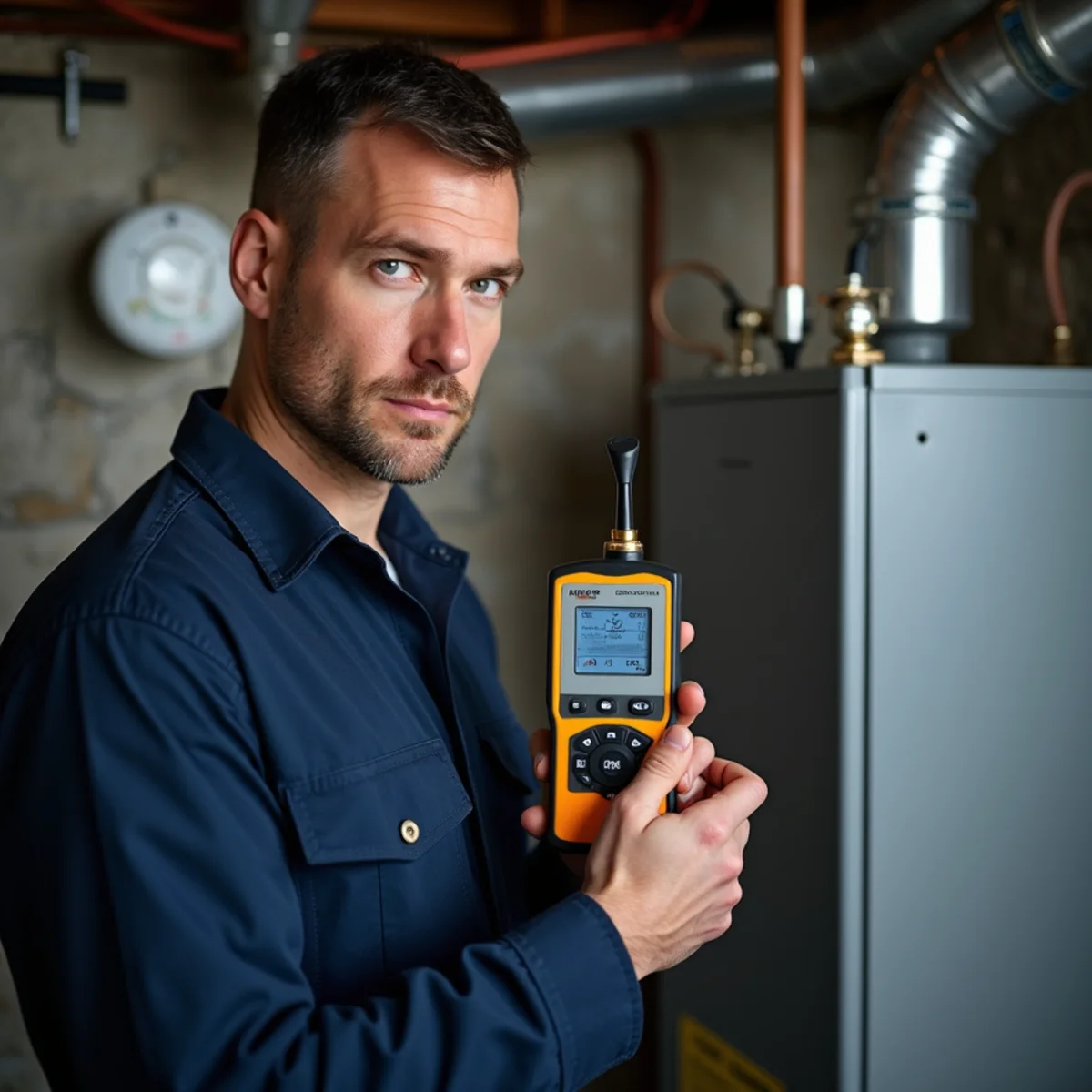
Medium priority service · Carlisle, PA
Gas Leak & Carbon Monoxide Safety Inspection in Carlisle, PA
If your carbon monoxide alarm is sounding right now, stop reading. Get everyone out of the building, including pets, and call 911 from outside. Do not open windows first, do not go back for anything, and do not try to find the source yourself.
Same-day emergency service across Cumberland County 4.9/5 from 214+ reviewsLicensed & insured
- 4.9 ★
- 214+ local reviews
- 18 yrs
- Serving Cumberland County
- 24/7
- Emergency dispatch
- 100%
- Satisfaction guarantee
Once the building is cleared, that is when we come in. A CO event is not solved by silencing the alarm — it is solved by finding what produced the CO and taking that appliance out of service until it is safe.
Carbon monoxide is colorless and odorless. Every fuel-burning appliance in a house — furnace, boiler, water heater, gas range, fireplace, wood stove, attached-garage vehicles — is a potential source, and the risk climbs in winter when houses are sealed and equipment runs hardest.
Warning signs worth an inspection
- Any CO alarm activation, even a single chirp you cannot explain — evacuate first, then call
- Headache, dizziness, nausea, or fatigue that improves when you leave the house and returns when you come back
- Symptoms affecting multiple people or pets in the household at the same time
- Soot, rust flakes, or a sooty film around the furnace, water heater, or vent connector
- A yellow, lazy, or flickering burner flame where it should be crisp and blue
- Excessive condensation on windows near a fuel-burning appliance
- A rotten-egg or sulfur odor, which is the odorant added to natural gas and propane — leave and call the utility
- A backdrafting appliance, or a downdraft you can feel at the flue
Recognise any of these? Do not wait for it to get worse.
Same-day emergency service across Cumberland County. Licensed technicians, 214+ local reviews, and written options before any work starts.
What a proper safety inspection includes
- Ambient CO measurement throughout the living space with a calibrated instrument
- Combustion analysis at each fuel-burning appliance — CO in the flue, O2, stack temperature, and efficiency
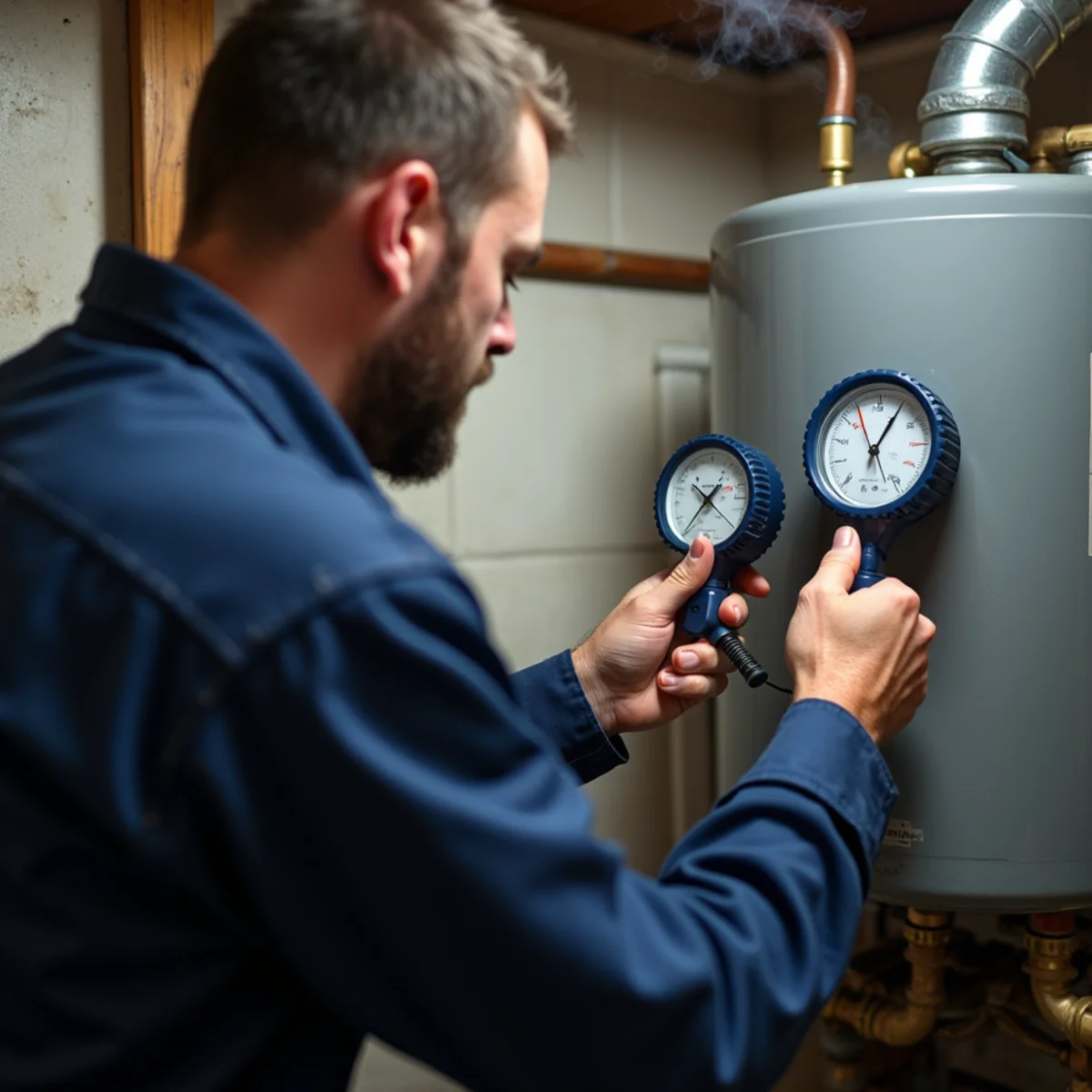
- Draft testing and spillage testing at the draft hood or vent connector
- Worst-case depressurization testing: exhaust fans, dryer, and fireplace running together to see whether appliances backdraft
- Heat exchanger inspection, visually and by combustion signature
- Gas line leak detection at every accessible joint with an electronic detector and bubble solution
- Vent and flue inspection for corrosion, disconnection, blockage, and correct sizing
- Combustion air verification — a very common problem in tightened-up older homes
- CO alarm placement, age, and function review
The orphaned water heater problem
This is the risk almost nobody warns homeowners about. In older Carlisle houses, the furnace and gas water heater often share a masonry chimney. When the furnace is upgraded to a 95% condensing model, it moves to PVC sidewall venting — and the water heater is left alone in a chimney sized for two appliances.
A small water heater cannot generate enough heat to establish draft in that oversized flue. Exhaust cools, condenses, and can spill back into the basement instead of going up. That is a carbon monoxide pathway created by an energy-efficiency upgrade.
We check for this on every furnace replacement quote and price the chimney liner or water-heater change when it applies. If someone replaced your furnace and never mentioned the water heater, get it tested.
CO alarms: placement, age, and the thing people miss
- One on every level of the home and outside each sleeping area, at minimum
- Alarms expire. Most sensors are rated for 7–10 years from the manufacture date — check the date on the back, not on the box
- Test monthly and replace batteries on schedule, or use sealed 10-year units
- Do not mount within about 15 feet of a fuel-burning appliance, or the nuisance alarms will make you disable it
- A UL-listed alarm sounds at CO levels well below immediate danger — but low-level chronic exposure can still make people sick below the alarm threshold, which is why annual combustion testing matters
- If you have an attached garage, put an alarm near the door into the house
Gas leak detection
If you smell gas, leave the building, do not touch light switches or your phone until you are outside, and call the gas utility from a safe distance. That call is free and they respond urgently. Then call us.
We locate leaks at appliance connections, unions, valves, drip legs, and the sections of piping we can access, and we make the repair on the appliance side. Meter-side and service-line issues belong to the utility.
A common finding we see in older borough basements is a decommissioned gas line — an old range or space heater connection that was capped decades ago and now weeps at the valve. Those get found on a proper inspection and nowhere else.
Why carbon monoxide exposure gets missed for weeks
Low-level carbon monoxide exposure does not feel like poisoning. It feels like a headache that clears when you go out, tiredness that does not match how you slept, nausea, or a household that all seems to have a lingering cold through the winter. Those symptoms are easy to attribute to anything else, which is precisely why the exposure continues.
Two patterns are worth knowing. If symptoms improve when you leave the house and return after a few hours at home, that is a signal worth taking seriously. If more than one person in the building, including pets, is unwell at the same time in the heating season, that is another.
None of this replaces an alarm, and an alarm sounding is not something to investigate at leisure. If an alarm activates, get everyone outside into fresh air and call 911 from outside. If anyone is confused, drowsy or unconscious, that is an emergency ahead of any consideration of the heating system. Our inspection comes after the building is safe, not instead of making it safe.
Combustion air: why sealing up a house can create the hazard
An atmospheric appliance, an older furnace, a standard water heater, a cast-iron boiler with a draft hood, needs air from the room to burn and needs the flue to draw properly to carry the products away. Both of those depend on air being available to replace what goes up the chimney.
Improve a house without accounting for that and the balance can change. New windows, air sealing, an added bathroom or kitchen exhaust fan, or a new dryer can each increase the depressurisation of a basement to the point where the flue no longer drafts reliably and combustion products spill into the room instead.
This is the specific reason we run worst-case depressurisation testing rather than simply checking whether an appliance lights. Turning on every exhaust device and closing the house down reproduces the condition that actually occurs on a winter evening, and it reveals spillage that a still afternoon test would never show.
How a safety inspection runs
- 1
Ambient survey
CO readings throughout the occupied space before any appliance is disturbed.
- 2
Appliance-by-appliance combustion testing
Furnace, boiler, water heater, and any other fuel-burning equipment, individually.
- 3
Draft and spillage testing
Including a worst-case depressurization test with exhaust appliances running.
- 4
Gas line leak survey
Electronic detection plus bubble confirmation on every accessible joint.
- 5
Written report
Every reading recorded, with photographs of anything flagged.
- 6
Corrective action
Unsafe appliances are shut down and tagged. We explain exactly what has to happen before they go back in service.
What affects inspection cost
We do not publish flat prices, because a price without a diagnosis is a guess. What we can do is tell you exactly what moves the number so you can compare quotes on scope rather than on a headline figure.
- Number of fuel-burning appliances in the building
- Whether the visit is emergency response after an alarm or a scheduled annual inspection
- Whether a heat exchanger inspection requires disassembly or camera access
- Extent of the gas line survey and how much piping is accessible
- Chimney and venting evaluation scope, including liner assessment
- Whether written documentation is needed for a real estate transaction or insurance claim
A note on the ranges we quote elsewhere on this site
Any dollar figures published here are Pennsylvania statewide planning proxies for budgeting purposes — not confirmed Carlisle quotes. Final pricing requires a site assessment, and we put every line item in writing before you approve anything.
Why Carlisle homeowners pick us for co & gas safety
Instrumented, not visual
Ambient CO through the living space, combustion analysis at every fuel-burning appliance, draft and spillage testing, and a gas line survey on each accessible joint.
Worst-case depressurization testing
Kitchen exhaust, bath fans and the dryer running together, because a house can pass a simple test and fail this one — and this one is what actually happens on laundry day.
We catch the orphaned water heater
When a furnace is upgraded to high efficiency it leaves the water heater alone in a chimney sized for two appliances. It is a CO pathway created by an energy upgrade, and almost nobody warns homeowners about it.
Findings in writing
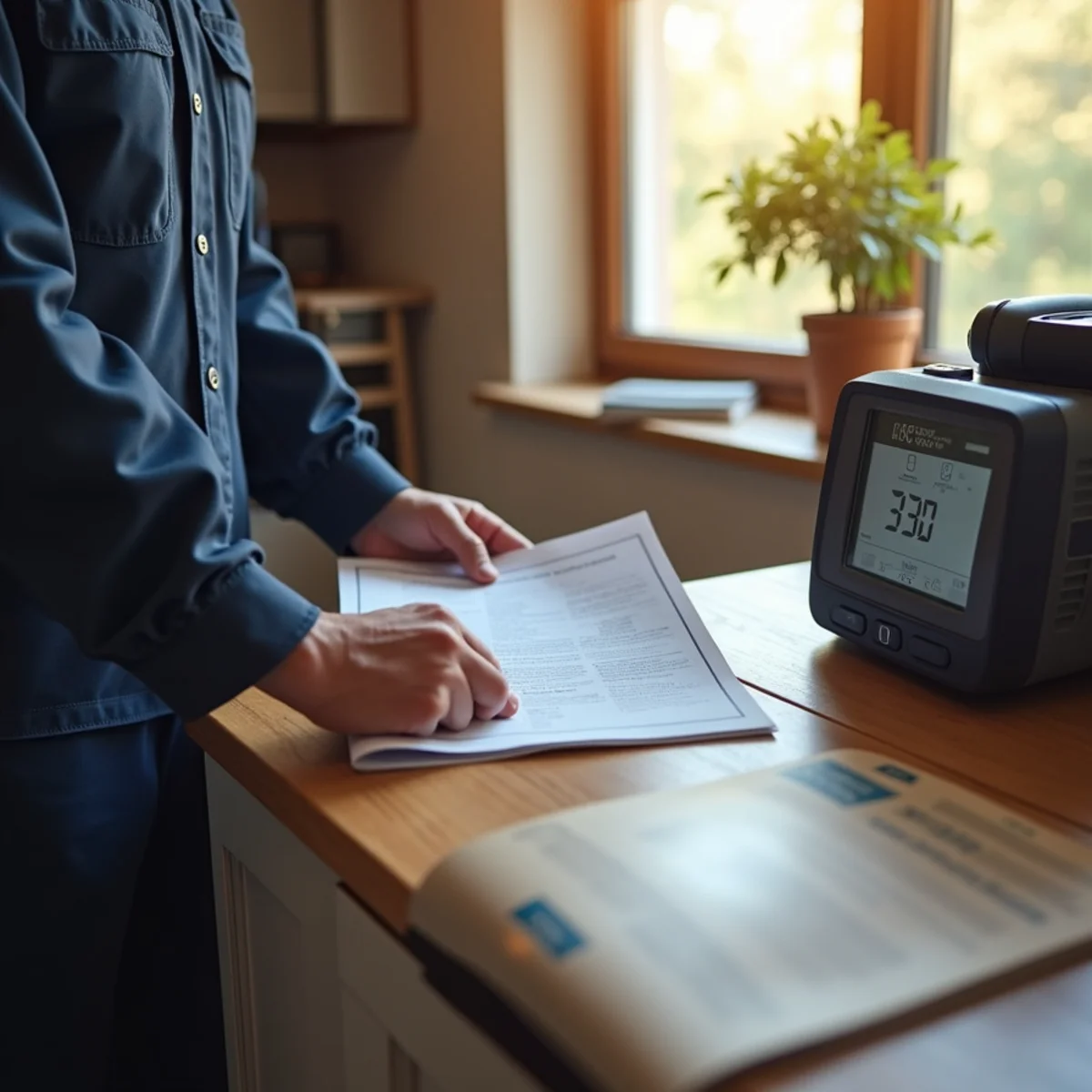
Every reading recorded and anything flagged photographed. Unsafe appliances are shut down and tagged, with a clear explanation of what has to happen before they go back in service.
Tested under the conditions that cause spillage
Every exhaust fan running and the house closed up is when flues fail — a still afternoon test proves nothing about a winter evening.
18 years serving Cumberland County · 214+ reviews · EPA Section 608 Universal certified technicians · NATE-certified service technicians · PA Home Improvement Contractor — registration number available on request · 100% satisfaction guarantee on every repair and installation
Where we provide co & gas safety
Combustion safety inspection matters most in the county's oldest housing, where flues have outlived the appliances they were built for. The Carlisle Historic District, the Army War College edge and the brick cores of Newville, Mount Holly Springs and Mechanicsburg all fall into that category.
Rural properties carry a different risk. Through Plainfield, Penn Township and Newburg, wood stoves and oil appliances often share a tightened-up house, and combustion air becomes the limiting factor. We test for that specifically.
Frequently asked: co & gas safety in Carlisle
Yes. Leave immediately with everyone and every pet, and call 911 from outside. Carbon monoxide poisoning does not always announce itself with symptoms, especially while you are asleep, and the alarm is calibrated to sound before most people feel anything. Do not silence it and go back to bed. That decision kills people every winter.
You cannot tell from across the room, and neither can a contractor. Proper confirmation comes from a combustion analysis showing an abnormal CO signature in the flue, a visual or camera inspection of the exchanger, or a documented spillage test. Ask for that evidence in writing before accepting a red tag. A legitimate contractor will hand it over without hesitation.
Annually, for every fuel-burning appliance, and it should be part of your heating tune-up rather than a separate purchase. Also get one any time you replace a furnace or water heater, add exhaust equipment, tighten up the building envelope, or move into a house whose heating history you do not know.
It simulates the toughest real-world condition for your venting. We run the kitchen exhaust, bath fans, and clothes dryer at once and check whether the furnace or water heater still drafts properly or begins spilling exhaust into the room. A house can pass a simple test and fail this one — and this one reflects what actually happens on laundry day.
Yes, if there is any fuel-burning appliance, fireplace, wood stove, or attached garage. An all-electric house with an attached garage still has a CO risk from a vehicle left running. Alarms are inexpensive; the alternative is not.
Get everyone out of the building into fresh air first, including pets, and call 911 from outside. Do not open windows to ventilate before you leave and do not spend time looking for the source, because both delay getting people out and clearing the air makes it harder for responders to establish what happened. If anyone is confused, drowsy, unsteady or unconscious, say so on the call, because that is a medical emergency. Do not re-enter until emergency services say it is safe. Once the building has been cleared, that is the point at which a combustion inspection is useful.
Yes, and it is one of the more commonly missed triggers. Tightening a house reduces the air available to any appliance that draws combustion air from the room and vents up a chimney, and it increases how far exhaust fans can depressurise the space. A flue that drafted adequately before the work can begin spilling afterwards, particularly on a cold evening with a bathroom fan and a dryer running. It is not a reason to avoid improving a house, it is a reason to have the combustion appliances tested under worst-case conditions once the work is done.
Related services
Often needed alongside co & gas safety
Furnace Repair
Ignition faults, flame sensors, limit trips, blower motors, and cracked heat exchangers — diagnosed with a meter, not a guess.
Learn moreEmergency HVAC
One number, answered around the clock, with a real technician dispatched — not an answering service taking a message until Monday.
Learn moreMaintenance
Documented seasonal tune-ups with actual readings — not a filter change and a sticker on the side of the unit.
Learn moreFurther reading
Guides on this topic
- Carbon Monoxide Warning Signs Every Carlisle Household Should KnowThe symptoms, the sources, the alarm mistakes almost everyone makes, and the venting risk created by furnace upgrades.
- Fall Furnace Tune-Up Checklist for Carlisle HomeownersA tune-up should produce data. If the only evidence anyone was in your basement is a sticker, you bought a visit.
Carlisle neighborhoods we serve
Need co & gas safety in Carlisle?
Same-day emergency service across Cumberland County. Call and speak to someone who can dispatch a licensed technician, or request a free written estimate and we will call you back.
214+ reviews · 18 years local · Licensed & insured · 100% satisfaction guarantee on every repair and installation
HVAC Carlisle PA122 Beech St, Carlisle, PA 17013
+1 (327) 210-5999