
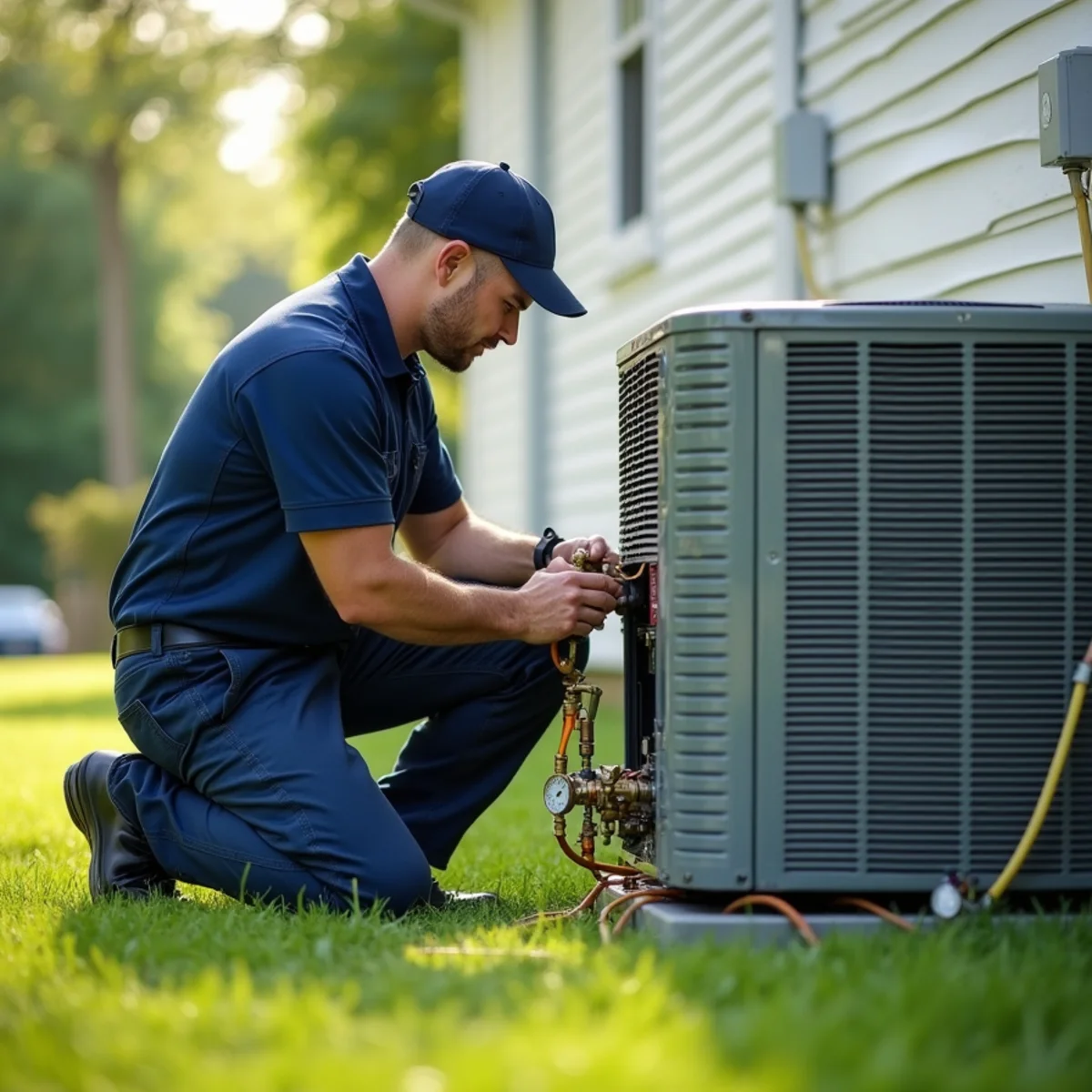
High priority service · Carlisle, PA
AC Repair in Carlisle, PA
Most Carlisle air conditioners fail in the first genuinely hot week of the year, usually late June, because that is the first time all season they have been asked to run for six hours straight. A capacitor that was marginal in May cannot start the compressor in July.
Same-day emergency service across Cumberland County 4.9/5 from 214+ reviewsLicensed & insured
- 4.9 ★
- 214+ local reviews
- 18 yrs
- Serving Cumberland County
- 24/7
- Emergency dispatch
- 100%
- Satisfaction guarantee
We run same-day AC repair across Carlisle Borough and Cumberland County. The common failures — capacitors, contactors, condenser fan motors, low-voltage shorts, plugged condensate drains, and dirty coils — we carry on the truck and fix on the first visit.
The less common ones we diagnose properly. A system low on refrigerant has a leak; adding a charge without finding it is a service call you will pay for again next summer. We locate leaks, we do not just top off.
AC symptoms and their usual causes
- Outdoor unit hums but the fan does not spin — nearly always a failed run capacitor
- Indoor blower runs, outdoor unit dead — contactor, capacitor, low-voltage fuse, or a tripped float switch
- Air is cool but the house never gets there — undercharge, dirty coil, restricted airflow, or an undersized system
- Ice on the refrigerant line or the indoor coil — low airflow or low charge; turn it off before the compressor pays for it
- AC runs constantly and the house feels clammy — a latent-load problem, often from oversizing
- Water around the air handler or a ceiling stain below it — condensate drain, pan, or pump
- Breaker trips when the compressor tries to start
- A new grinding, screech, or hard-start rattle from the condenser
Recognise any of these? Do not wait for it to get worse.
Same-day emergency service across Cumberland County. Licensed technicians, 214+ local reviews, and written options before any work starts.
What we measure on an AC diagnostic
- Supply and return temperatures for the delivered temperature split
- Static pressure across the filter and coil — restricted airflow imitates almost every refrigerant symptom
- Suction and liquid pressures, superheat and subcooling against the manufacturer’s chart
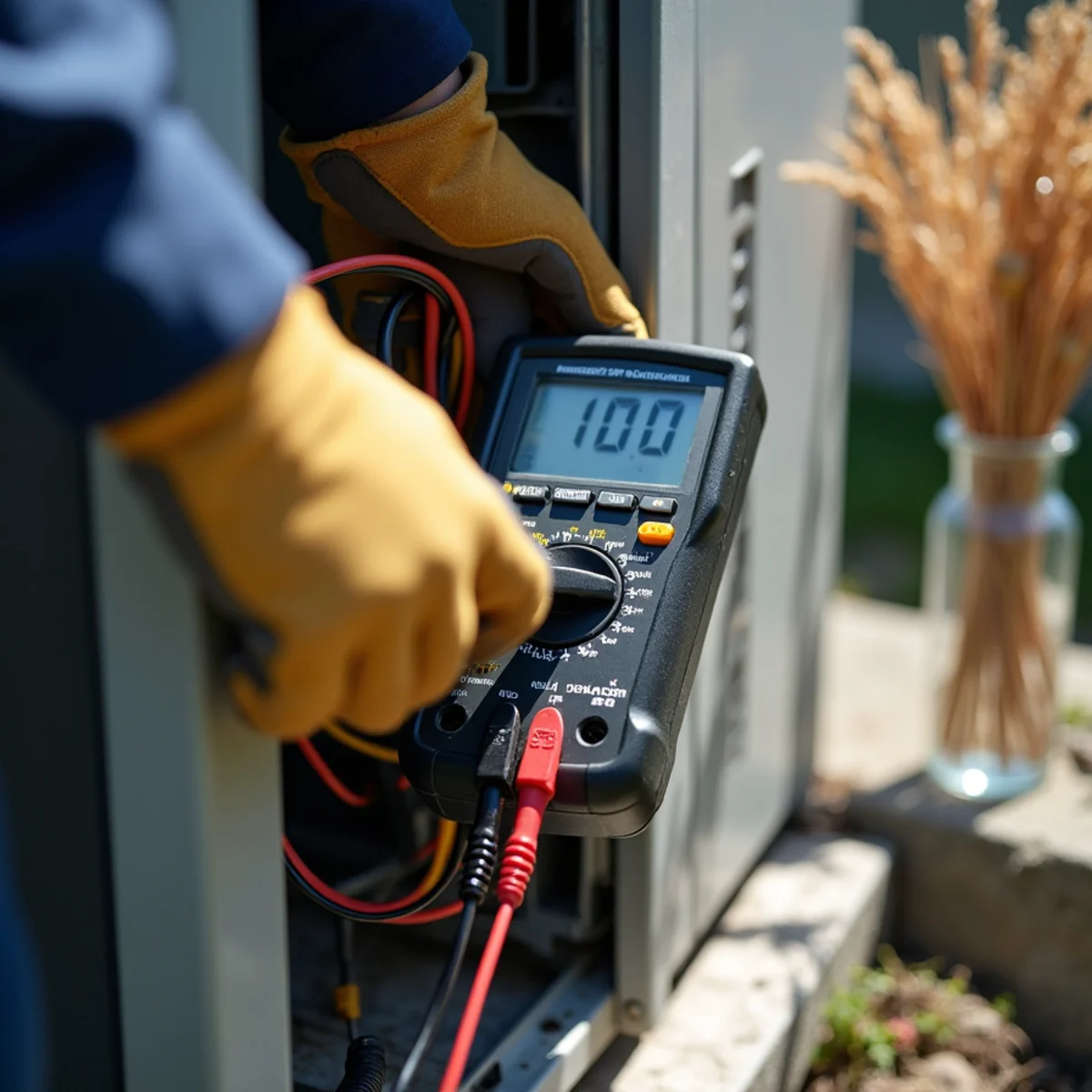
- Capacitor microfarads under load, compared to the rated value on the can
- Compressor and fan motor amp draw against nameplate rated load amps
- Condenser coil condition — cottonwood, grass clippings, and dryer lint are the local season openers
- Condensate pan, primary drain, trap, and float switch
- Indoor humidity, because the thermostat number alone does not tell you whether the system is doing its job
Low refrigerant is a symptom, not a diagnosis
Refrigerant is not consumed. A sealed system that is low has a leak, and the leak is the actual repair. We use electronic detection and, where needed, dye or nitrogen pressure testing to find it, then we tell you where it is and what it takes to fix.
Sometimes that is a Schrader core or a service-valve cap — an inexpensive afternoon. Sometimes it is a corroded evaporator coil, which is a real cost decision. Either way you get the location and the number in writing before you approve anything.
One practical note for older systems: if your unit still runs R-22, that refrigerant is no longer produced and reclaimed supply is expensive and shrinking. A significant R-22 leak repair often costs more than it is worth against putting that money toward replacement. We will show you both paths honestly.
The Carlisle humidity problem, and why a bigger AC makes it worse
July normals here run about 86°F high and 63°F low, and the dewpoints that come with a Cumberland Valley summer mean a large share of the cooling load is latent — moisture, not temperature.
An oversized air conditioner cools the air fast, hits the thermostat setpoint, and shuts off before it has run long enough for the coil to condense a meaningful amount of water out of the house. You get 72°F and 62% relative humidity, which feels worse than 75°F at 45%. EPA guidance puts the healthy range at 30–50% and below 60%.
The fix is rarely more capacity. It is usually airflow correction, a longer runtime through proper staging or fan speed, coil and drain service, duct sealing, or whole-home dehumidification. We measure the humidity and tell you which one your house needs.
Refrigerant leaks, and the R-410A reality nobody explains
Refrigerant is not consumed. A system that is low has a leak, and topping it up without finding the leak means paying for the same refrigerant repeatedly while the compressor runs in a condition that shortens its life.
The commercial reality has also changed. R-410A is being phased down under federal rules, which means supply tightens and price rises over the remaining life of existing equipment. On an older system with a significant leak, that shifts the honest arithmetic: repeatedly recharging a leaking R-410A system is a worse proposition each year than it was the year before.
We locate leaks rather than estimating them, using electronic detection and, where the situation warrants it, nitrogen pressure testing. Then we tell you what the repair costs against what the equipment is worth, and let you decide with the numbers in front of you.
What we can finish on the first visit
Cooling-season stock on the truck covers the components that actually strand people: run and start capacitors, contactors, condenser fan motors in common sizes, float switches, transformers and thermostats. Those are the majority of mid-summer no-cool calls and they are same-visit repairs.
What cannot be same-visit is a compressor, a coil or a manufacturer-specific board on older equipment. On those we give you the part cost, the lead time and an honest view on whether the repair is proportionate before anything is ordered.
- Capacitors and contactors: same visit, the most common no-cool cause
- Condenser fan motors in common sizes: usually same visit
- Refrigerant leak location: same visit; the repair depends on where it is
- Coils and compressors: ordered, with a proportionality conversation first
- We will tell you if a repair is not worth making before you pay for it
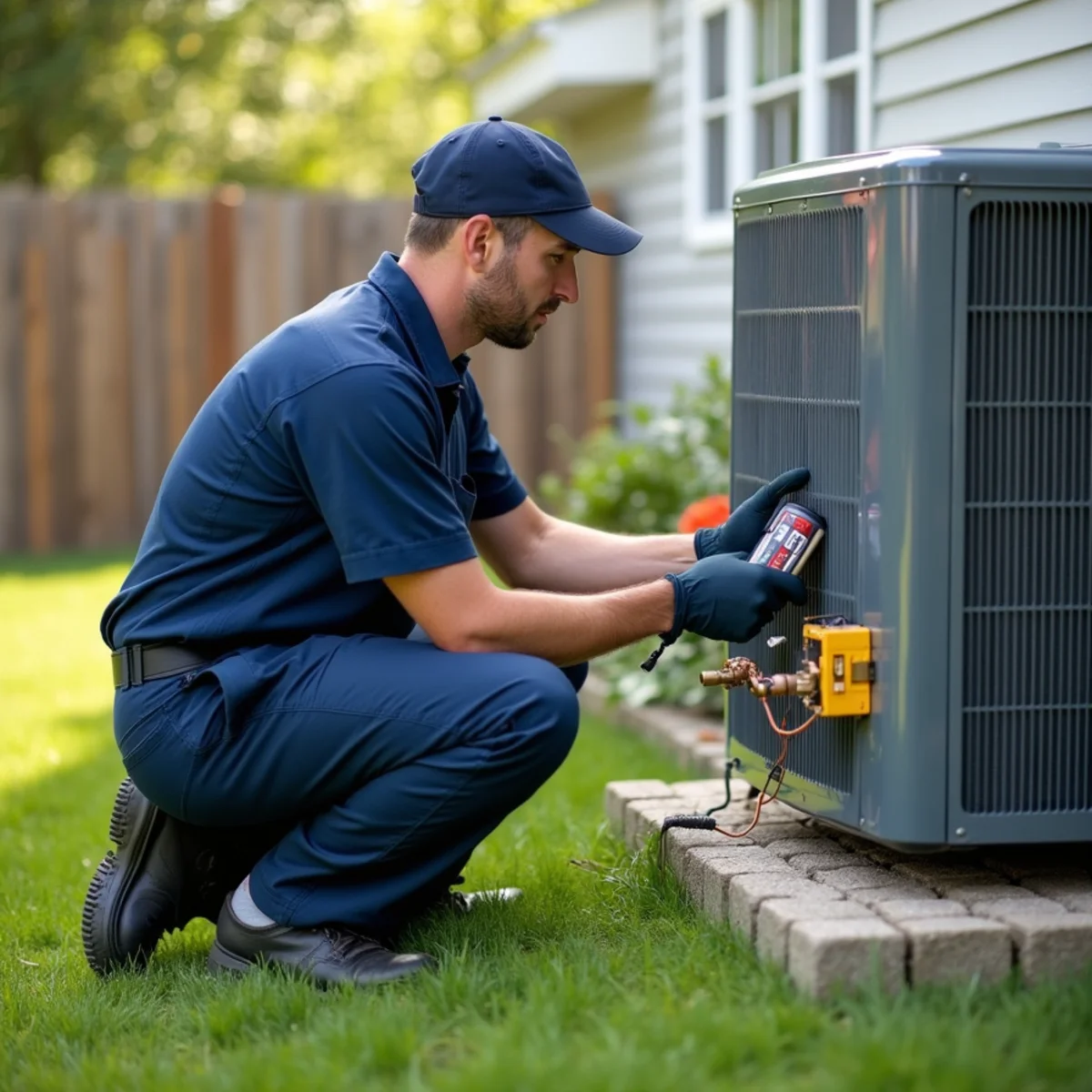
Our AC repair process
- 1
Phone triage
Symptom, thermostat display, whether the outdoor unit runs, and whether there is water or ice. That determines dispatch priority.
- 2
Electrical and airflow first
Most no-cool calls end here — capacitor, contactor, fuse, float switch, or a filter that has not been changed since Christmas.
- 3
Refrigerant-side testing
Only after airflow checks out, because bad airflow produces false refrigerant readings all day long.
- 4
Written findings
The failed part, the measurement that proves it, and the repair price before we start.
- 5
Repair and verify
Fix, then re-run the system and re-measure split, subcooling, and amp draw to confirm.
- 6
Prevention notes
What caused it, and what will keep it from happening next June.
What affects AC repair cost
We do not publish flat prices, because a price without a diagnosis is a guess. What we can do is tell you exactly what moves the number so you can compare quotes on scope rather than on a headline figure.
- Part class — capacitor and contactor at the low end, condenser fan motor mid-range, compressor at the top
- Whether refrigerant recovery, leak repair, evacuation, and recharge are involved
- Refrigerant type: R-410A versus increasingly scarce R-22 changes the math significantly
- After-hours or weekend emergency dispatch during a heat wave
- Coil cleaning depth — a surface rinse versus a pulled and chemically cleaned coil
- Condensate work, including pump replacement and any drain re-routing
- Whether the system is still under manufacturer parts warranty
A note on the ranges we quote elsewhere on this site
Any dollar figures published here are Pennsylvania statewide planning proxies for budgeting purposes — not confirmed Carlisle quotes. Final pricing requires a site assessment, and we put every line item in writing before you approve anything.

Why Carlisle homeowners pick us for ac repair
Airflow first, refrigerant second
Restricted airflow imitates almost every refrigerant symptom there is. We measure static pressure before putting gauges on, which is why we do not sell recharges to systems that only needed a filter and a coil cleaning.
We find leaks, we do not top off
Refrigerant is not consumed — a system that is low has a leak. You get the location and the repair cost in writing rather than an annual bill for gas that leaks straight back out.
Honest about R-22
Reclaimed R-22 is expensive and shrinking. A small repair is usually still worth doing; a large leak on an aging R-22 system usually is not, and we will show you both numbers instead of quietly charging for the recharge.
Same-day in peak season
We hold capacity through July and August for no-cool calls, and we triage by who is in the house — infants, older adults and anyone medically vulnerable to heat move up the board.
Leaks located, not topped up
Refrigerant is never consumed, so a low system has a leak — and with R-410A under phase-down, recharging year after year gets worse, not cheaper.
18 years serving Cumberland County · 214+ reviews · EPA Section 608 Universal certified technicians · NATE-certified service technicians · PA Home Improvement Contractor — registration number available on request · 100% satisfaction guarantee on every repair and installation
Where we provide ac repair
Cooling repair runs county-wide from June through September. Inside the borough, Bellaire and Meeting House Heights generate the most calls — mid-century houses with heating ducts asked to carry a cooling load they were never sized for.
The 1990s and 2000s developments in Silver Spring Township and Hampden Township are the other cluster, where builder-grade systems installed in the same few years now fail in the same few years. We have worked enough of those streets to know the duct layout before we pull in the driveway.
Frequently asked: ac repair in Carlisle
The three usual causes are restricted airflow, low refrigerant charge from a leak, and a dirty condenser coil. A clogged filter or collapsed flex duct can cut airflow enough that the coil starts freezing, which drops capacity further. Turn the system to fan-only for an hour to melt any ice, replace the filter, clear the outdoor unit, and if it still will not cool, it needs a gauge set on it.
Ice means the coil is running below freezing, which is caused by either too little airflow across it or too little refrigerant in it. Shut cooling off and run the fan to thaw it before anything else — running a compressor against a frozen coil is how you turn a small repair into a compressor replacement.
A capacitor or contactor replacement is the least expensive common repair; a condenser fan motor is a step up; refrigerant leak repair with recovery, evacuation, and recharge is meaningfully more; and a compressor replacement usually triggers a replace-versus-repair conversation. We quote the specific repair after diagnosis, in writing, before starting.
That is a latent-load problem and it is very common in Cumberland County summers. The system is likely oversized or running too short a cycle to dehumidify — it satisfies the thermostat before the coil condenses much moisture. Fixes include blower speed adjustment, staging, duct sealing, or a whole-home dehumidifier. Installing a larger air conditioner makes it worse, not better.
Yes, we still service R-22 systems, but you should know the context. R-22 is no longer produced, so charges come from reclaimed stock at high and rising cost. A small repair is usually still worth doing. A large leak on an aging R-22 system is often better money put toward a replacement, and we will show you the comparison rather than quietly charging you for an expensive recharge.
We can, and sometimes that is the right call, but you should know exactly what you are buying. Refrigerant does not get used up, so a low charge means it is escaping somewhere and it will escape again. A top-up on a system with a slow leak might get you through a season; on a significant leak it may not last weeks. With R-410A now under a federal phase-down, the cost of that approach rises each year. We will locate the leak, tell you what the repair costs, and if you still want the top-up as a stopgap we will do it and be straight with you about how long it is likely to hold.
A system running continuously without reaching setpoint is usually short on capacity delivered rather than short on capacity installed. The common causes are a low refrigerant charge from a leak, a filthy condenser coil that cannot reject heat, an evaporator coil iced over from restricted airflow, or a failing compressor no longer pumping properly. Airflow problems and dirty coils are the most frequent and the cheapest to fix. We measure the refrigerant performance, the temperature split and the static pressure, which separates those causes quickly rather than by replacing parts in sequence.
Related services
Often needed alongside ac repair
Emergency AC
Heat-advisory dispatch for houses with infants, older adults, or anyone who cannot safely wait out a 95°F afternoon.
Learn moreAC Installation
Load-calculated central air sized for latent load — so the house is dry at 75°F, not clammy at 72°F.
Learn moreIndoor Air Quality
Humidity, filtration, and ventilation solved with measurements — starting with what your house actually reads.
Learn moreFurther reading
Guides on this topic
- AC Running But Not Cooling? Carlisle's Summer Humidity May Be WhyComfort is temperature and moisture. If your house is 72°F and still miserable, the second half is the problem.
- Spring AC Tune-Up Checklist: Beat Cumberland County's July HumidityBook it in March or April. By the first 90°F day in June, everyone else is calling too — and they are calling about failures.
Carlisle neighborhoods we serve
Need ac repair in Carlisle?
Same-day emergency service across Cumberland County. Call and speak to someone who can dispatch a licensed technician, or request a free written estimate and we will call you back.
214+ reviews · 18 years local · Licensed & insured · 100% satisfaction guarantee on every repair and installation
HVAC Carlisle PA122 Beech St, Carlisle, PA 17013
+1 (327) 210-5999