Local Angles
Freeze-Thaw on the Valley Floor: Why Carlisle Condensate Lines Freeze
If your furnace only quits on the coldest nights of the year, this is almost certainly why — and it is permanently fixable.
By HVAC Carlisle PAPublished Updated 7 min read
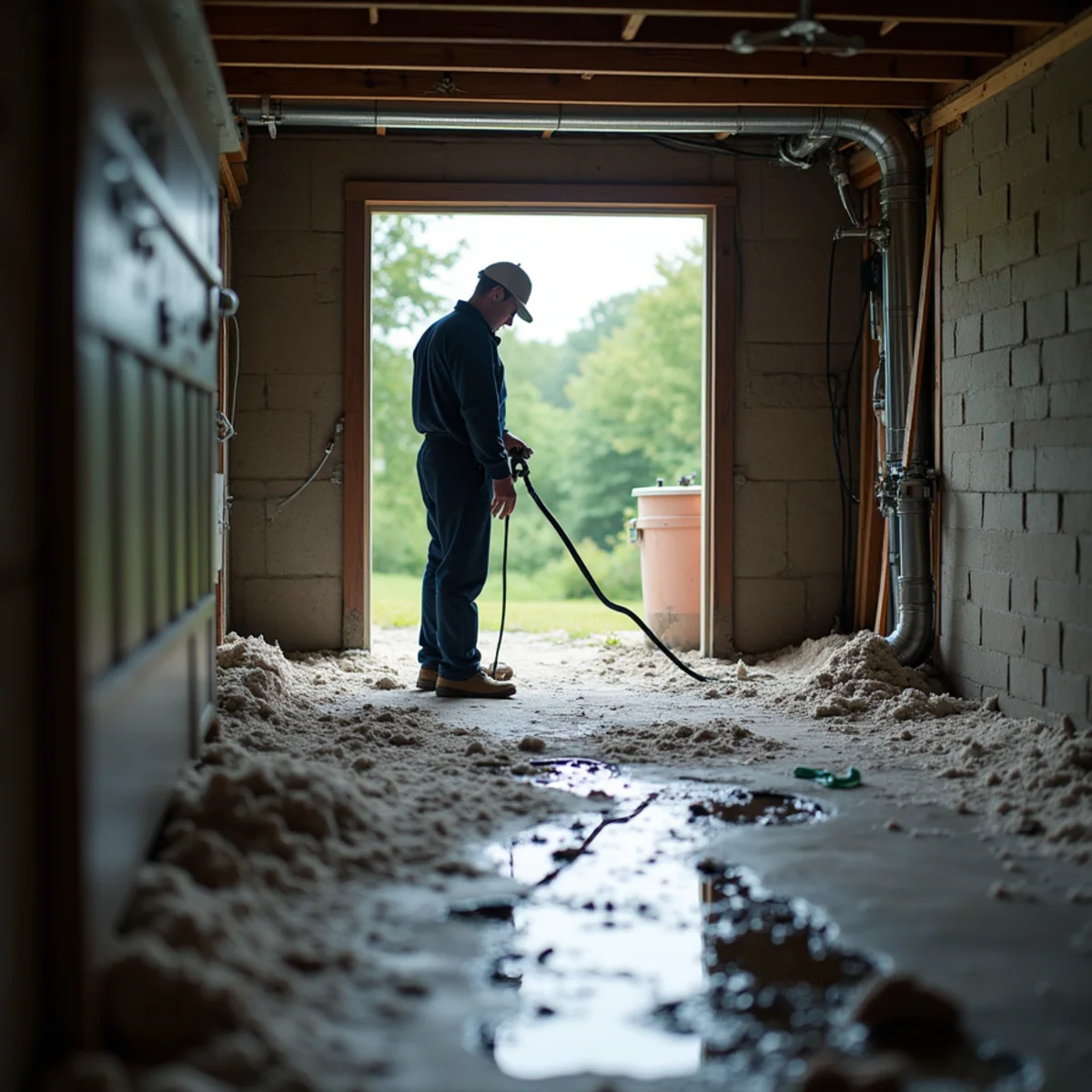
Here is a pattern we see every single winter in Carlisle. A homeowner calls with a furnace that has quit, we arrive, and the furnace starts right up. Nothing seems wrong. Three nights later, the coldest night of the week, it quits again.
That intermittent, weather-following pattern on a high-efficiency furnace is almost always a frozen condensate line, and it is one of the most preventable failures in the trade.
Need this handled rather than explained?
Same-day emergency service across Cumberland County. Licensed technicians dispatched from Carlisle, with written options before any work begins.
Why a furnace makes water
A 95%+ efficiency condensing furnace extracts so much heat from the combustion gases that water vapor in the exhaust condenses back to liquid. That is where the efficiency comes from — you are recovering the latent heat of vaporization instead of sending it up a chimney.
The by-product is liquid water, and a good deal of it: over a gallon on a cold day when the furnace runs hard.
That water has to drain. It runs from the secondary heat exchanger through a collector, into a trap, and out to a floor drain, a condensate pump, or in many installations, out through a sidewall.
The four places it freezes
The Carlisle freeze-thaw pattern makes it worse than a steady cold would. Water accumulates during a mild afternoon, then a clear night with cold-air pooling on the valley floor freezes it solid.
- A drain line that exits through a sidewall and terminates outdoors — the most common and the worst offender
- A line routed through an unconditioned crawlspace, which describes a great many older borough homes and rural farmhouses
- A line running through an unheated garage
- The exterior termination point itself, where dripping water builds an ice plug at the end of the pipe over several cold nights
What happens when it blocks
The condensate backs up into the collector and eventually into the secondary heat exchanger area. A pressure switch or a float switch detects it and shuts the furnace down.
That is the safety system working correctly. Left running with a blocked drain, water would eventually reach places it should not, damaging the heat exchanger and the control board.
The tell for diagnosis: the furnace runs fine during the day when the ice partially melts, then locks out again overnight. If your failures follow the weather rather than occurring randomly, this is your first suspect.
The three permanent fixes
We also increase the pitch where the run is nearly flat and shorten the exterior termination so no lip of pipe sits outdoors collecting ice. All of it together is a modest half-day of work that ends the problem permanently.
- Insulate the line — the minimum intervention, appropriate for a marginal crawlspace run but not sufficient for a sidewall termination in a real cold snap
- Re-route it — the best fix where possible. Bring the drain to an interior floor drain or a condensate pump discharging to an interior sanitary connection, so no part of the path is exposed to outdoor temperatures.
- Heat-trace it — a self-regulating heat cable along the line, insulated over top, powered from a dedicated circuit. This is the right answer where re-routing genuinely is not possible.
The temporary fix, for tonight
If you are reading this at 11 p.m. with no heat and you suspect a frozen line, there is a safe temporary measure.
Find the drain line — white PVC, usually 3/4 inch, running from the furnace. Follow it. If it exits through a wall, go outside and check the termination for an ice plug. Warm the frozen section with a hair dryer or warm — not boiling — water. Never use a torch or an open flame on PVC.
You may also be able to disconnect the line at the trap and let it drain into a bucket temporarily, which restores heat while you wait for a proper repair. Empty the bucket; a condensing furnace produces more water than people expect.
This is a stopgap. Call in the morning and get the line properly protected before the next cold snap.
The heat pump version of the same problem
Heat pumps produce meltwater during defrost, and that water has the same problem: nowhere good to go.
When an outdoor unit sits on a pad at grade, meltwater pools underneath and refreezes over a freeze-thaw week, building a solid shelf of ice under the coil. Once that shelf blocks drainage, each defrost cycle makes it worse.
The fix is riser mounting — brackets or a stand lifting the unit well clear of grade with open space underneath. We install that way as standard, and it is worth retrofitting on an existing unit that ices in repeatedly.
Why this is a modern problem rather than an old one
Older furnaces did not produce condensate. They vented hot flue gas up a chimney, and much of the energy in that gas went with it, which is exactly why they were less efficient.
A condensing furnace extracts so much heat from the flue gas that the water vapour in it condenses into liquid, and that liquid has to go somewhere. That is where the efficiency comes from, and the drain is the price of it. The same applies to condensing boilers and, in cooling mode, to any air conditioner or heat pump.
It also means the water is mildly acidic, because it carries dissolved combustion products. That is normal and manageable, and it is the reason condensate should not simply be run onto masonry, into a metal floor drain it will corrode, or into a septic system without thought.
Pumps, neutralisers and the parts of the drain nobody services
The condensate path is a small system in its own right and it is the part of an installation most often left off a maintenance schedule. Almost every mid-winter lockout we attend that traces back to condensate involves a component that has never been touched since installation.
A condensate pump, used where the drain cannot run downhill to a discharge, has a reservoir, a float and a check valve, and all three foul over time. When it fails the safety switch shuts the appliance down, which is the system working correctly and is nonetheless a no-heat call.
A neutraliser cartridge, where fitted, contains media that is consumed as it works. Once exhausted it stops neutralising and begins to restrict flow instead, which produces exactly the same lockout by a different route.
- Trap and drain line flushed annually, before the heating season rather than during it
- Condensate pump reservoir cleaned, float tested and check valve verified
- Neutraliser media checked and replaced when spent, not left indefinitely
- The safety float switch tested deliberately, since it is what prevents an overflow
- The outdoor termination checked for ice, debris and the slope that keeps it draining
Related services and areas
Frequently asked questions
The pattern is the giveaway: the furnace locks out on the coldest nights and runs fine in milder weather. Look for a white PVC drain line from the furnace, follow it, and check for ice — particularly at any exterior termination. A furnace error code indicating a pressure switch or drain fault supports the diagnosis.
As a temporary measure to get through a night, yes — but empty it regularly, because a condensing furnace produces more than a gallon on a cold day, and an overflow puts water on your floor. It is a stopgap, not a solution. Get the line properly insulated, re-routed, or heat-traced.
Because it was the shortest and cheapest path, and in a milder climate it would be fine. In the Cumberland Valley, with clear-night cold pooling on the valley floor, a sidewall condensate termination is a predictable annual failure. It is one of the most common installation shortcuts we correct.
It is mildly acidic, and over years it does affect certain materials. Running it directly onto concrete gradually etches the surface, and discharging it into cast iron or galvanised drainage will corrode it in time. Many manufacturers and local requirements call for neutralisation before discharge for exactly this reason, particularly on higher-output appliances. A neutraliser is an inexpensive cartridge of media that raises the pH before the water leaves, and the important part is that its media is consumed and needs replacing. It is not dangerous to touch, but it should not be draining onto something it will slowly destroy.
Usually fouling rather than a defective pump. The reservoir collects a biological film that thickens over time, and that film jams the float or blocks the check valve, so the pump either fails to start or fails to lift the water. If it is failing repeatedly, the likely causes are that it is never cleaned, that it is undersized for the lift and run it is being asked to do, or that the discharge line has a sag holding water back. It is also worth checking the drain does not actually have enough fall to run by gravity, in which case the pump can be removed altogether.
You can improve it, though insulation alone rarely solves it. Insulating a pipe slows heat loss but does not add heat, so a line running slowly in sustained sub-freezing weather will still freeze eventually. The durable fixes are re-routing the drain so it terminates inside to a proper drain, increasing the fall so water leaves quickly rather than sitting in the line, or adding self-regulating heat trace under the insulation. If you insulate as a stopgap, make sure the termination itself stays clear, because that open end is where the ice plug most often starts.
Talk to a licensed Carlisle technician
HVAC Carlisle PA has served Carlisle and Cumberland County since 2007. We test before we recommend, we put options in writing, and we answer the phone at 2 a.m.
HVAC Carlisle PA · 122 Beech St, Carlisle, PA 17013 · +1 (327) 210-5999