
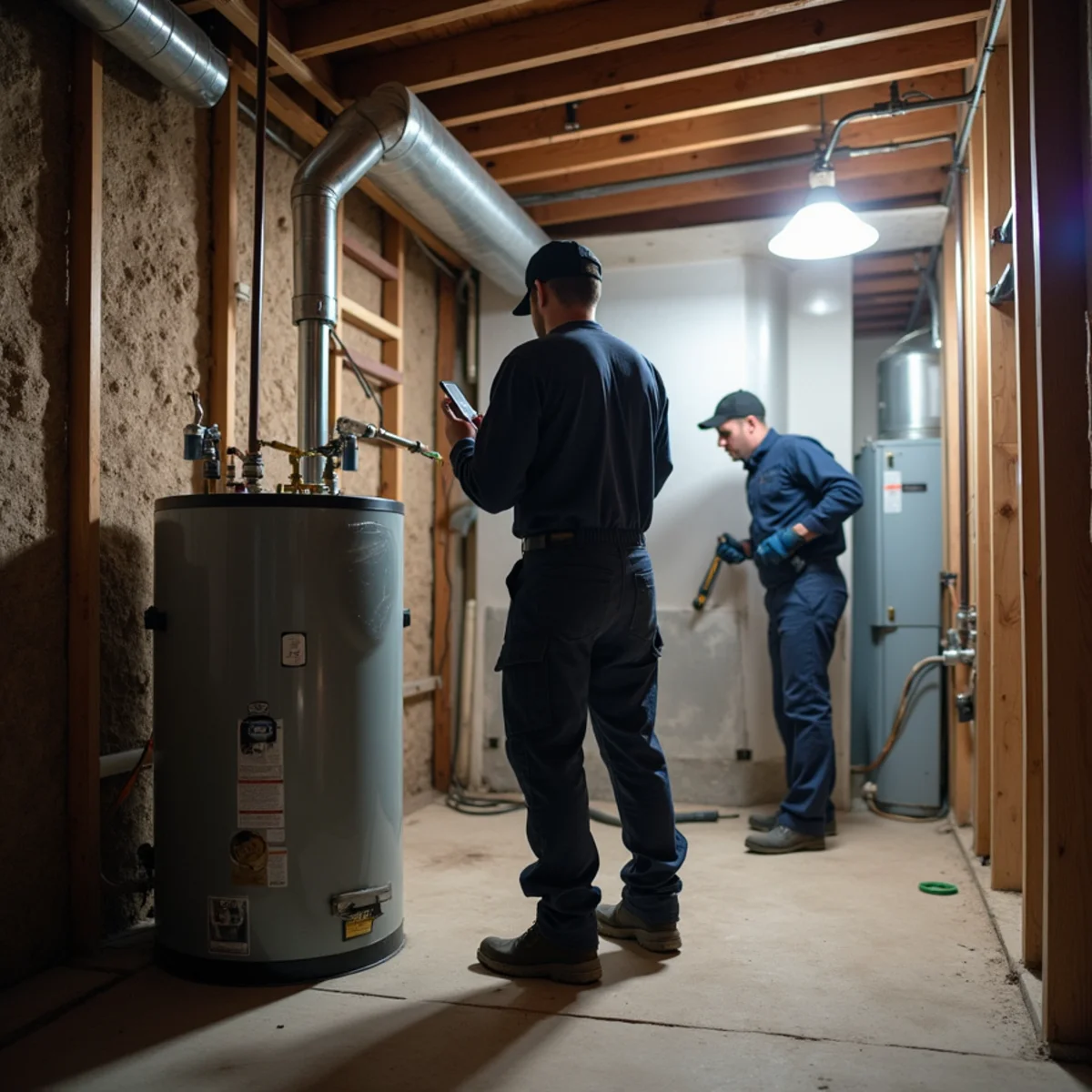
High priority service · Carlisle, PA
Oil-to-Gas Conversion in Carlisle, PA
Fuel conversion is one of the few HVAC projects where the equipment is the easy part. The hard parts are whether a gas main runs down your street, what the utility charges to bring service to the meter, what the venting change requires, and what happens to the oil tank sitting in your basement.
Same-day emergency service across Cumberland County 4.9/5 from 214+ reviewsLicensed & insured
- 4.9 ★
- 214+ local reviews
- 18 yrs
- Serving Cumberland County
- 24/7
- Emergency dispatch
- 100%
- Satisfaction guarantee
We handle all of it, and — importantly — we tell people when the answer is no. If your street has no main and the tap fee is five figures, converting to natural gas is not your project. A cold-climate heat pump or a modern high-efficiency oil unit probably is.
That distinction matters a lot around Carlisle. The borough has gas coverage. South of I-81 through South Middleton and much of Dickinson Township, it largely does not, which is exactly why oil and propane still heat so many houses out there.
Reasons homeowners start this conversation
- Delivered oil or propane prices that swing unpredictably every winter
- An aging oil furnace or boiler already at the end of its service life
- A buried or basement oil tank approaching the age where leaks become a real liability
- The smell of oil in the basement, or a tank showing weeping seams and surface rust
- A gas main recently extended down the street
- Wanting to consolidate cooking, water heating, and space heating onto one fuel
- Planning to sell, where oil heat and an old tank are a negotiating point for buyers
Recognise any of these? Do not wait for it to get worse.
Same-day emergency service across Cumberland County. Licensed technicians, 214+ local reviews, and written options before any work starts.
Step one: is gas even available to you?
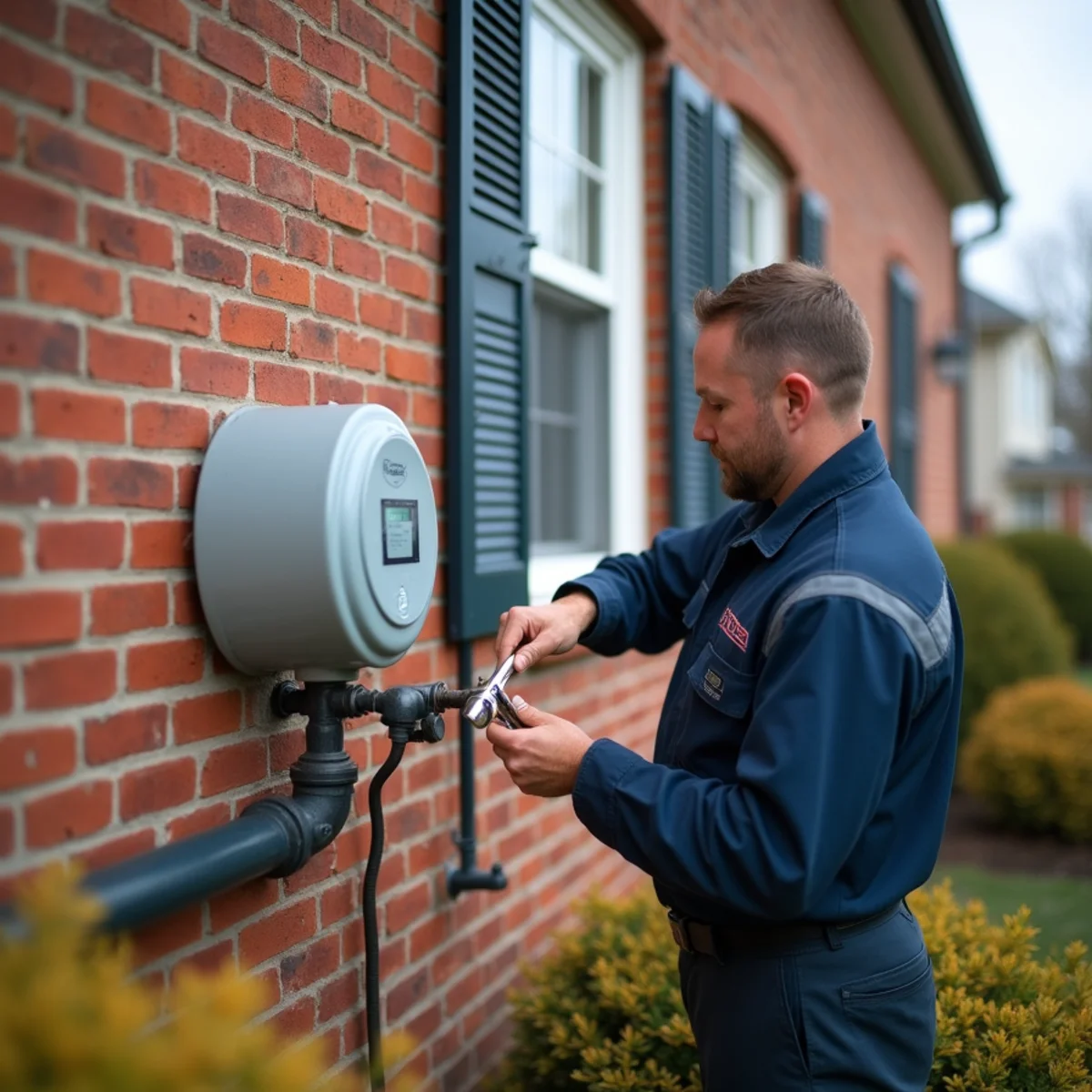
Before anything else, we confirm whether a distribution main runs on your street and what the utility will charge to run service to the house and set a meter. That number varies enormously — from little or nothing on a street with an existing main and available capacity, to many thousands where the main has to be extended down the block.
We help you get that answer from the utility in writing, because the conversion math is meaningless without it. It is genuinely common for the utility cost to be the largest single line in a conversion budget.
If gas is not realistic, we pivot the conversation rather than forcing the project. In much of South Middleton, Dickinson, Penn Township, and out toward Newville and Plainfield, a cold-climate heat pump with the existing furnace kept as dual-fuel backup is the better economic answer — and it can be installed without waiting on anyone else’s construction schedule.
What the conversion actually involves
- Utility coordination for the service line, meter set, and any main extension
- Interior gas piping sized for the total connected load — furnace, water heater, range, dryer, and any future appliances
- New gas furnace or boiler, sized by load calculation rather than matching the old oil unit’s output
- Venting: usually PVC sidewall on a condensing unit, or a properly sized liner if the appliance stays on the chimney
- Chimney evaluation, since removing the oil appliance often leaves a water heater orphaned in an oversized flue
- Condensate drain, trap, neutralizer where required, and float-switch protection
- Electrical verification and a new thermostat configured for the new equipment
- Oil tank decommissioning: pumping remaining fuel, cleaning, and removal or approved in-place abandonment
- Oil line abandonment and removal of the old burner, tank fill, and vent piping
- Permits, inspections, and closeout documentation
The oil tank, handled properly
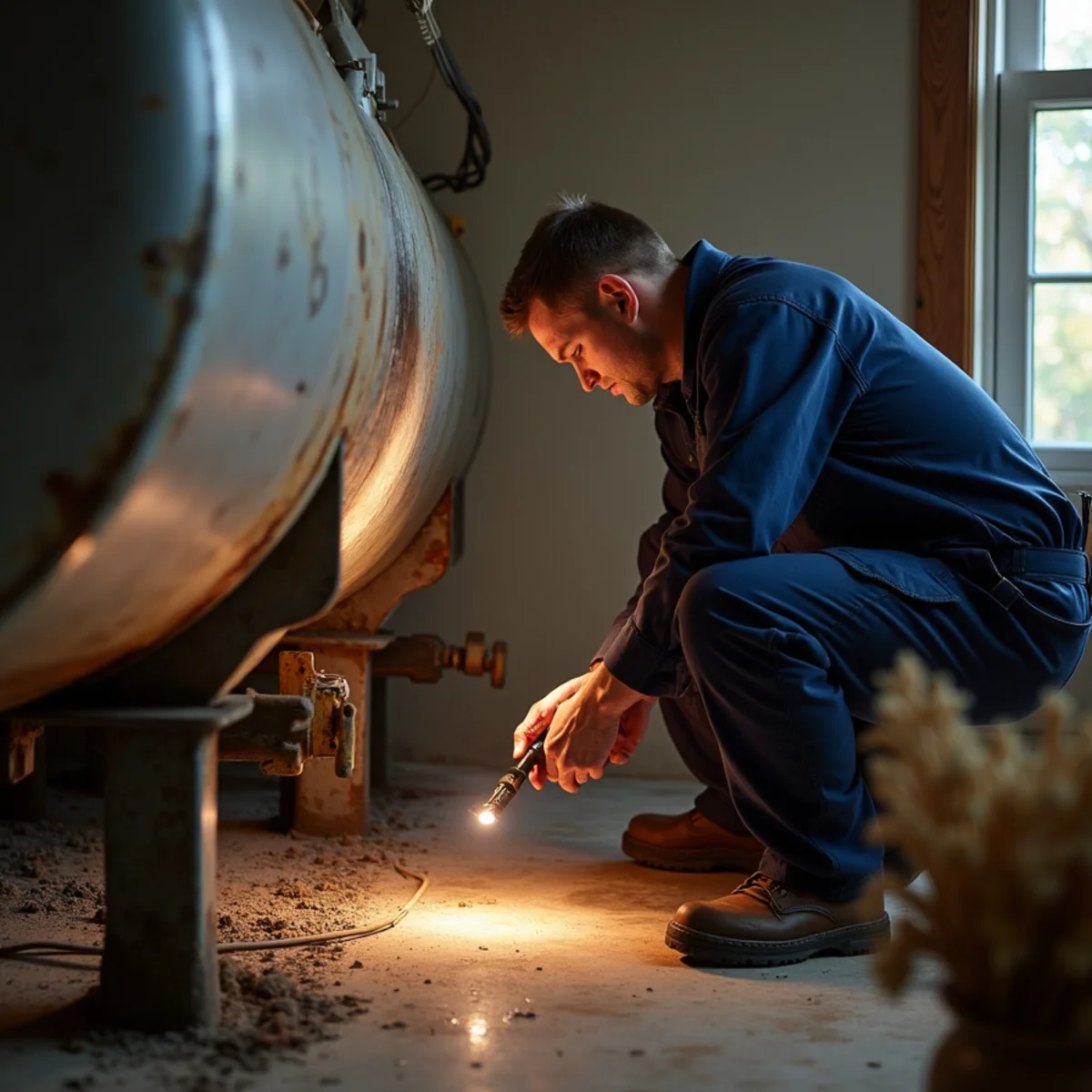
An aboveground basement tank is straightforward: pump out the remaining oil, clean the tank, cut and remove it, cap the fill and vent lines, and patch the exterior penetrations.
A buried tank is a different matter entirely, with environmental considerations that go beyond HVAC work. We coordinate with a qualified tank contractor rather than pretending it is a routine removal, and we tell you up front that soil conditions can turn it into a larger project.
Do not let a contractor simply leave an old tank full and forgotten in the basement. It is a liability at sale, and a slow seep from a corroded seam is a remediation bill that dwarfs the cost of doing it correctly now.
The honest payback conversation
Conversion payback depends on three things that all move: the price spread between oil or propane and natural gas, your actual annual consumption, and the total installed project cost including the utility’s charge.
We build that comparison with your real delivery records — bring us two or three years of oil bills and we will use your gallons, not an average. Then we compare it honestly against two alternatives: replacing with a modern high-efficiency oil unit, and a dual-fuel heat pump conversion.
Sometimes gas wins clearly. Sometimes the heat pump does. Occasionally the right answer is a good oil furnace and insulation work with the difference. We would rather tell you that than sell you a conversion you will not recover.
Gas line and meter capacity, which quietly decides what you can install
Having gas at the property is the first question and it is not the last one. The service line and meter have a capacity, and everything gas-fired in the house draws against it: the new furnace, the water heater, a range, a dryer, a fireplace insert, and anything you are planning to add later.
Undersized interior piping is the more common problem and it produces symptoms that get blamed on the appliance. A furnace at the end of an inadequate run cannot maintain manifold pressure when the water heater fires at the same time, so it underperforms or drops out intermittently in exactly the conditions that make it hardest to diagnose.
We size the piping for the total connected load rather than for the furnace alone, and where the meter needs upgrading we establish that with the utility before the equipment is ordered rather than after it is installed.
- Total connected load calculated, not just the new appliance
- Interior pipe sizing checked against run length and fittings, which both cost pressure
- Meter capacity confirmed with the utility before equipment is ordered
- Future appliances discussed now, because upsizing later means opening walls twice
- Manifold pressure verified under simultaneous load, not with everything else off
The option nobody offers: staying on oil with better equipment
Conversion is not automatically the right answer, and we would rather say so than sell it by default. Where the gas connection charge is high because the main is a long way off, or where the existing oil equipment is relatively young and in good condition, modernising what you have can beat converting on straightforward arithmetic.
A properly set up oil burner with a correctly sized nozzle, clean combustion and a well-maintained tank runs far better than most people assume, and the gap between a neglected oil system and a well-tuned one is frequently larger than the gap between oil and gas.
The honest comparison includes the connection cost, the equipment cost, the disposal of the tank, and the realistic operating cost of each option using your own consumption. Sometimes that arithmetic says convert. Sometimes it says spend a fraction of the money on the system you have and revisit in five years.
Our conversion process
- 1
Availability check
Confirm the gas main, service route, and the utility’s cost to bring service and set a meter.
- 2
Load calculation and options
Correct equipment sizing, plus a side-by-side against high-efficiency oil and dual-fuel heat pump alternatives.
- 3
Consumption analysis
Your actual gallons over two to three seasons against projected gas usage — real numbers, not averages.
- 4
Written scope
Every element itemized: piping, equipment, venting, chimney work, tank decommissioning, permits, and exclusions.
- 5
Coordinated installation
Utility scheduling, gas piping, equipment set, venting, condensate, and electrical.
- 6
Tank decommissioning and closeout
Tank handled, lines capped, commissioning readings taken, permits closed, documentation delivered.
What drives conversion project cost
We do not publish flat prices, because a price without a diagnosis is a guess. What we can do is tell you exactly what moves the number so you can compare quotes on scope rather than on a headline figure.
- Utility charges for the service line, meter set, or main extension — frequently the largest single item
- Length and complexity of interior gas piping and the total connected appliance load
- Equipment: furnace versus boiler, efficiency tier, and capacity
- Venting scope, including chimney liner needs for an orphaned water heater
- Oil tank type — aboveground basement versus buried, and the condition it is in
- Whether other appliances are converting at the same time, which improves the economics
- Permits and inspections for gas, mechanical, and electrical work
A note on the ranges we quote elsewhere on this site
Any dollar figures published here are Pennsylvania statewide planning proxies for budgeting purposes — not confirmed Carlisle quotes. Final pricing requires a site assessment, and we put every line item in writing before you approve anything.
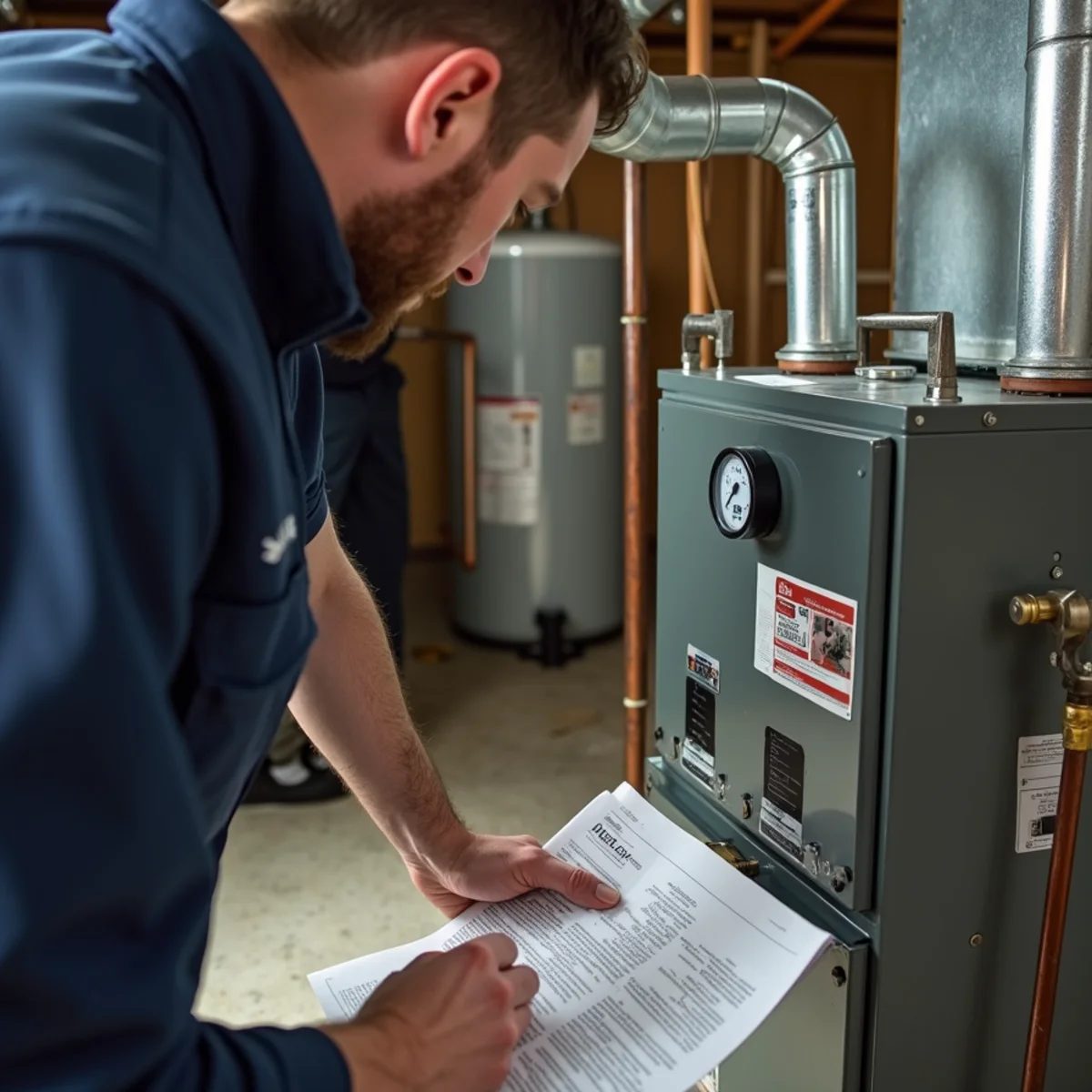
Why Carlisle homeowners pick us for oil-to-gas conversion
The utility number comes first
We help you get the service line and meter cost in writing before we quote anything, because it is frequently the largest single line in the project and nothing downstream means much without it.
We tell you when not to convert
No main on your street means this is not your project, and no amount of equipment shopping changes that. We will say so and price a modern oil unit or a dual-fuel heat pump instead.
The tank handled properly
Pumped, cleaned, cut out and removed, with fill and vent lines capped and penetrations patched. Buried tanks go to a qualified tank contractor — we do not pretend that is routine work.
Payback from your own gallons
Bring two or three years of delivery tickets and we build the comparison on your actual consumption, then divide the real project cost by the real annual saving. Sometimes the answer is that it does not pay.
We price the option that keeps your money
Where the connection cost is high or the oil equipment is sound, modernising what you have can beat converting — and we will show you that arithmetic.
18 years serving Cumberland County · 214+ reviews · EPA Section 608 Universal certified technicians · NATE-certified service technicians · PA Home Improvement Contractor — registration number available on request · 100% satisfaction guarantee on every repair and installation
Where we provide oil-to-gas conversion
Conversions are realistic in Carlisle Borough and the developed corridors where gas distribution already runs — Schlusser, the East High Street corridor and parts of North Middleton and Middlesex Township.
South and west of I-81 the answer is usually different. South Middleton, Dickinson Township, West Pennsboro, Penn Township and the farm country around Newville and Plainfield have no main, which is exactly why oil and propane still heat those houses. There we quote electrification instead.
Frequently asked: oil-to-gas conversion in Carlisle
The equipment side tracks a standard furnace or boiler replacement — Pennsylvania planning proxies put a gas furnace around $3,000–$7,500. What separates conversions is everything else: the utility’s charge to bring service, interior gas piping, venting changes, chimney work, and tank decommissioning. That total varies enormously by address, which is why we get the utility number in writing before we quote.
In Carlisle Borough, usually yes. South of I-81 through much of South Middleton and Dickinson Township, often no — those areas have no distribution main, which is exactly why oil and propane remain the primary heat there. We confirm your specific address with the utility rather than guessing from the neighborhood.
An aboveground basement tank gets pumped out, cleaned, cut up, and removed, with the fill and vent lines capped and the exterior penetrations patched. A buried tank requires a qualified tank contractor and carries environmental considerations we will not minimize. Leaving a tank full and forgotten is the one option we will not recommend.
It depends on whether gas is available and what the utility charges. Where a main runs past the house and the tap is inexpensive, gas conversion is often the strongest economics. Where there is no main — most of the rural county — a cold-climate heat pump with your existing furnace kept as dual-fuel backup usually wins, and it does not depend on anyone else’s construction schedule.
The work in your house is typically two to three days. The overall timeline is set by the utility: scheduling the service line and meter can take weeks to months depending on their queue and whether a main extension is required. We start that process first and schedule the mechanical work around their date.
Usually not, but it needs checking rather than assuming. A gas furnace replacing an oil furnace generally connects to the existing distribution, so the ducts stay. What changes the answer is whether that duct system was adequate in the first place. If static pressure is already high, the new furnace inherits the same restriction and you will have spent conversion money without fixing the comfort complaint that may have prompted it. We measure before quoting so you know whether you are buying a fuel change, a duct correction, or both.
A straightforward conversion is a one-day job and you are without heat for the working part of that day, not overnight. Where the chimney needs lining, gas piping has to be run a significant distance, or the venting arrangement changes substantially, it can extend into a second day, and we tell you which you are booking beforehand. The utility side, the service line and meter if those are needed, runs on their schedule rather than ours, and we sequence our work so you are not left without heat waiting on a connection date we do not control.
Related services
Often needed alongside oil-to-gas conversion
Furnace Installation
Load-calculated furnace replacement with venting, duct, and electrical work priced up front — not discovered on install day.
Learn moreHeat Pumps
Cold-climate heat pumps designed around a real 21°F design night — with backup heat and defrost behavior explained before you buy.
Learn moreBoiler Repair
Cast-iron, steam, and modern condensing boilers. Zone valves, circulators, aquastats, and radiator balance done properly.
Learn moreFurther reading
Guides on this topic
- Oil-to-Gas Conversion Cost in Carlisle, PA: When the Switch Pays OffThe equipment is the easy part. The utility charge, the venting, and the tank are what decide whether this project makes sense.
- Heat Pump Cost in Carlisle, PA: Rebates & Tax Credits ExplainedThe real cost drivers, why the electrical panel is often the deciding factor, and how to document incentives without being promised a number.
Carlisle neighborhoods we serve
Need oil-to-gas conversion in Carlisle?
Same-day emergency service across Cumberland County. Call and speak to someone who can dispatch a licensed technician, or request a free written estimate and we will call you back.
214+ reviews · 18 years local · Licensed & insured · 100% satisfaction guarantee on every repair and installation
HVAC Carlisle PA122 Beech St, Carlisle, PA 17013
+1 (327) 210-5999