Emergency Guides
AC Failure During a Cumberland County Heat Wave: Your First 5 Steps
The five things to do in the first ten minutes, and how to judge whether this is an emergency or a morning appointment.
By HVAC Carlisle PAPublished Updated 7 min read
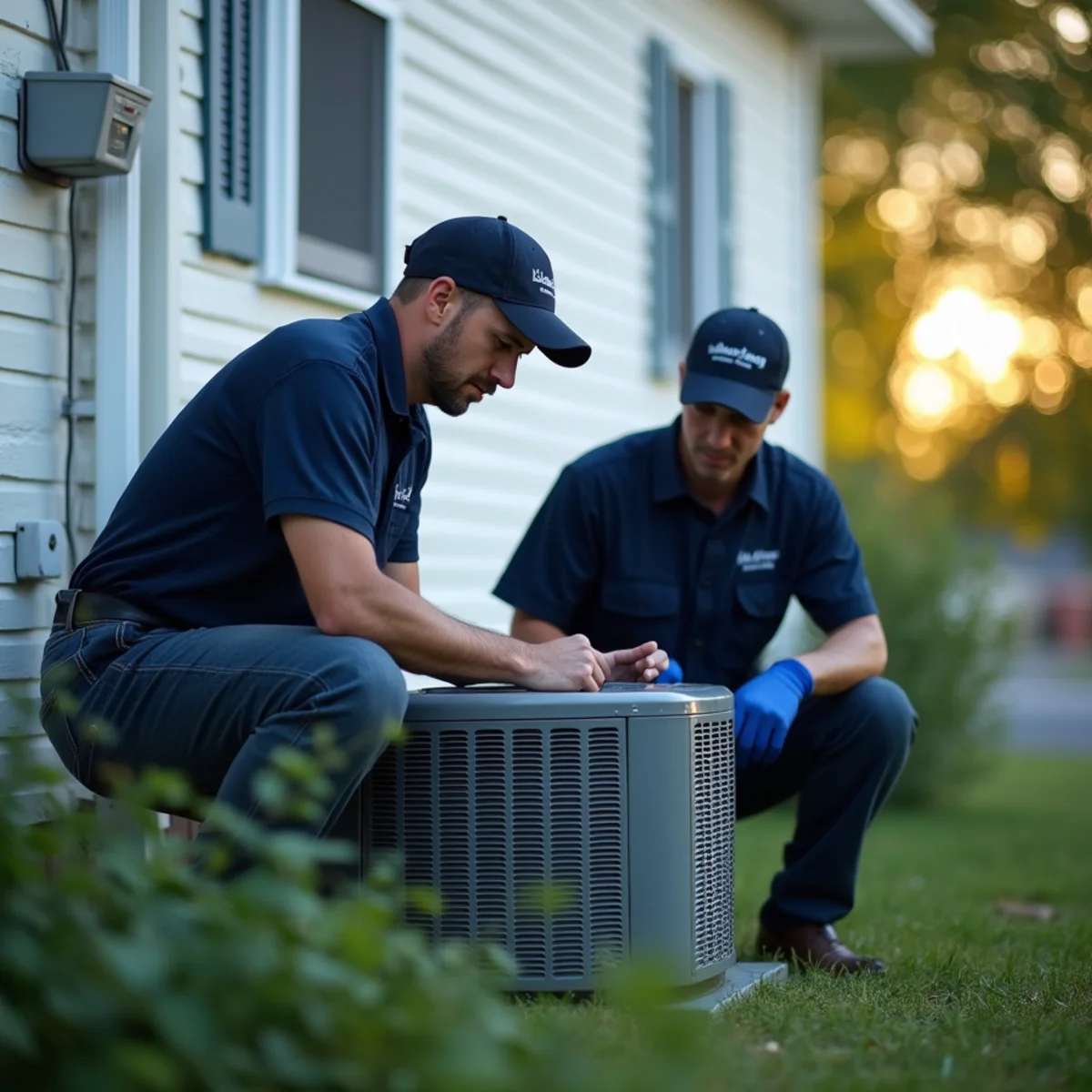
July normals in Carlisle run about 86°F, and during a genuine heat wave the overnight low stays high enough that houses never shed the heat they gained the day before. By the third afternoon, upper floors in rowhomes and twins get genuinely dangerous.
If your air conditioning just quit, here are the first five steps — in order.
Need this handled rather than explained?
Same-day emergency service across Cumberland County. Licensed technicians dispatched from Carlisle, with written options before any work begins.
Step 1: Turn the system OFF, not up
Set the thermostat to OFF and the fan to ON. This matters more than it sounds.
If the indoor coil has frozen — which is extremely common on a no-cool call — continuing to run the compressor against a block of ice is how a capacitor replacement becomes a compressor replacement. Fan-only circulates room air across the coil and melts it, usually within one to three hours.

Step 2: Change the filter
Restricted airflow is the single most common cause of coil icing, and a filter that has been in place since spring is the usual culprit. Change it while the coil thaws.
While you are there, make sure supply registers and the return grille are not blocked by furniture, rugs, or boxes. A closed-off return will strangle the whole system.

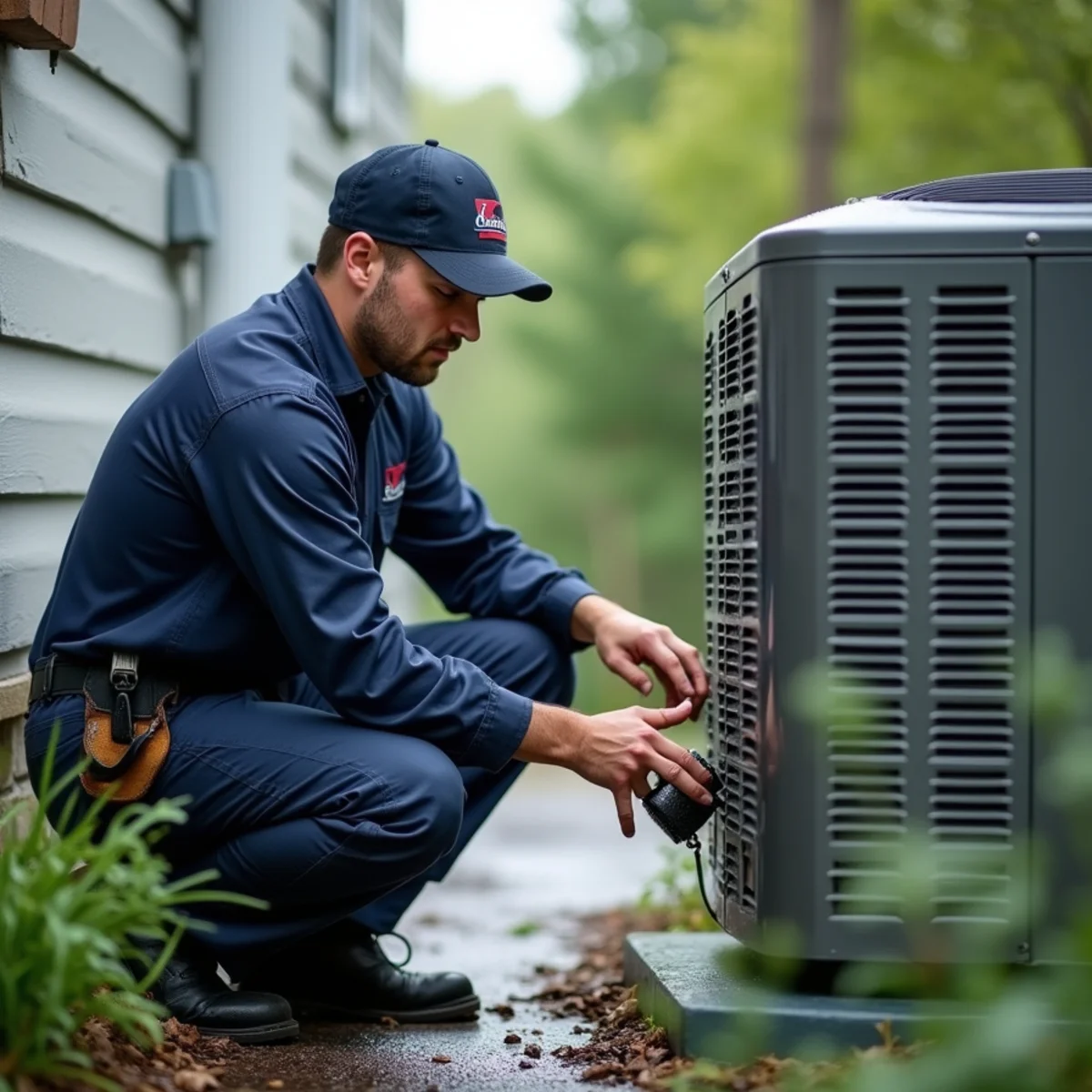
Step 3: Clear the outdoor unit
- Cottonwood fluff, grass clippings, and dryer lint mat onto the coil and block airflow — mid-June is peak season for this in Cumberland County
- Cut back any plantings within about two feet of the cabinet
- Remove anything stacked against or on top of the unit
- If the coil is visibly matted, a gentle rinse from the inside out with a garden hose helps; never use a pressure washer, which flattens the fins permanently

Step 4: Check power in three places, once each
- The breaker for the air handler and the breaker for the condenser — both, checked once. If one trips again, stop.
- The outdoor disconnect box next to the condenser, which sometimes gets pulled and not reseated
- The float switch near the air handler. If the condensate pan filled, that switch shut the system down on purpose. Clear the drain rather than bypassing the switch — that switch is protecting your ceiling.

Step 5: Decide whether this is an emergency
A hot house is not automatically an emergency. A hot house with the wrong person in it absolutely is.
- Call for emergency service if anyone in the home is an infant, an older adult, pregnant, or has a cardiac, respiratory, or neurological condition
- Call if indoor temperature is above 85°F and still rising in the evening
- Call if anyone shows heat exhaustion signs: heavy sweating, nausea, dizziness, muscle cramps, or a rapid pulse
- Call if water is actively spreading into finished space
- If everyone is healthy and the overnight low is coming down into the sixties, a morning appointment saves you the after-hours premium — and a good contractor will tell you so
Staying safe while you wait
Move to the lowest floor. In Carlisle’s brick rowhomes and twins, third-floor bedrooms routinely run 10–15°F above the first floor during a heat wave, and those upper rooms are where heat illness happens.
Close blinds on south and west exposures during the day. Run bathroom and kitchen exhaust fans to push hot, humid air out. After sunset, a box fan in a window pulling air out does far more than one blowing into a hot room at noon.
Use fans to move air across skin rather than trying to cool the volume of the house — evaporative cooling on your body is what actually helps. Keep hydration going, and check on neighbors who live alone.
Cumberland County opens cooling centers during extended heat events. If someone in the household is genuinely at risk, use one rather than waiting it out.
Who is most at risk in a hot house, and the signs that matter
How urgent a cooling failure is depends far more on who is in the building than on the number on the thermostat. Risk is not evenly distributed, and the people most affected are frequently the least likely to complain about it.
Risk also accumulates across days. A house that cannot shed its heat overnight, common in masonry and in upper floors under a hot roof, starts each day warmer than the last, so the third day of a heat wave is materially more dangerous than the first at the same outdoor temperature.
- Infants and young children, who regulate temperature poorly and cannot tell you they are struggling
- Adults over roughly sixty-five, who feel thirst less reliably and often take medication affecting heat regulation
- Anyone with heart or lung conditions, diabetes, or reduced mobility
- Warning signs needing attention: headache, dizziness, nausea, cramps, heavy sweating with cool clammy skin
- A medical emergency: confusion, no sweating with hot dry skin, rapid pulse, fainting — call 911 immediately
- Check on elderly neighbours as well as your own household, particularly on consecutive hot days
What the technician will actually check, so you know what you are paying for
Cooling diagnostics follow a sequence, and knowing it helps you tell a thorough visit from a quick guess. A technician who arrives, glances at the outdoor unit and quotes a replacement has skipped everything that would establish what is wrong.
The single most useful thing you can do before arrival is turn the cooling off and leave the fan running, because a coil frozen into a block of ice cannot be tested until it has thawed. A system left running against ice wastes the visit and risks turning a modest repair into a compressor replacement.
- Filter and airflow first, since restricted airflow causes a large share of no-cool calls
- Static pressure across the system, which reveals a duct problem masquerading as an equipment problem
- Refrigerant charge assessed by superheat or subcooling, which pressure gauges alone cannot tell you
- Capacitor microfarads against the rated value — the most common single failure in July
- Contactor condition, condenser fan operation and compressor amp draw
- Condensate drain and float switch, a frequent cause of a system that stops for no obvious reason
Related services and areas
Frequently asked questions
One to three hours with the fan running, depending on how much ice built up. Do not try to speed it up with a heat gun or hot water, and do not turn cooling back on until the coil is completely clear — running the compressor against remaining ice can flood liquid refrigerant back to it.
Either the system has lost cooling capacity — low charge from a leak, a failed compressor, or a badly fouled coil — or the load has simply exceeded what it can deliver during an extreme afternoon. Check the temperature split between supply and return air: if it is under about 15°F, the system is not producing meaningful cooling.
Yes, if it is safe to. After-hours dispatch carries a premium, and for a healthy household with a mild overnight low it usually buys very little. If anyone in the house is vulnerable to heat or the indoor temperature is climbing above 85°F, that calculation changes entirely.
There is no fixed number, because humidity and the occupants change the answer substantially. A healthy adult in a house in the mid-eighties is uncomfortable rather than at risk. An infant, an elderly resident or someone with a heart condition in the same house, at high humidity, across consecutive days where the building does not cool overnight, is a genuinely different situation. The practical guidance is to watch people rather than the thermostat: if anyone is showing heat-related symptoms, or if the house is not dropping overnight during a multi-day heat wave, arrange somewhere cooler to stay.
No, and they cost you slightly. A fan does not cool air, it moves it, which helps a person by speeding evaporation from skin. In an empty room the only measurable effect is the motor adding a small amount of heat to the space. Turn fans off in rooms nobody is using and concentrate them where people actually are. There is also an upper limit: above roughly the upper nineties, moving hot air across skin stops being protective for vulnerable people and can accelerate dehydration, which is the point to relocate rather than add another fan.
Yes, once the outdoor temperature has genuinely dropped below the indoor temperature, and then close everything early the following morning before the sun reaches the walls. Running window fans to exhaust hot air from upstairs while drawing cooler air in downstairs is more effective than simply opening windows, because it uses the stack effect deliberately. In a masonry house this single habit is worth several degrees by the following afternoon. The mistake is leaving windows open into the morning, which lets the house take on heat and humidity it then has to lose again.
Talk to a licensed Carlisle technician
HVAC Carlisle PA has served Carlisle and Cumberland County since 2007. We test before we recommend, we put options in writing, and we answer the phone at 2 a.m.
HVAC Carlisle PA · 122 Beech St, Carlisle, PA 17013 · +1 (327) 210-5999