Prevention & Maintenance
Spring AC Tune-Up Checklist for Cumberland County Homes
Book it in March or April. By the first 90°F day in June, everyone else is calling too — and they are calling about failures.
By HVAC Carlisle PAPublished Updated 8 min read
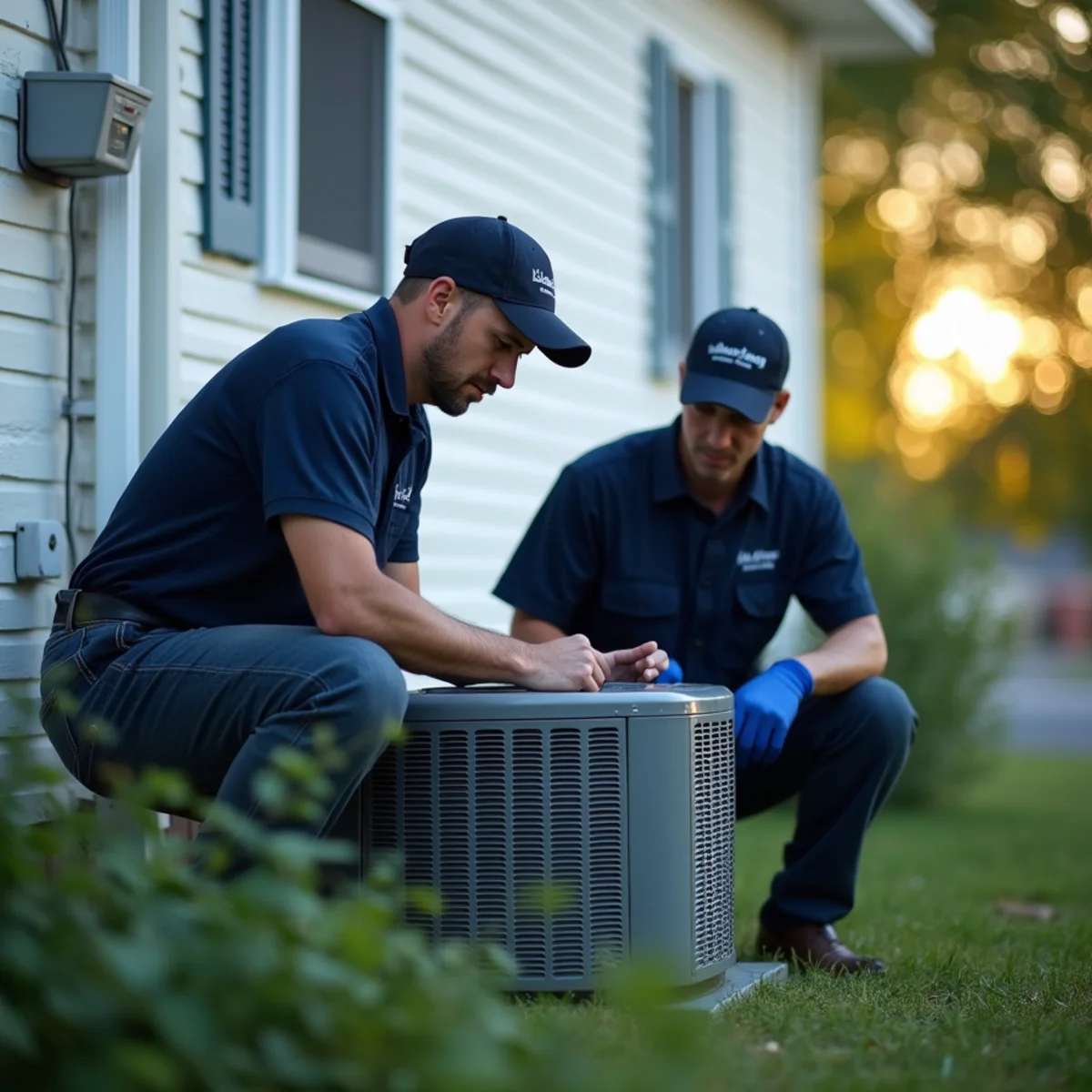
The first genuinely hot week of a Cumberland County summer is when marginal air conditioners fail. It is the first time all year the system is asked to run for six hours straight, and a capacitor that limped through May cannot start the compressor in July.
Spring service exists to find those problems while it is still 60°F outside and there is no queue.
Need this handled rather than explained?
Same-day emergency service across Cumberland County. Licensed technicians dispatched from Carlisle, with written options before any work begins.
What you can do before we arrive
- Replace the filter
- Clear vegetation, mulch, and stored items at least two feet back from the outdoor unit on all sides
- Remove any winter cover — and if you use one, make sure it is a top-only cover, never a full wrap that traps moisture
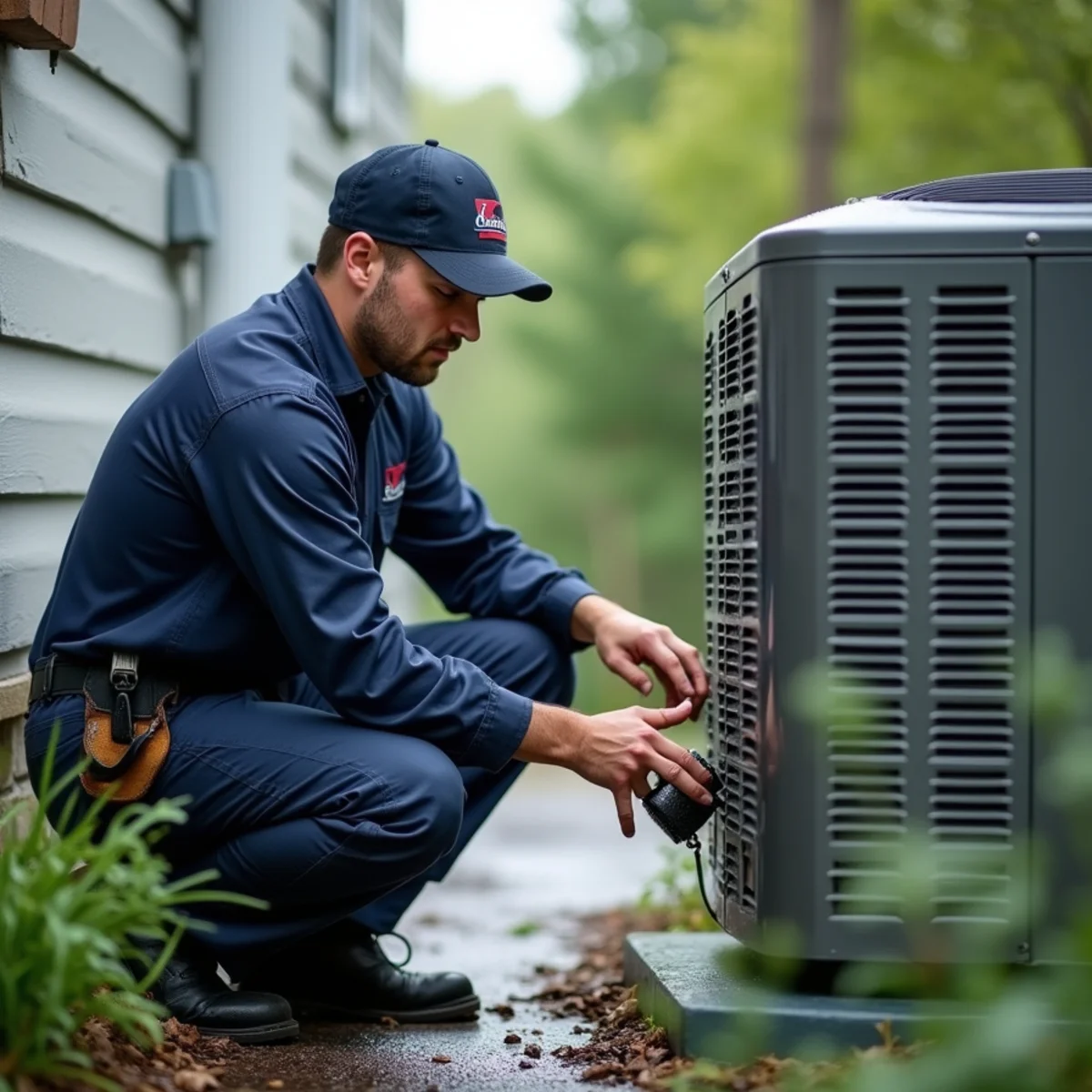
- Gently rinse the condenser coil from the inside out with a garden hose. Never a pressure washer, which permanently flattens the fins.
- Open all supply registers and unblock the return
- Check that the condensate drain line outlet is clear
- Run cooling for fifteen minutes on a mild day in April to confirm it starts and cools before you need it
The professional checklist
- Condenser coil cleaning — a real cleaning, with the top opened, not a rinse from above
- Evaporator coil inspection where access allows
- Refrigerant pressures with superheat and subcooling compared against the manufacturer’s chart
- Capacitor microfarads under load versus the rated value on the can
- Contactor contact condition and inspection for pitting
- Compressor and condenser fan motor amp draw against nameplate rated load amps
- Condensate pan, primary drain, trap, and float switch cleared and tested; pump verified if present
- Temperature split measured across the coil
- Static pressure across filter, coil, and the total system
- Indoor relative humidity measured — comfort is not just a temperature
- Electrical connections inspected and torqued, disconnect and whip checked
- Thermostat operation and cooling staging verified
The humidity readings most tune-ups skip
A tune-up that only checks whether the system produces cold air is missing half the job in a Cumberland Valley summer.
EPA guidance puts healthy indoor relative humidity at 30–50%, and below 60% at all times. A system that holds 72°F while the house sits at 62% relative humidity is not doing its job, and the fix is usually blower speed, staging, or duct sealing rather than more capacity.
Ask for the indoor humidity reading and the temperature split together. A split of roughly 16–22°F with humidity in the forties means a healthy system. A normal split with high humidity means a latent capacity problem worth solving before July.
The cottonwood problem
Mid-June in Cumberland County means cottonwood seed, and it mats onto condenser coils like insulation. Add grass clippings from mowing and lint from a dryer vent aimed the wrong way, and a coil can lose a substantial share of its heat rejection capacity within a few weeks.
A blocked condenser raises head pressure, which raises energy use, reduces capacity, and shortens compressor life. It is also the single most common cause of a mid-summer "my AC stopped cooling" call that turns out to be nothing more than a dirty coil.
Check yours in late June, after the cottonwood has finished. A gentle rinse from the inside out takes ten minutes.
The condensate system deserves its own attention
- The drain pan should be clean and free of standing water and biological growth
- The trap should be cleared — a plugged trap is the most common cause of a mid-summer ceiling stain
- The float switch should be tested by lifting it to confirm it actually shuts the system down
- A condensate pump, if present, should be tested and its check valve verified
- Any drain line above finished space should be inspected along its length for sags where water can stand
- On an attic air handler, the secondary drain pan and its own float switch are the last line of defense for your ceiling — check both
What we look for that predicts a July failure
The whole point of spring service is prediction, and a few readings are genuinely predictive.
A capacitor measuring below its rated tolerance will usually fail on a hot day under load, not on a mild one. A contactor with pitted contacts will weld closed or fail to pull in during a heat wave. A coil that is 30% fouled in April will be 60% fouled in July. Refrigerant that reads slightly low means a leak, and slightly low in spring becomes badly low by August.
Every one of those is a cheap fix in April and an emergency call in July. That is the entire economic case for spring service.
Why routinely adding refrigerant at a tune-up is a red flag
Refrigerant is not a consumable. It circulates in a sealed system and is not used up, burned off or gradually depleted by normal operation. A system that is low on refrigerant has a leak, without exception.
So a tune-up that includes adding refrigerant as a routine annual item is describing an unrepaired leak as maintenance. You pay for the refrigerant every year, the leak continues, and the compressor spends each summer running in conditions that shorten its life.
With R-410A now under a federal phase-down, that arrangement gets worse annually as supply tightens and price rises. The correct response to a low charge is to locate the leak, quote the repair, and let you decide with the numbers visible — not to top it up and book you in again next spring.
Between the tune-up and the first hot week
A spring tune-up typically happens well before the system is genuinely stressed, which is the point of doing it then. It also means several weeks pass before the equipment is asked to do anything demanding, and that gap is worth using.
Run the system deliberately on the first warm day rather than waiting for the first hot one. A twenty-minute run tells you whether it cools, whether it sounds as it should, and whether anything drips where it should not, at a time when a fault is an inconvenience rather than an emergency.
- Run the cooling for twenty minutes on the first mild warm day, not the first heat wave
- Check the condensate is discharging where it should, and that no water is pooling
- Confirm the outdoor unit is clear of the growth that appears through spring
- Note the temperature difference between supply and return air and compare it later
- Check the filter again in early summer, since spring pollen loads them quickly
- Test the thermostat schedule before you rely on it
Related services and areas
Frequently asked questions
March through May. Book before the first genuinely hot week, because that is when marginal systems fail and everyone calls at once. Spring service in mild weather also means a needed part can be ordered without you sitting in a 90°F house waiting for it.
A top-only cover that keeps leaves and debris out of the cabinet is fine. A full wrap is not — it traps moisture against the coil and cabinet, encourages corrosion, and makes an excellent rodent home. If you use any cover, remove it completely before the first cooling call of the season.
Shut power off at the outdoor disconnect. Clear debris from around the unit. Rinse gently with a garden hose from the inside of the coil outward, so you push debris out the way it came in rather than driving it deeper. Never use a pressure washer — it flattens the fins permanently and reduces airflow for the life of the unit.
No. A properly sealed system holds its charge indefinitely, so needing refrigerant annually means there is a leak that has not been repaired. Some contractors present this as routine maintenance, and it is not: you are buying the same refrigerant repeatedly while the underlying fault continues and the compressor operates outside its design conditions. Ask for the leak to be located, using electronic detection or a nitrogen pressure test, and for the repair cost against the value of the equipment. On an older system the honest answer is sometimes that repair is not proportionate, but that should be your decision with the facts in front of you.
Yes, and arguably more than a cooling-only system does. A heat pump runs year round, so it accumulates roughly twice the run hours, and the winter work is hard on it: defrost cycles, reversing valve operation and outdoor coil fouling from a season of weather. Spring is also the point to verify the changeover settings and auxiliary heat lockout are still correct, which is where most excess running cost hides. Ideally a heat pump is seen twice a year, before cooling and before heating, for the same reason a car with double the mileage is serviced more often.
Ask for the readings, and keep them. A genuine visit produces numbers: refrigerant performance expressed as superheat or subcooling, the temperature difference across the coil, capacitor microfarads against rated value, amp draws against nameplate, and static pressure. A report that says only that everything was checked and is operating normally has told you nothing you can compare against next year. The readings are also what make the visit worth repeating, because a value that has drifted since last spring is the early warning the whole exercise exists to provide.
Talk to a licensed Carlisle technician
HVAC Carlisle PA has served Carlisle and Cumberland County since 2007. We test before we recommend, we put options in writing, and we answer the phone at 2 a.m.
HVAC Carlisle PA · 122 Beech St, Carlisle, PA 17013 · +1 (327) 210-5999