Problem-Solving
AC Running But Not Cooling? Carlisle Humidity May Be Why
Comfort is temperature and moisture. If your house is 72°F and still miserable, the second half is the problem.
By HVAC Carlisle PAPublished Updated 8 min read
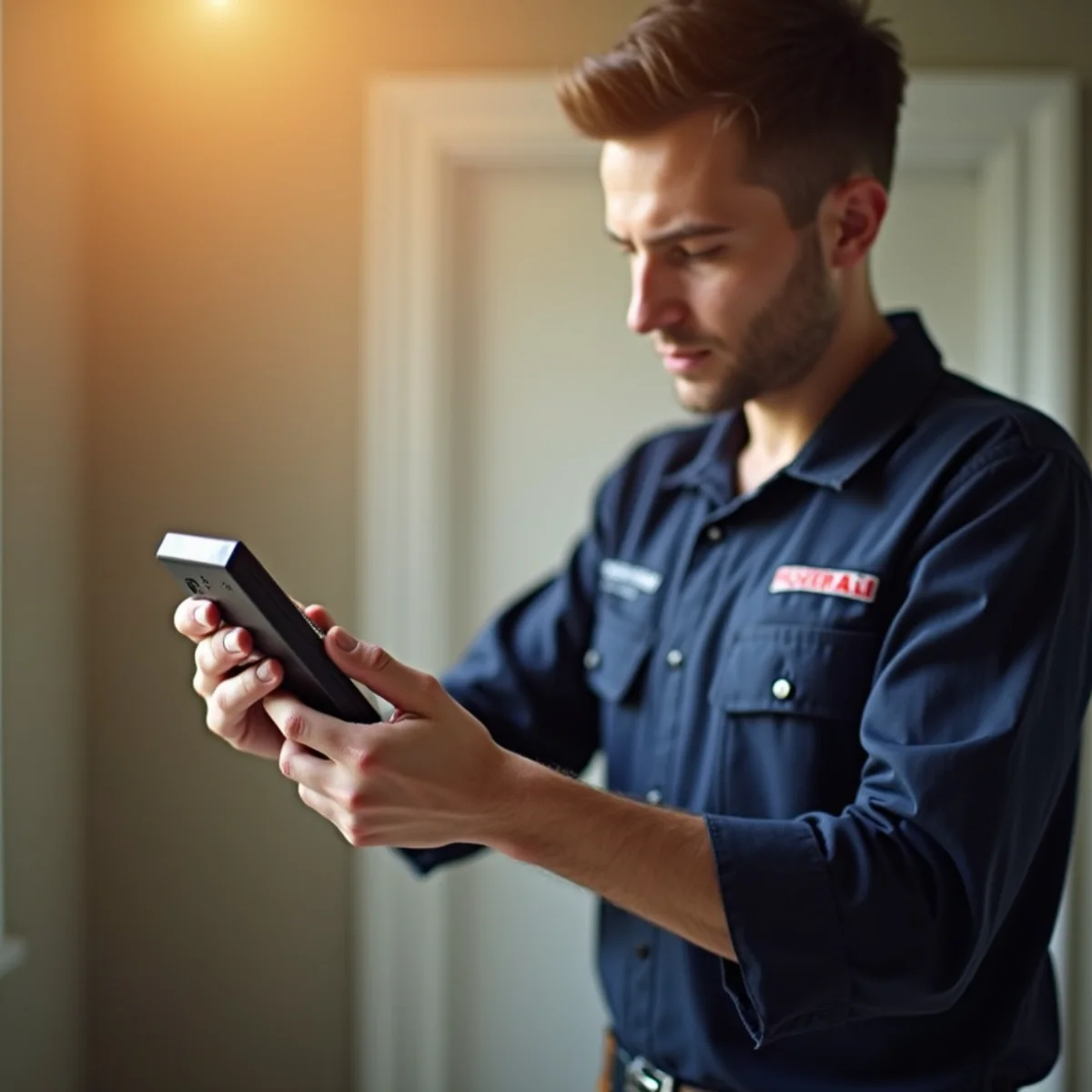
A thermostat measures one thing. Comfort depends on two. A house at 72°F and 62% relative humidity feels considerably worse than the same house at 75°F and 45%, and it is the reason so many Cumberland County homeowners spend summers convinced their air conditioner is failing when it is actually doing exactly what it was sized to do.
EPA guidance puts the healthy indoor range at 30–50% relative humidity, and below 60% at all times. Buy a hygrometer for fifteen dollars before you buy anything else.
Need this handled rather than explained?
Same-day emergency service across Cumberland County. Licensed technicians dispatched from Carlisle, with written options before any work begins.
Sensible load and latent load, in plain English
Cooling does two jobs. Sensible cooling lowers the air temperature. Latent cooling removes moisture — water vapor condensing on the cold evaporator coil and draining away.
In a Cumberland Valley July, with dewpoints that sit high for days, latent load is a large share of the total. Removing that moisture requires the coil to stay cold and wet for a sustained period. It cannot happen in a five-minute cycle.
That is the whole problem in a sentence: dehumidification requires runtime, and oversized equipment is designed not to run.
Why an oversized AC makes it worse
An oversized system cools the air fast, satisfies the thermostat, and shuts off. The coil never runs long enough to condense much water.
Worse, the moisture that did condense sits on the coil during the off cycle and re-evaporates back into the house when the blower runs. You can genuinely end up with a system that adds humidity to the air on short cycles.
So the instinct — my house is uncomfortable, I need more cooling — produces exactly the wrong purchase. We have downsized systems in Silver Spring Township and New Cumberland and had homeowners report the house feels cooler at a higher thermostat setting, which is precisely what proper latent capacity does.
The other causes worth checking first
- Blower speed set too high for cooling — a very common installer default that moves air across the coil too fast to condense moisture
- A dirty evaporator coil, which reduces both sensible and latent capacity
- Low refrigerant charge from a leak, which raises coil temperature and kills dehumidification
- A clogged condensate drain, so the water that does condense has nowhere to go and re-evaporates
- Duct leakage in a humid crawlspace or attic, which pulls moist air directly into the supply stream
- An unconditioned basement or crawlspace contributing moisture that the AC never sees
- Genuine internal moisture sources — a bathroom fan venting into the attic, unvented cooking, a crawlspace with bare soil
The fixes, in order of cost
- Measure. A hygrometer in the room with the complaint tells you whether this is a moisture problem at all.
- Clear the condensate drain and clean the coil — sometimes that is the entire fix
- Adjust blower speed for cooling. Slower air across the coil condenses more water. This is a configuration change, not a purchase.
- Seal ducts, particularly any run through a crawlspace or attic
- Address the moisture source: encapsulate a crawlspace, vent bath fans outdoors, seal the rim joist
- Add a whole-home dehumidifier ducted into the return, with a hard-piped drain
- Replace with correctly sized, properly staged equipment when the existing system is genuinely oversized and near end of life
What "not cooling at all" looks like versus a humidity problem
These are different failures and they need different responses.
A genuine cooling failure shows a small temperature split — measure supply air at a register and return air at the grille. A healthy system produces roughly a 16–22°F difference. Under about 15°F means the system is not producing meaningful cooling, and that is a refrigerant, compressor, or airflow problem needing diagnosis.
A humidity problem shows a normal split, a thermostat that reads at setpoint, and a house that still feels wrong. That is latent capacity, and no amount of adding refrigerant will fix it.
Where this bites hardest in Carlisle
Houses near water are the worst affected: the Conodoguinet floodplain in North Middleton, around Children’s Lake in Boiling Springs, and along the Yellow Breeches through Monroe Township.
So are houses with crawlspaces, which is a large share of the rural county. A vented crawlspace over damp soil in July is a moisture source that no air conditioner upstairs will ever address.
And rowhomes with masonry mass hold moisture in the walls themselves, which shows up as a persistent damp feeling on the lowest floor even when the numbers upstairs look acceptable.
Measuring your own humidity properly
Most of this problem becomes obvious once you have a number, and the number costs very little to obtain. An inexpensive digital hygrometer tells you more about why your house feels wrong than the thermostat does.
Place it away from supply registers, away from exterior doors and away from kitchens and bathrooms, at roughly seated height in the room where the complaint is worst. Leave it for several hours rather than reading it immediately.
Then read it during a cooling cycle and again an hour after one ends. A house that sits at a reasonable level while the system runs and climbs sharply afterward is telling you the cycles are too short, which is the oversizing signature rather than an equipment fault.
- Target roughly 50 percent relative humidity in summer; above 60 supports mould growth
- Measure in the worst room, not the hallway where the thermostat lives
- Take a reading during a cycle and another an hour after it ends
- Check the basement separately — it is frequently the source for the whole house
- Note the temperature alongside it, since the pair together tell you the dew point
Why the upstairs improves last
When humidity is corrected, the ground floor generally responds first and the upper floor lags, which leads people to conclude the fix did not work. Usually it did, and the upstairs has two additional problems the ground floor does not.
The first is that warm moist air rises, so the upper floor receives what the rest of the house sheds. The second is the roof: an attic at high temperature radiates heat downward through the ceiling all afternoon and continues well after sunset, which is a load the cooling system has to overcome before it can address anything else.
This is why insulation and ventilation at the roof plane so often outperform any equipment change for an upstairs complaint, and why an upstairs return is the single most valuable duct modification in a two-storey house here.
Related services and areas
Frequently asked questions
EPA guidance recommends 30–50% relative humidity and below 60% at all times. In practice, most people find 45–50% comfortable in summer. If your house reads above 55% while the AC is running, there is a latent capacity problem worth diagnosing.
Usually yes, and that is part of the point. Removing latent load means the air conditioner has less total work to do, and because dry air feels cooler, most households find they can raise the thermostat two or three degrees and be more comfortable — which reduces runtime and energy use.
The tells are short cycles — under about ten minutes of runtime in hot weather — rapid temperature swings, air that feels blasty, and persistent high humidity despite the thermostat being satisfied. A load calculation confirms it. In a great many Carlisle homes the existing equipment is a half-ton to a full ton above the calculated load.
On AUTO, in almost every case, and this matters specifically for humidity. When the compressor stops, the evaporator coil is wet with the moisture it just removed. If the fan keeps running, it blows air across that wet coil and re-evaporates much of that water straight back into the house. Running continuously can undo a meaningful share of the dehumidification you just paid for. The exceptions are limited: some ventilation and filtration setups require continuous circulation, and some multi-storey houses use low continuous fan to reduce stratification. Absent one of those, AUTO is correct.
Yes, and more than most people expect on west-facing glass. Direct sunlight through a window is a substantial heat gain arriving exactly when the outdoor temperature is peaking. Interior blinds help; exterior shading helps considerably more, because it stops the energy before it passes through the glass rather than after. In practical terms, closing blinds on the sun side through the afternoon and opening them once the sun is off that face is a free measure worth a real fraction of your afternoon cooling load, particularly in rooms with large or unshaded windows.
Because comfort depends on humidity and radiant surfaces as well as air temperature, and a thermostat measures only the last of those. At high indoor humidity, sweat evaporates slowly and the same air temperature feels considerably warmer. On top of that, a ceiling below a hot attic, or a wall that has absorbed afternoon sun, radiates heat at you regardless of what the air is doing. That combination is exactly why oversized cooling produces a house that is cold to a thermometer and unpleasant to sit in, and why humidity control usually improves comfort more than lowering the setpoint does.
Talk to a licensed Carlisle technician
HVAC Carlisle PA has served Carlisle and Cumberland County since 2007. We test before we recommend, we put options in writing, and we answer the phone at 2 a.m.
HVAC Carlisle PA · 122 Beech St, Carlisle, PA 17013 · +1 (327) 210-5999