Cost & Insurance
AC Replacement Cost in Carlisle: What Homeowners Actually Pay
The line items that actually move the number, and the ones contractors leave out to look cheaper.
By HVAC Carlisle PAPublished Updated 9 min read
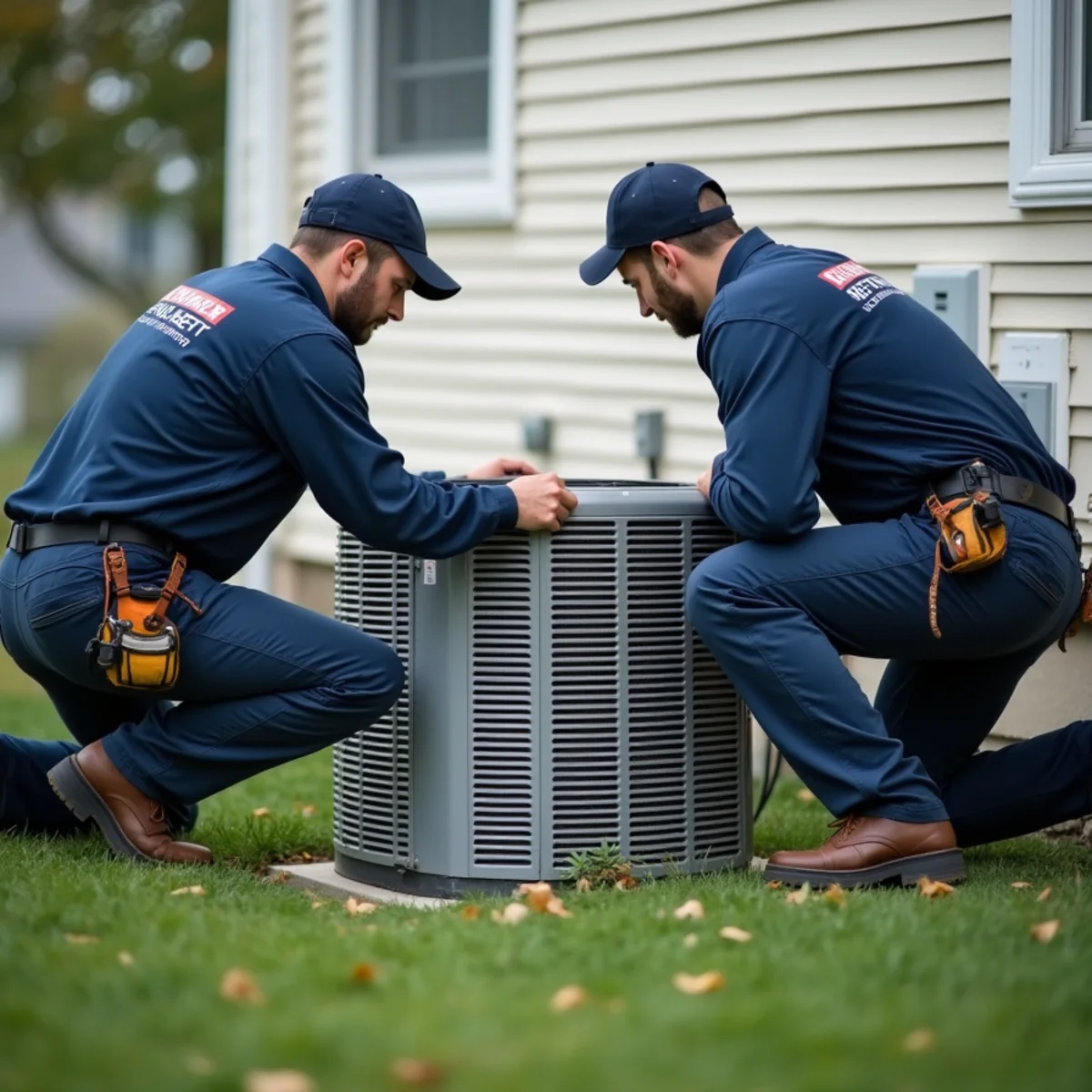
Pennsylvania planning proxies put central AC replacement in the $3,500–$8,500 range, and a full AC-plus-furnace changeout at roughly $5,500–$14,000. Those are statewide planning figures, not quotes for your house.
What separates a $4,200 job from a $9,000 job in Carlisle is rarely the equipment. It is the eight other line items below.
Need this handled rather than explained?
Same-day emergency service across Cumberland County. Licensed technicians dispatched from Carlisle, with written options before any work begins.
What is actually in the price
- The condenser and the matched indoor coil — an AHRI-matched pair, not a bargain mismatch
- Refrigerant line set: reused where genuinely safe, replaced where it is not
- Electrical: disconnect, whip, and breaker verification, plus any panel work
- Condensate: drain, trap, secondary protection, float switch, and a pump if there is no gravity drain
- Duct and plenum modifications so the new equipment can actually move its rated airflow
- Pad or riser, leveling, and vibration isolation
- Recovery and legal disposal of the old refrigerant and equipment
- Permit, inspection, and commissioning with documented readings
Tonnage: where most people overspend
The instinct is that bigger is safer. It is the opposite, and it costs you twice — once on the equipment and again every summer in comfort.
An oversized air conditioner satisfies the thermostat quickly and shuts off before the coil has run long enough to remove meaningful moisture. In a Cumberland County July, where a large share of the load is latent, that produces exactly the complaint we hear constantly: 72°F and clammy.
A correct load calculation frequently comes out a half-ton to a full ton below the existing equipment. That is a cheaper unit that delivers a more comfortable house. We have made that recommendation enough times in Silver Spring Township developments to be confident in it.
SEER2: what the efficiency premium buys
SEER2 is the current standard, tested at more realistic duct static pressure than the old SEER rating. Higher is genuinely better, but returns diminish quickly.
Moving from a failed 10 SEER unit to current minimum efficiency is a substantial improvement. Climbing from mid-tier to premium efficiency has a long payback in central Pennsylvania’s cooling season, where we simply do not run air conditioning as many hours as the Gulf states the marketing was written for.
Installation quality matters more than the last few points on the label. A mid-tier unit with a proper deep vacuum, a weighed-in charge, and measured airflow will beat a premium unit installed carelessly, every time.
The line items contractors leave out to look cheaper
A quote that omits these is not cheaper. It is incomplete, and the difference reappears as change orders on install day.
- Duct or return-air modifications, which the new equipment often requires to hit rated airflow
- Line set replacement where the existing one is the wrong size or contaminated
- Electrical work, including a panel with no available slots
- The permit and inspection
- A condensate pump where there is no gravity drain path
- Old equipment disposal and refrigerant recovery
- Commissioning — the vacuum, the weighed charge, and the airflow measurement
Carlisle-specific cost factors
- Historic District and rowhome properties: condenser siting, masonry core drilling, and line-hide work
- Tight lots in the borough and West Shore boroughs, where there may be exactly one viable condenser location
- Older converted duct systems that need real modification, common in Bellaire and the Barracks-area houses
- Floodplain properties near the Conodoguinet, where equipment should be raised
- Carlisle Borough permit scope for the specific work
Financing, without losing the plot
Financing makes an urgent replacement manageable, and there is nothing wrong with it. What there is something wrong with is deciding on the basis of a monthly payment alone.
Compare the cash price, the amount financed, the interest or promotional terms and what happens if a promotional period expires, the term length, any fees, the monthly payment, and the total repayment. Two quotes with identical monthly payments can differ by thousands in total cost.
And never let financing be the reason a scope comparison gets skipped. Compare what the two contractors are actually doing first.
Making three quotes actually comparable
Homeowners routinely collect three quotes and then discover they cannot be compared, because each describes a different scope in different language. Normalising them is straightforward once you know what to hold constant.
The single most useful step is to insist every quote states the outdoor unit model, the indoor coil model and the tonnage. Efficiency ratings only apply to a matched pair, so a quote naming the condenser alone is describing an unknown system.
- Outdoor unit, indoor coil and air handler or furnace models all named, not just the brand
- Tonnage stated, and the load calculation it came from available on request
- Line set: reused or replaced, and if reused, why that is appropriate
- Filter drier, pad, disconnect, whip, condensate management and thermostat — included or not
- Permit and inspection included, and old-equipment removal and refrigerant recovery included
- Labour warranty length, stated separately from the manufacturer parts warranty
What you should be handed when the job is finished
A replacement ends with a package of documents, not just an invoice, and the absence of that package is worth noticing because it usually means steps were skipped rather than merely undocumented.
The commissioning readings matter most. Two identical systems perform very differently depending on whether the charge was set properly and the airflow adjusted, and those numbers are the only evidence that either happened.
Warranty registration is the item most often forgotten and the most expensive to forget, because manufacturers typically require registration within a set window and will otherwise honour only a shorter default period.
- The load calculation the equipment was sized from
- Commissioning readings: refrigerant charge method, subcooling or superheat, airflow, temperature split
- Manufacturer warranty registered in your name, with confirmation
- Model and serial numbers of every component installed
- Permit documentation closed out after inspection
- Written labour warranty terms with start and end dates
Related services and areas
Frequently asked questions
Pennsylvania planning proxies run about $3,500–$8,500 for a central AC replacement and $5,500–$14,000 with the furnace included. Those are statewide planning ranges. Your figure depends on tonnage, efficiency tier, line-set condition, duct modifications, electrical work, condensate routing, and access — which is why an honest quote follows a site visit.
Generally no, and you should be cautious of anyone who offers to. The indoor coil and outdoor unit are engineered as a matched pair; mismatching them costs capacity and efficiency, and it typically voids the manufacturer warranty. If your existing coil is genuinely compatible and in good condition, we will tell you — but that is the exception.
Carlisle Borough materials indicate separate HVAC permits are required, with the exact requirement depending on scope — electrical changes in particular can affect what review applies. A contractor who suggests skipping the permit is telling you something about how they work. We pull it and handle the inspection.
Usually because it describes a smaller scope rather than a better price. The common omissions are a new indoor coil (leaving a mismatched pair that will not deliver the rated efficiency), the permit, refrigerant line work, a filter drier, proper condensate management, or removal and disposal of the old equipment. Sometimes it is a shorter labour warranty, which is a real cost moved into your future. Occasionally it is genuinely a leaner operation with lower overheads. Line the quotes up against the same scope checklist and the gap usually explains itself.
Yes, and it also performs worse, which is the part people find counterintuitive. An oversized system reaches the thermostat setpoint quickly and shuts down, so it runs in short bursts. Compressors are least efficient during start-up, so short cycling raises consumption. More importantly, dehumidification only happens while air moves across a cold coil, so a system that satisfies in six minutes cools the air without drying it, and the house feels clammy at a temperature that should be comfortable. People then set it lower, which costs more again. Correct sizing is cheaper to buy and cheaper to run.
With annual maintenance, a well-installed system should give you a good many years of service, and installation quality affects that more than brand does. What shortens it here specifically is running with a refrigerant leak, which makes the compressor work in conditions it was not designed for; a chronically dirty condenser coil, which raises head pressure; and restricted airflow from a duct system nobody measured. All three are avoidable and all three are found during routine service, which is the practical argument for maintaining a system rather than waiting for it to fail.
Talk to a licensed Carlisle technician
HVAC Carlisle PA has served Carlisle and Cumberland County since 2007. We test before we recommend, we put options in writing, and we answer the phone at 2 a.m.
HVAC Carlisle PA · 122 Beech St, Carlisle, PA 17013 · +1 (327) 210-5999