Commercial & Property Managers
Carlisle Property Managers: The Between-Tenants HVAC Checklist
Twenty minutes at turnover prevents most of the mid-lease emergency calls you will otherwise take.
By HVAC Carlisle PAPublished Updated 7 min read

Turnover is the only moment you have full access, no occupant, and a natural reason to be in the unit. It is the cheapest time to find problems and the only practical time to document condition.
This checklist is built for that window.
Need this handled rather than explained?
Same-day emergency service across Cumberland County. Licensed technicians dispatched from Carlisle, with written options before any work begins.
Inspect and document
- Photograph the equipment data plate — make, model, serial — and record it in your system
- Note equipment age and last service date
- Photograph overall condition, including any corrosion, water staining, or physical damage
- Check the filter, record its exact size, and replace it
- Confirm the thermostat works, is level, and is in a sensible location
- Test both heating and cooling for a full cycle, regardless of season
- Listen. New noises at startup are the earliest warning you will get.
- Record indoor humidity, particularly in a basement unit
The failure points that generate mid-lease calls
- Condensate drain and trap — clear them. A plugged drain in an occupied unit is a ceiling.
- Float switch — lift it and confirm it actually shuts the system down
- Condensate pump, if present — test it and check the check valve
- Capacitor value against the rating on the can. A drifting capacitor fails on the first hot day under load.
- Contactor contacts for pitting
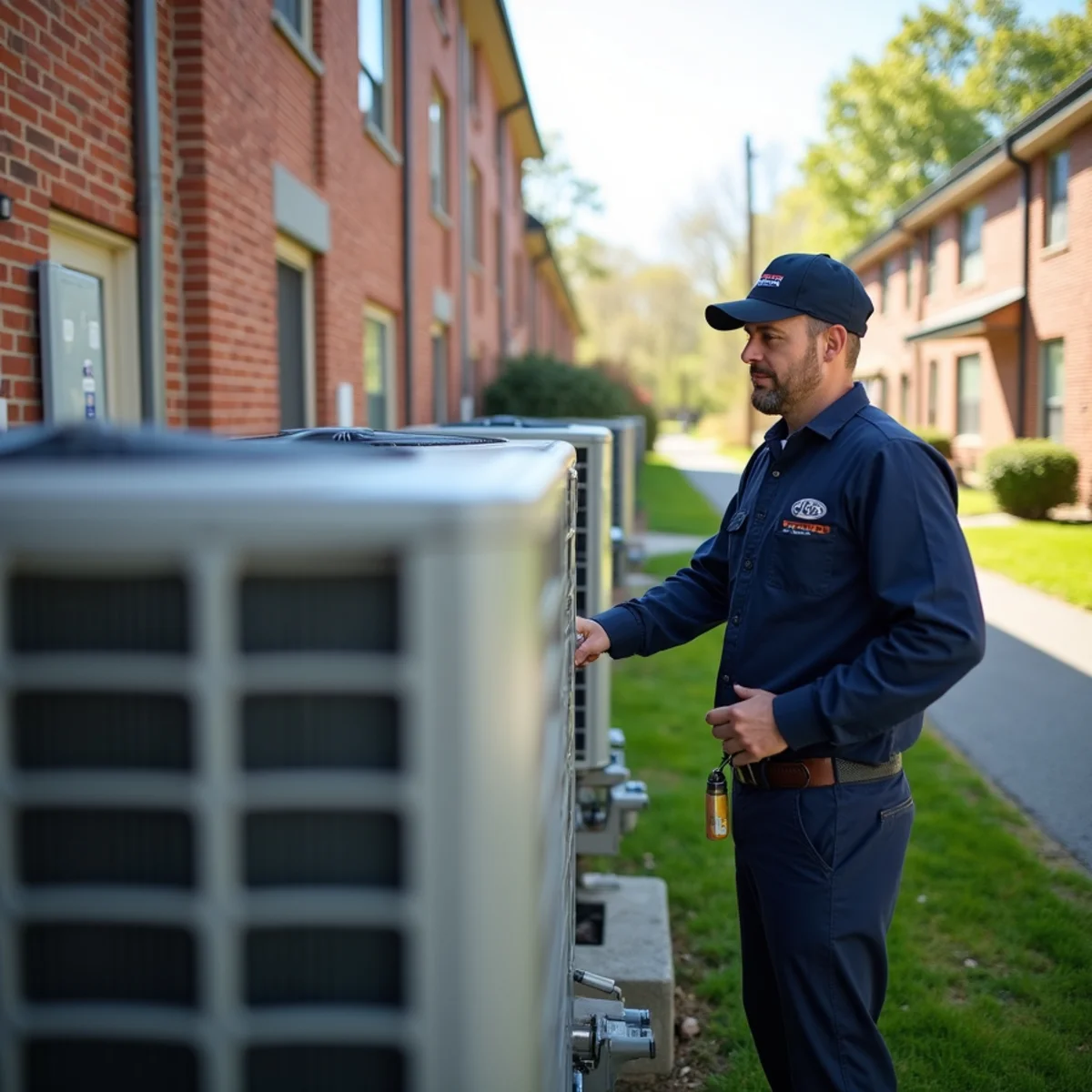
- Outdoor coil condition — clear cottonwood, grass, and debris
- Return grille and supply registers for obstructions left by the previous tenant
- Any duct that has been disconnected, crushed, or blocked by storage
Fix now, not later
Anything on this list that is marginal at turnover will fail during a tenancy, and it will fail at the least convenient moment. The economics are straightforward: a capacitor replaced during a vacant turn costs a fraction of the same capacitor replaced on an emergency call at 8 p.m. in July, with a tenant waiting and a possible rent abatement conversation attached.
The same applies to a marginal contactor, a partly plugged drain, and a filter cabinet that has never been serviced. Do them while the unit is empty.
Set the unit up for the next tenant
- Install a fresh filter and leave two spares, labelled with the size, somewhere the tenant will find them
- Leave written guidance: filter location and interval, where the disconnect is, what to do if the system stops
- Set the thermostat to a reasonable holding temperature — never below 55°F if the unit will sit vacant
- Where you pay utilities, consider a limited-range thermostat
- For extended vacancy, add a Wi-Fi thermostat with a low-temperature alert to your phone, not the tenant’s
- Confirm the outdoor unit is clear and that any protective cover has been removed
The documentation that settles disputes
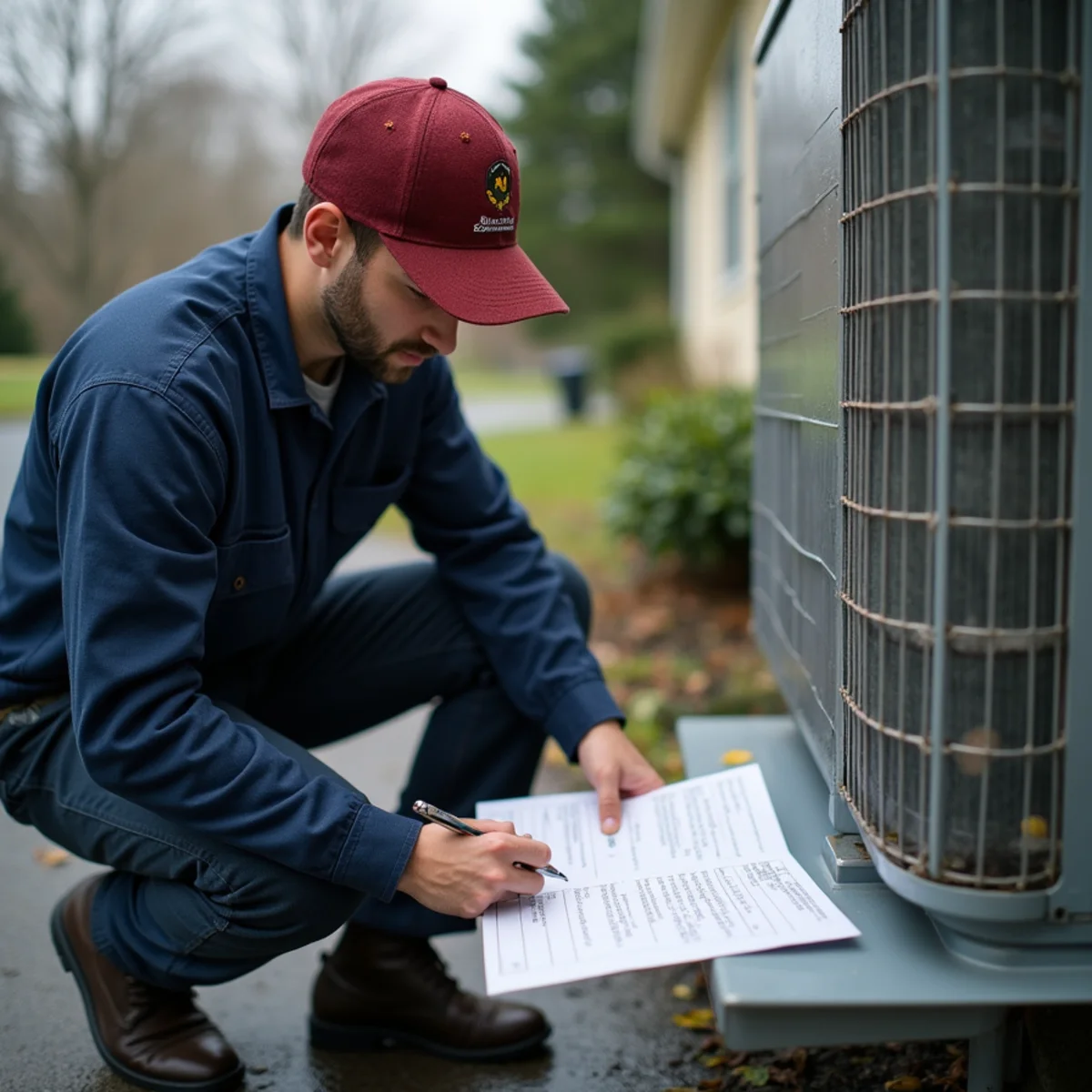
A dated turnover report with photographs and readings does more work than anything else on this list.
It establishes what condition the equipment was in when the tenancy started, which resolves the "it was already broken" conversation before it becomes an argument. It supports a deposit deduction where damage is genuinely tenant-caused. It gives you the trend data to plan replacement rather than react to failure. And for owners you report to, it is evidence that the asset is being managed.
Keep it in the unit file alongside the lease. It takes twenty minutes and it settles most of the disagreements that would otherwise take hours.
Seasonal timing for Carlisle turnovers
A great deal of turnover in this market happens in summer — the Shippensburg and Grantham student cycle, Carlisle Barracks families rotating after a War College year, and the general June-to-August moving season.
That timing is convenient for cooling checks and inconvenient for heating ones, because nobody wants to run the furnace in July. Run it anyway, for one full cycle. Finding a failed igniter in August is a scheduled repair; finding it in November is an emergency call with a new tenant already in place.
For turnovers happening into the winter, add condensate line protection to the list before the unit is occupied.
Building the checklist into the turnover workflow
A checklist that lives in a drawer gets used when someone remembers. A checklist that is a required step in the turnover process gets used every time, and the difference across a portfolio over a few years is substantial.
The practical trick is to attach the HVAC step to something that already always happens. Turnovers reliably involve a clean, a key handover and a condition report, so making the HVAC inspection a prerequisite for signing off the condition report means it cannot quietly be skipped.
- Make the HVAC check a required field on the turnover sign-off, not a separate document
- Book it at the same time as the clean, so the unit is empty and accessible
- Standardise one form across every property so records are comparable
- Set a rule that filters are replaced at every turnover regardless of apparent condition
- Flag any unit where the same fault appears at consecutive turnovers for capital review
- Keep a per-unit history rather than a per-tenancy file, so patterns are visible
Photographs that will still be useful in two years
Turnover photographs settle disputes, but only if they can be found and only if they show what is contested. Most portfolios have thousands of images and no way to retrieve the relevant six.
The fix is naming and consistency rather than volume. The same shots, in the same order, at every turnover, filed under property and date, produces a comparable series where a change between tenancies is immediately visible.
- Data plate of every appliance, so model and serial are always recoverable
- The filter, in place, before it is changed — dated and the single most useful image
- The full equipment from a consistent angle, showing condition and surroundings
- The outdoor unit including surroundings and any damage
- The thermostat screen showing the setting it was left at
- Any pre-existing damage, close enough to be unambiguous
- Filed as property, date, room — not as a phone camera roll
Related services and areas
Frequently asked questions
Twenty to forty minutes for a typical single unit, including running both heating and cooling cycles and clearing the condensate drain. For a portfolio, scheduling several turnovers in one visit brings the per-unit time down considerably.
Yes. Run one full heating cycle regardless of season. A failed igniter or pressure switch found in August is a scheduled repair on an empty unit; the same failure found in November is an emergency call with a tenant in place and possibly a habitability issue attached.
Two spare filters labelled with the size, written guidance on the filter location and interval, where the disconnect and breaker are, and what to do if the system stops. Tenants who know where the filter goes sometimes change it. Tenants who do not, never will.
It sits between a basic inspection and a full tune-up, and the sensible way to buy it is as a defined scope across the portfolio rather than as individual callouts. At minimum it should include operating the system in the mode that is out of season, a filter replacement, a condensate check, a visual and instrumented look at the obvious failure points, and a written report with photographs. Negotiated across several properties with predictable scheduling, the per-unit cost drops considerably. Compare it against one mid-tenancy emergency callout and it is generally the cheaper arrangement by a wide margin.
You should, centrally, and it is one of the easier operational wins available. Holding a small stock of the sizes across your portfolio means a turnover is never delayed by a filter run, the correct size actually goes in, and buying in quantity costs less. Record the size against each unit in your property records so nobody has to measure. Where a property has an awkward or expensive size, that is worth noting as a candidate for a media cabinet at the next opportunity, which standardises the size and extends the interval at the same time.
Your position depends on the lease and on evidence, which is precisely why the move-in and move-out documentation matters more than anything you can do afterwards. A dated photograph of a clean filter and a functioning system at move-in, paired with the same shots at move-out, is what turns an assertion into a claim. Get a written contractor assessment stating what the damage is and what caused it, since a professional opinion distinguishing neglect or misuse from normal wear is what a deposit determination will turn on. Take legal advice before deducting for anything substantial.
Talk to a licensed Carlisle technician
HVAC Carlisle PA has served Carlisle and Cumberland County since 2007. We test before we recommend, we put options in writing, and we answer the phone at 2 a.m.
HVAC Carlisle PA · 122 Beech St, Carlisle, PA 17013 · +1 (327) 210-5999