Problem-Solving
Furnace Short-Cycling in Carlisle: Causes and Fixes
Short-cycling is a symptom with six common causes. Five are repairs. One is a sizing mistake you inherited.
By HVAC Carlisle PAPublished Updated 8 min read
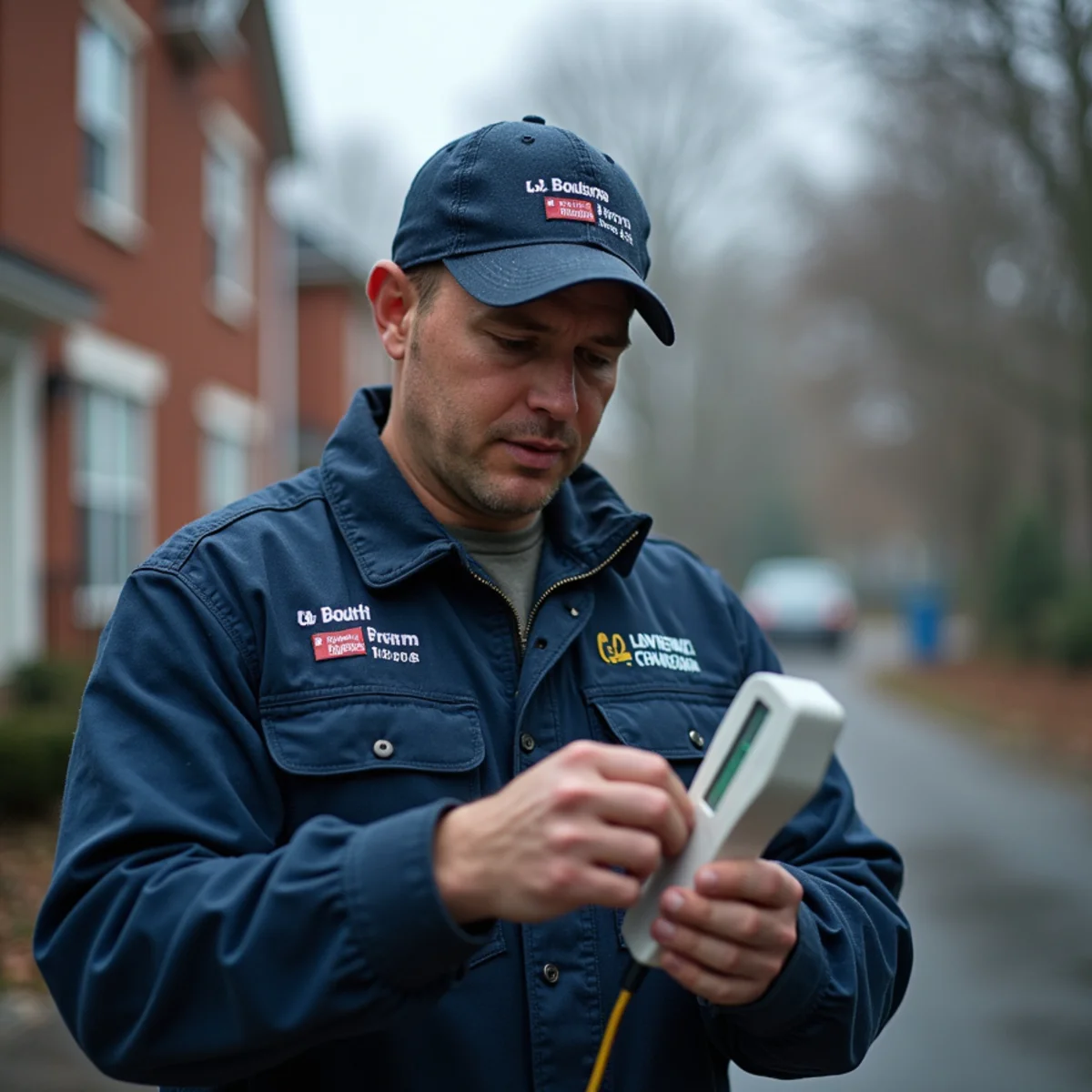
Short-cycling means the furnace fires, runs briefly, shuts down, and starts again a few minutes later. It never completes a proper heating cycle.
It is worth taking seriously. Every startup is the hardest moment in a furnace’s life — the igniter, the inducer, and the blower all take their heaviest wear at ignition. A furnace cycling four times an hour is aging several times faster than one cycling twice.
Need this handled rather than explained?
Same-day emergency service across Cumberland County. Licensed technicians dispatched from Carlisle, with written options before any work begins.
Cause 1: Restricted airflow — start here
This is the most common cause and the easiest to check. When airflow across the heat exchanger is insufficient, the furnace overheats and the high limit switch shuts the burner down. The blower keeps running, temperatures drop, the limit resets, and the cycle repeats.
- A loaded filter — the first thing to check, always
- Closed or blocked supply registers, especially in rooms people have shut off
- An undersized or blocked return grille, which is endemic in older Carlisle homes
- A dirty blower wheel, which loses a surprising amount of capacity when caked
- A dirty evaporator coil sitting above the furnace, restricting the whole system
- Crushed or disconnected duct in a crawlspace or attic
Cause 2: The furnace is simply too big
This is the cause nobody wants to hear because it is not a repair. An oversized furnace produces more heat than the house loses, drives the thermostat to setpoint in a few minutes, and shuts off. Then the house cools, and it does it again.
It is extremely common here, because for decades replacement furnaces were sized by matching the previous unit — which was itself matched to the one before it, sized before anyone insulated the attic or replaced the windows.
The symptoms beyond cycling: uneven temperatures between rooms, noticeable temperature swings, air that feels blasty rather than steady, and blower and igniter components that fail early.
You cannot fix oversizing with a repair. What you can do is mitigate it: correct the airflow, adjust the thermostat cycle rate, and, on a two-stage furnace, make sure it is actually configured to run on low fire rather than jumping straight to high.
Cause 3: The freeze-thaw special — a plugged condensate path
On a 95%+ condensing furnace, the drain path matters as much as the gas line. Carlisle’s freeze-thaw pattern is particularly good at defeating it.
A trap partly filled with slime, a drain line running through an unconditioned crawlspace, or a line exiting a sidewall that freezes overnight all restrict drainage. The pressure switch or float switch trips, the burner shuts down, the ice partially melts during the day, and the furnace runs again — producing an intermittent cycling pattern that follows the weather.
If your furnace short-cycles only during cold snaps and behaves fine in milder weather, look here first.
Cause 4: Thermostat problems
Thermostat placement causes more comfort complaints in older Carlisle houses than almost anything else, and it is cheap to correct.
- Poor location — above a supply register, in direct sun, on an exterior wall, or beside an open stairwell where rising warm air fools it
- Cycle rate configured wrong for the equipment type, which is common after a DIY smart thermostat installation
- Loose or corroded wiring producing intermittent contact
- A failing thermostat with a drifting temperature sensor
Cause 5: Flame sensing and ignition faults
A marginal flame sensor produces a specific pattern: the burner lights, runs sixty to ninety seconds, and drops out. The control tries again, sometimes several times, then locks out entirely.
That is technically a lockout sequence rather than true short-cycling, but from the living room it looks identical. The distinguishing feature is that it eventually stops trying, whereas true short-cycling continues indefinitely.
Flame sensor cleaning or replacement is one of the least expensive repairs there is.
Cause 6: Flue and venting problems
Venting faults are a safety matter, not just a comfort one. If the pressure switch is tripping, it is protecting you.
- A blocked or partly obstructed flue — birds, nests, and debris are common finds in fall
- A deteriorated or disconnected vent connector
- A pressure switch failing to prove draft
- Wind-induced downdraft on an exposed chimney, which is a real factor in Mount Holly Springs where wind funnels through the South Mountain gap
What we measure to tell them apart
- Temperature rise across the heat exchanger, compared against the data plate range — high rise points squarely at airflow
- Static pressure across filter, coil, and total system
- Flame sensor microamps
- Manifold gas pressure against the nameplate
- Limit switch operation and the actual trip point
- Condensate trap and drain path, including any exterior run
- Cycle timing — how long the burner runs, and how long the off period lasts
What you can safely check yourself first
Two of the six causes above are things a homeowner can rule out in ten minutes without tools, and they account for a large share of short-cycling calls. It is worth doing before you book anything.
Everything beyond this list needs instruments. Flame current is measured in microamps, static pressure needs a manometer, and gas pressure needs the manifold tapped, none of which are guesswork exercises.
- Pull the filter and hold it to a light — if you cannot see light through it, that is your first suspect
- Walk the house and open every supply register and return grille, including in unused rooms
- Check nothing is stacked against a return grille, which is a common cause after furniture moves
- Confirm the thermostat is not in direct sun, above a lamp, or on a wall with a duct behind it
- Look at the condensate drain for standing water or ice at the outdoor termination
- Note the flash-code pattern at the control board before calling — it narrows the diagnosis considerably
What short-cycling actually costs you, and how quickly
Short-cycling is not merely annoying. The start-up of any heating cycle is its least efficient phase, so a furnace completing many short cycles burns more fuel to deliver the same heat than one running longer, steadier cycles.
The wear is the larger cost. Ignition components, inducer motors and control relays are all rated by cycle count rather than by running hours, so a furnace cycling three times as often ages those parts roughly three times as fast. An igniter that should last many seasons fails in one or two.
There is a comfort cost as well, and it is the one people notice first without connecting it: rooms furthest from the equipment never receive a full cycle worth of air, so the house feels uneven in a way that no thermostat adjustment resolves.
Related services and areas
Frequently asked questions
Roughly two to three cycles per hour in moderate weather is typical for a correctly sized system, with longer, less frequent runs as it gets colder. Four or more cycles per hour in cold weather usually indicates either an airflow restriction or an oversized furnace.
Yes, over time. The highest wear on an igniter, inducer, and blower occurs at startup, so more cycles means faster wear. It also reduces efficiency, because a furnace running short cycles spends a larger share of its time in the least efficient part of the cycle, and it worsens comfort by producing temperature swings.
It can, if the cycle rate or equipment type is configured incorrectly during installation. Smart thermostats need to be told what kind of equipment they are controlling — gas, heat pump, staging, and so on — and a wrong setting produces cycling patterns that look like an equipment fault. It is worth checking the configuration before assuming the furnace is at fault.
That pattern points strongly at oversizing. On a cold day the demand is high enough that even an oversized furnace runs a reasonable cycle, but on a mild day the house needs a fraction of the furnace output, so it satisfies the thermostat within minutes and shuts down. If your furnace behaves acceptably in January and cycles constantly in October and April, the equipment is almost certainly larger than the house requires. That is not repairable as such, though staging, a better thermostat and correcting airflow can improve how it behaves considerably.
Sometimes, and it is always worth trying first because it costs almost nothing. A loaded filter restricts airflow, which allows heat to build in the heat exchanger until the high-limit switch trips and shuts the burner down. The blower keeps running, the furnace cools, the limit resets and it fires again — a classic short cycle. If a fresh filter resolves it, the underlying lesson is that the filter interval was too long or the filter was too restrictive for the duct system. If it does not resolve it, you have eliminated the cheapest cause.
They can contribute meaningfully. Closing registers does not reduce the air the blower moves, it raises the pressure in the duct system, which reduces total airflow across the heat exchanger. Close enough of them and you reproduce exactly the same high-limit trip a dirty filter causes. It also increases leakage from the ductwork, so more of the heat you paid for ends up in the basement. Opening everything back up is free, and in houses where several rooms have been closed off it is a genuinely common fix.
Talk to a licensed Carlisle technician
HVAC Carlisle PA has served Carlisle and Cumberland County since 2007. We test before we recommend, we put options in writing, and we answer the phone at 2 a.m.
HVAC Carlisle PA · 122 Beech St, Carlisle, PA 17013 · +1 (327) 210-5999