Problem-Solving
Heat Pump Defrost Mode: What Is Normal in a Cumberland County Winter
Steam, a whoosh, and a brief cold draft are normal. A unit encased in ice is not. Here is the line between them.
By HVAC Carlisle PAPublished Updated 7 min read
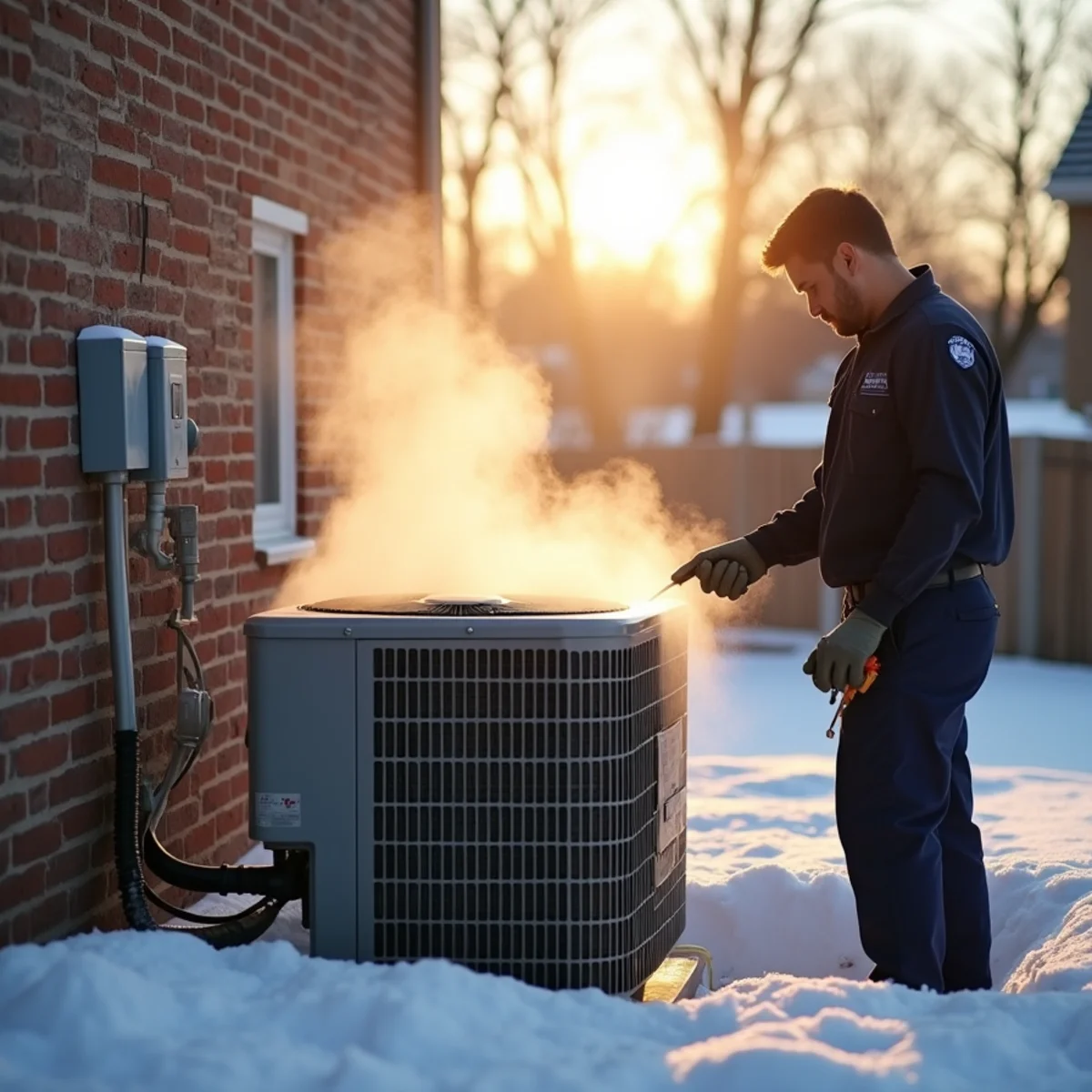
Every winter we get calls from people convinced their new heat pump is broken because it is steaming, making a whooshing sound, and blowing cool air for a few minutes. It is not broken. That is defrost, and it is the system working as designed.
But there is a real line between normal defrost and a fault, and knowing where it falls saves you both an unnecessary service call and a missed genuine problem.
Need this handled rather than explained?
Same-day emergency service across Cumberland County. Licensed technicians dispatched from Carlisle, with written options before any work begins.
Why frost forms in the first place
In heating mode, the outdoor coil is the cold side — it absorbs heat from outdoor air, which means the coil runs below ambient temperature. When outdoor air is cold and damp, moisture condenses on the coil and freezes.
Frost insulates the coil and blocks airflow through it, so the system loses capacity. Left alone, it would eventually stop producing useful heat entirely.
The conditions that produce the most frost are not the coldest ones. Around 30–40°F with high humidity, freezing rain, or fog is the worst case — which describes a great many Cumberland Valley winter days.
What a normal defrost cycle looks like
- The outdoor fan stops while the compressor keeps running
- The system briefly reverses into cooling mode, sending hot refrigerant to the outdoor coil to melt the ice
- You hear a whoosh or a thunk as the reversing valve shifts — this is normal and can be loud
- Steam rises off the outdoor unit as the frost melts. It looks alarming and it is not.
- Indoors, auxiliary heat engages to offset the cold air, so you may feel a brief change at the registers
- The whole cycle takes roughly five to fifteen minutes, then the system returns to heating
- Frequency depends on conditions — every 30 to 90 minutes in bad weather is entirely normal
What is not normal
- The unit is encased in solid ice and never clears — a defrost board, sensor, or reversing valve fault
- Defrost cycles every 15 minutes or less regardless of weather
- A thick ice slab building underneath the unit, which usually means meltwater cannot drain away
- The system defrosts but the ice returns within minutes — often low charge or an airflow problem
- Auxiliary heat running continuously rather than only during defrost and deep cold
- The unit blows cold air indoors with no steam outside and no whoosh — that is not defrost, that is a fault
The mounting height problem
Meltwater has to go somewhere. When an outdoor unit sits on a pad at grade, the water runs off, pools underneath, and refreezes — and over a Carlisle freeze-thaw week it builds a solid shelf of ice under the coil.
That shelf blocks the drain path, so the next defrost cycle has nowhere to send its water, and the problem compounds until the unit is sitting in its own ice.
The fix is riser mounting: brackets or a stand that lift the unit well above grade with clear space underneath. It is standard practice on our installs and it is worth retrofitting on an existing unit that ices under repeatedly.
Auxiliary heat: the setting that quietly doubles your bill
Electric resistance strip heat is the most expensive heat available. It should engage during defrost, during recovery from a deep setback, and below the balance point where the heat pump alone cannot carry the load.
It should not run whenever the thermostat is more than a degree from setpoint, which is exactly what happens when auxiliary staging is misconfigured. This is one of the most common findings we make on heat pumps in Heatherlands and the older Silver Spring developments, and correcting the configuration frequently cuts a winter electric bill noticeably with no equipment change at all.
A practical tip: if your thermostat has an auxiliary or emergency heat indicator, watch it. If it is on more than briefly during defrost and the coldest snaps, get the staging checked.
Why supply air feels cool even when it is working
A furnace delivers air at roughly 120–140°F. A heat pump delivers 90–105°F. Your skin is around 92°F, so heat pump supply air can feel neutral or even slightly cool against your hand while it is genuinely heating the house.
This surprises people converting from a furnace, and it is not a malfunction. The heat is delivered more gradually and more steadily, which many people ultimately prefer once they stop expecting a blast.
What is not normal is supply air that is genuinely cold — under about 80°F — outside a defrost cycle. That warrants diagnosis.
Snow, drifting and clearance around the outdoor unit
A heat pump outdoor unit has to breathe. It pulls a large volume of air across the coil, and anything obstructing that airflow reduces capacity, extends run times and makes defrost cycles less effective at exactly the point in the winter when you need them working.
Snow is the obvious obstruction and drifting is the underestimated one. A unit that is clear on a still day can be buried on the windward side after a night of blowing snow, and the meltwater from repeated defrost cycles can freeze into a solid mass at the base if the drainage is not clear.
- Keep roughly two feet clear on all sides and several feet above the unit
- Clear snow after any significant fall, including drifted snow against one side
- Never chip ice off the coil with anything hard — fins and refrigerant tubing damage easily
- Check the base is draining, since ice building up under the unit blocks the fan and lifts it out of level
- Keep the unit raised on a stand appropriate for local snow depth rather than sitting at grade
- Do not let roof runoff or a gutter discharge onto the unit, which reliably produces an ice block
What an ignored defrost fault costs
A defrost problem rarely announces itself as a breakdown. The system keeps running and the house stays broadly warm, because auxiliary electric heat quietly takes up the slack. The first evidence most people get is a bill.
Underneath that, the unit is working in conditions it was not designed for. A coil that stays iced restricts airflow and drops suction pressure, which risks liquid refrigerant returning to the compressor. That is the failure mode that turns a sensor or a reversing valve fault into a compressor replacement.
It is worth acting on the visual signs specifically because the comfort signal is masked. A unit iced solid, a defrost cycle running every few minutes, or one that never appears to run at all in freezing weather are all worth a call while they are still inexpensive.
Related services and areas
Frequently asked questions
It depends entirely on conditions. In cold, damp weather around 30–40°F with high humidity, every 30 to 90 minutes is normal. In dry cold, considerably less often. Defrosting every 15 minutes or less regardless of weather points at a control or charge problem worth diagnosing.
Warm water is acceptable in an emergency to clear a badly iced unit — never boiling, and never a torch or heat gun. What you must not do is chip at the ice with anything, because puncturing the coil converts a nuisance into a several-thousand-dollar repair. If it ices up repeatedly, the underlying cause needs fixing rather than repeated manual clearing.
No — considerably more expensive. Emergency heat locks out the compressor and runs on electric resistance strips alone, which is the most expensive heat there is. Use it only when the heat pump has genuinely failed, and call for service rather than leaving it that way for weeks.
No. Unlike a summer-only air conditioner, a heat pump runs all winter and covering it obstructs the airflow it depends on, which is actively harmful. If your concern is debris or roof runoff, the correct answer is a solid cover mounted well above the unit that leaves all four sides completely open, or better, redirecting the gutter that is causing the problem. Wrapping the unit, covering the coil or boxing it in will reduce capacity, extend defrost cycles and can cause the compressor to operate in conditions that damage it.
Because that is precisely what defrost is doing. In defrost the system reverses, sending hot refrigerant to the outdoor coil to melt the frost that has accumulated. On a cold day, melting frost produces water and water vapour, which condenses in cold air as visible steam rising from the unit. It looks alarming and it is entirely normal. What is not normal is steam accompanied by a burning smell, or a defrost cycle that runs continuously without ever completing, or ice that persists after the cycle ends.
Turn the system to emergency or auxiliary heat so the house stays warm, then stop and call rather than attacking the ice. Do not chip at it, and do not pour hot water over the unit, which refreezes and typically makes the block larger while risking cracked components. Ice forming at the base almost always means either the defrost cycle is not working or the base drainage is blocked, frequently both, and the underlying cause needs correcting or it will simply recur. Continuing to run it in that state is what turns a modest repair into a compressor.
Talk to a licensed Carlisle technician
HVAC Carlisle PA has served Carlisle and Cumberland County since 2007. We test before we recommend, we put options in writing, and we answer the phone at 2 a.m.
HVAC Carlisle PA · 122 Beech St, Carlisle, PA 17013 · +1 (327) 210-5999