Local Angles
Cold-Air Damming in the Cumberland Valley: Why Carlisle Furnaces Work Harder
Carlisle sits in a bowl between two ridges. That geography shows up on your thermostat and in your equipment sizing.
By HVAC Carlisle PAPublished Updated 8 min read

If you have ever looked at the Harrisburg forecast, seen 26°F, and then walked outside in Carlisle to find frost on everything and a car reading 19°F, you have met cold-air damming.
It is not a rounding error. It is geography, and it has real consequences for how heating equipment should be sized in this valley.
Need this handled rather than explained?
Same-day emergency service across Cumberland County. Licensed technicians dispatched from Carlisle, with written options before any work begins.
The physics, briefly
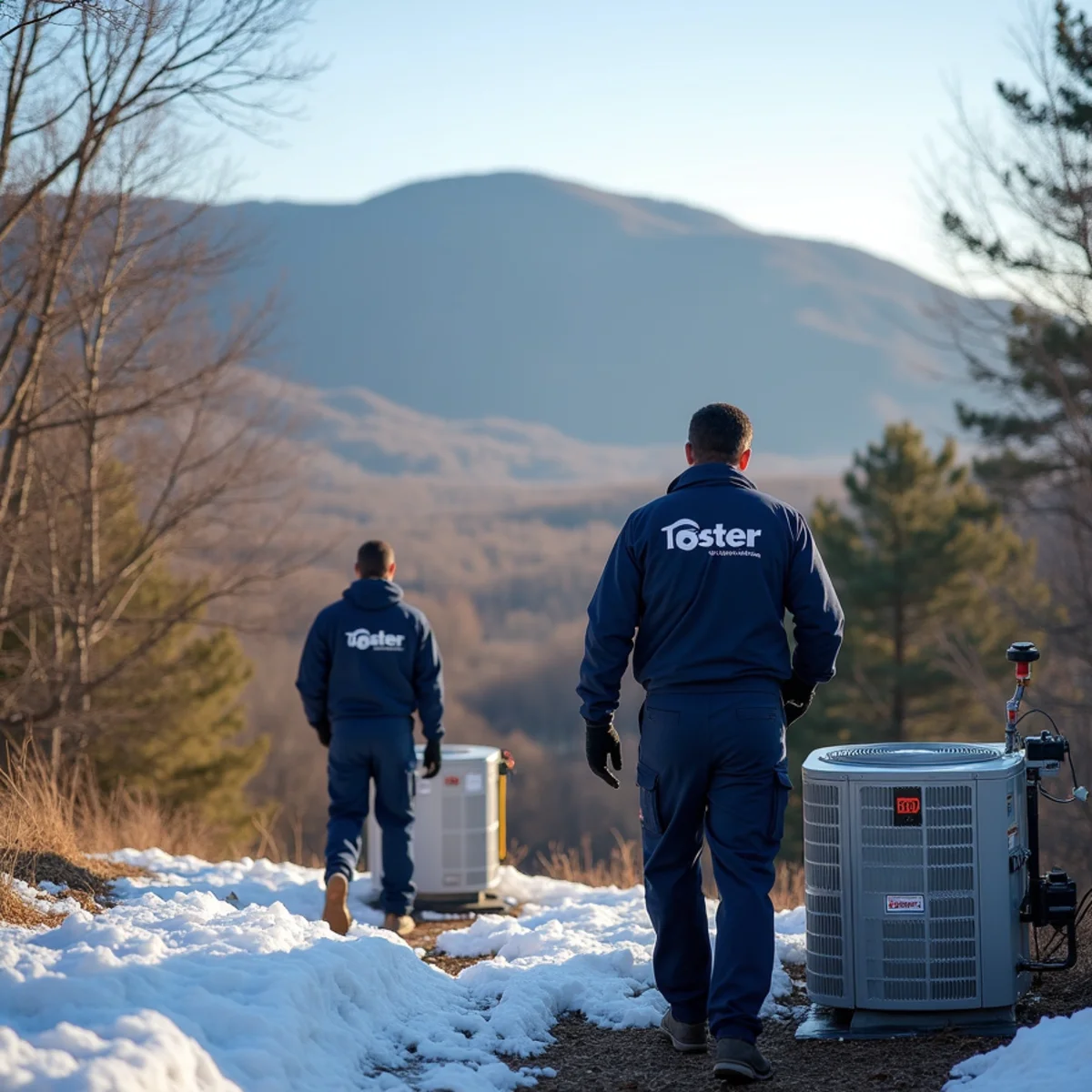
Carlisle sits on the floor of the Cumberland Valley, with South Mountain to the south and Blue Mountain to the north. On clear, calm nights, the ground radiates heat to space and the air near it cools. Cold air is denser than warm air, so it slides downslope off both ridges and pools on the valley floor.
The result is a temperature inversion: colder air trapped at the bottom, warmer air above it. Carlisle sits at the bottom.
There is a second, larger-scale version too. When high pressure sits to the north and east, cold dense air gets wedged against the mountains and cannot displace, producing extended cold that broadcast forecasts keyed to the Harrisburg metro consistently underplay for the valley.
What it means for your heating bill
Heating load scales with the difference between indoor and outdoor temperature. A few degrees colder outside is not a rounding error — over a full heating season it is meaningful runtime.
The nights it matters most are precisely the clear, calm ones when cold-air drainage is strongest. Those are also the nights when a heat pump’s capacity is lowest and when backup heat engages.
So the practical effect is that homes designed to a regional average spend more hours on expensive backup heat than the design predicted.
Why it changes equipment design
- Heat pump balance point: the temperature where the heat pump alone stops covering the load has to be calculated against a realistic local design temperature, not a metro average
- Dual-fuel switchover: set too high and you burn fuel unnecessarily in mild weather; set too low and you run expensive strips on the coldest nights. The right number depends on your actual site.
- Backup heat capacity: sized to carry the house at the local design temperature, not at the regional one
- Furnace sizing: a load calculation using a proper design temperature for the valley floor
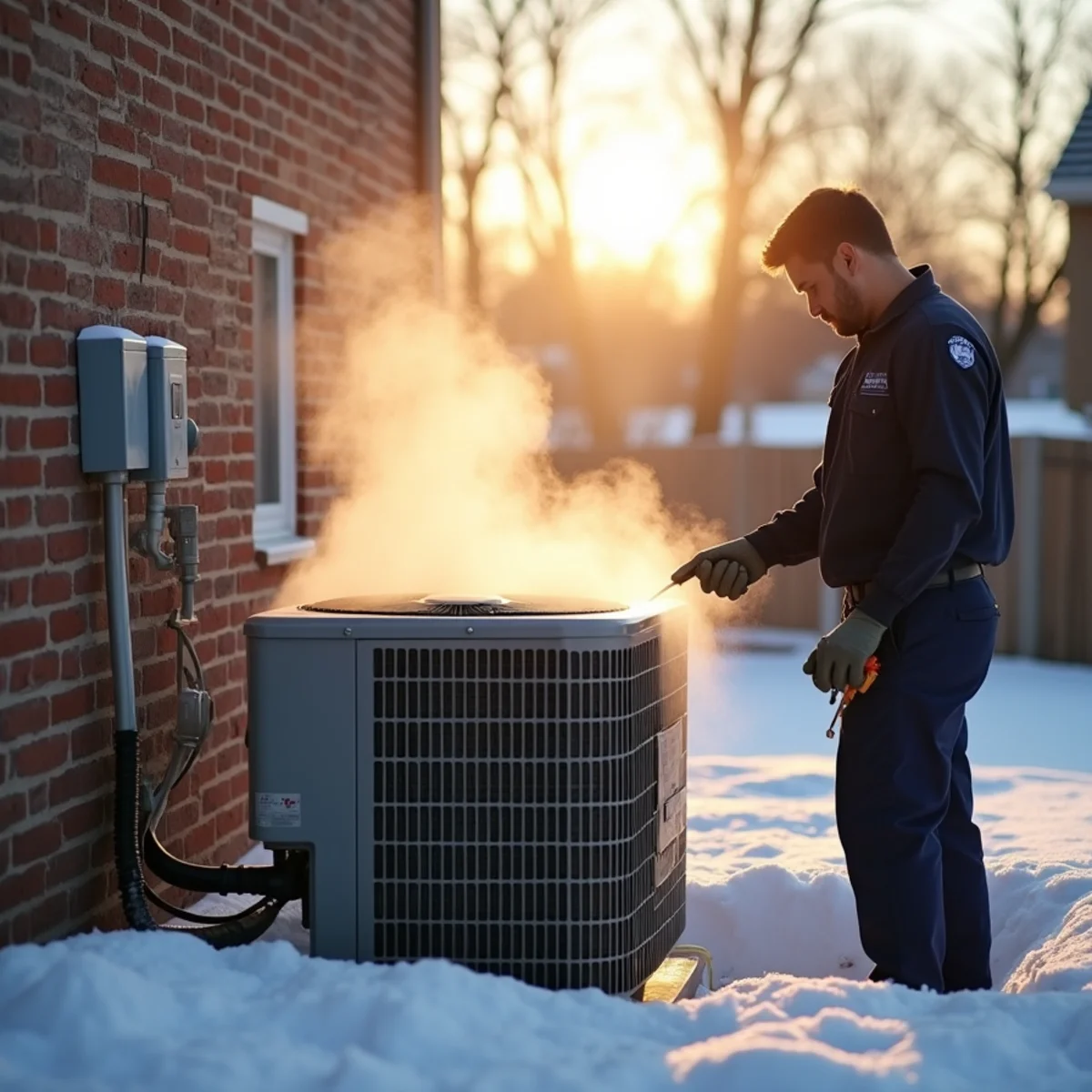
- Condensate protection: cold-air pooling on clear nights is exactly what freezes a sidewall condensate line
Elevation matters within a few miles
This is the part that surprises people. The effect is not uniform across our service area — it varies with elevation over remarkably short distances.
Properties up Waggoners Gap Road in North Middleton sit above the pooling layer on many nights and can actually be warmer than houses down along the Conodoguinet, despite being higher and more exposed. The same is true climbing toward South Mountain in South Middleton.
Meanwhile the low, flat ground through Middlesex Township and along the creek bottoms gets the full effect.
We set dual-fuel switchover points differently for houses two miles apart because of this. A township-wide assumption is not good enough.
Practical things you can do
- Get a load calculation that uses a defensible local design temperature and ask what number was used
- On dual-fuel, ask what switchover temperature was set and why — and have it revisited after the first winter
- Insulate or heat-trace any condensate line with exterior or unconditioned exposure; clear-night cold pooling is what freezes them
- Prioritize air sealing. Infiltration load scales directly with temperature difference, so it costs you most on exactly the nights that are already worst.
- Watch the auxiliary heat indicator on your thermostat through a cold snap. Constant operation means the balance point or staging is wrong.
- Do not size backup heat from the Harrisburg forecast, and be sceptical of any contractor who does
The flip side: summer inversions
The same bowl that traps cold air in winter traps humid air in summer. On calm mornings, moisture pools on the valley floor and fog settles along the Conodoguinet and the Yellow Breeches.
That contributes to the persistent latent load that makes properly sized cooling so important here. The valley does not just get humid — it holds humidity, which is why oversized air conditioners that short-cycle produce such consistently poor results in Cumberland County.
The geography works against you in both directions. Equipment that respects it works considerably better than equipment that does not.
Forecast temperature and design temperature are different numbers
People reasonably assume the temperature on the forecast is the number equipment gets sized to. It is not, and conflating the two is behind a good deal of undersized equipment in this valley.
A forecast is a prediction for a broad area over the next few days, generally issued for the nearest reporting station, which for this region sits lower, closer to the river and inside more urban development than Carlisle does. A design temperature is a statistical figure derived from decades of records at a specific location, representing a threshold that is only exceeded for a small percentage of hours in a typical year.
Equipment is sized to the second. If a contractor uses the regional station figure for a property on the valley floor, or worse for a property on rising ground, the system is specified for a milder location than the one it is going into, and it comes up short on precisely the nights it matters.
Wind and exposure: the part of the load most often ignored
Cold air damming explains the temperature; exposure explains why two houses at the same temperature behave differently. Infiltration, the outside air being pushed through a building envelope, is driven by wind, and in an open valley the difference between a sheltered street and an exposed property is large.
That load is real and it is frequently the least accurately estimated part of a calculation, because it depends on how leaky the building actually is rather than on anything visible from the kerb. A house on open ground with an unsealed attic plane can be losing a striking proportion of its heat to air movement alone.
The practical implication is encouraging rather than otherwise: it is the part of the load you can reduce most cheaply. Air sealing costs a fraction of equipment, reduces the design load, and can shrink the system the house needs — which is why it belongs before the replacement rather than after it.
Related services and areas
Frequently asked questions
Cold-air drainage and pooling. On clear, calm nights dense cold air slides off South Mountain and Blue Mountain onto the valley floor where Carlisle sits, while Harrisburg is lower in the valley near the river and in a slightly different setting. Broadcast forecasts are generally keyed to the metro, so valley-floor lows routinely run colder than forecast.
A defensible local design temperature rather than a regional average, accounting for valley-floor pooling and the elevation of your specific site. What matters is that your contractor can tell you what number they used and justify it — a load calculation is only as good as its assumptions.
Not at all. Modern cold-climate heat pumps hold usable capacity well below freezing and cover the large majority of our heating season. What cold-air damming means is that the balance point and the backup heat strategy have to be honest about local conditions — which is exactly the design work that should happen anyway.
Indirectly, and in the opposite direction. The same valley geometry that pools cold air on clear winter nights also traps air on calm summer nights, producing inversions that hold warm humid air near the surface and prevent a house from shedding heat overnight. That matters because a building relies on that overnight recovery, and a run of nights without it means each day starts warmer than the last. It is one reason the third day of a heat wave here feels considerably worse than the first at the same daytime temperature.
Possibly, and it is one of the cheapest corrections available. A thermostat should sit on an interior wall, at roughly seated height, away from direct sun, away from supply registers, away from lamps and appliances, and not on a wall with a duct or chimney behind it. Any of those makes it report something other than how the house feels. In houses where one side is consistently uncomfortable, a remote sensor placed in the problem room, or a control that averages several sensors, resolves more complaints than equipment changes do and costs a fraction as much.
Usually because the houses are less similar than they look. Attic insulation depth, air sealing, window condition and orientation all vary enormously between houses built in the same year on the same street, and none of them are visible from outside. Equipment differences matter too: an oversized furnace short-cycling costs more than a correctly sized one, and a heat pump running unnecessary auxiliary heat costs a great deal more. Occupancy patterns and setpoints account for the rest. The way to find out which applies to you is a load calculation and a look at the attic, not a comparison.
Talk to a licensed Carlisle technician
HVAC Carlisle PA has served Carlisle and Cumberland County since 2007. We test before we recommend, we put options in writing, and we answer the phone at 2 a.m.
HVAC Carlisle PA · 122 Beech St, Carlisle, PA 17013 · +1 (327) 210-5999