Cost & Insurance
Oil-to-Gas Conversion Cost in Carlisle, PA: When It Pays Off
The equipment is the easy part. The utility charge, the venting, and the tank are what decide whether this project makes sense.
By HVAC Carlisle PAPublished Updated 9 min read
Every oil-to-gas conversion conversation should start with a question that has nothing to do with equipment: does a gas main run down your street, and what will the utility charge to bring service to your house?
That number varies from nearly nothing to many thousands of dollars, and it is frequently the largest single line in the whole project. Until you have it in writing, nobody can tell you whether converting makes sense.
Need this handled rather than explained?
Same-day emergency service across Cumberland County. Licensed technicians dispatched from Carlisle, with written options before any work begins.
Step one: is gas even available?
In Carlisle Borough, generally yes. South of I-81 through much of South Middleton and Dickinson Township, generally no — there is no distribution main, which is precisely why oil and propane still heat so many houses out there.
The utility will tell you whether a main runs past your property, what a service line and meter set costs, and whether a main extension is required. A main extension down a block is where the five-figure numbers come from.
We help customers get that answer in writing before we quote anything, because everything downstream depends on it.
What the conversion actually costs, line by line
- Utility service line and meter set — sometimes minimal, sometimes the largest item in the project
- Interior gas piping, sized for total connected load: furnace, water heater, range, dryer, and anything planned
- New gas furnace or boiler — Pennsylvania planning proxies put a gas furnace at roughly $3,000–$7,500
- Venting: usually PVC sidewall on a condensing unit, or a properly sized chimney liner otherwise
- Chimney work, including a liner where removing the oil appliance orphans the water heater
- Condensate drain, trap, neutralizer where required, and float-switch protection
- Oil tank decommissioning — pumping, cleaning, removal, and capping the fill and vent lines
- Removal of the old burner and oil line abandonment
- Permits, inspections, and closeout documentation
The oil tank
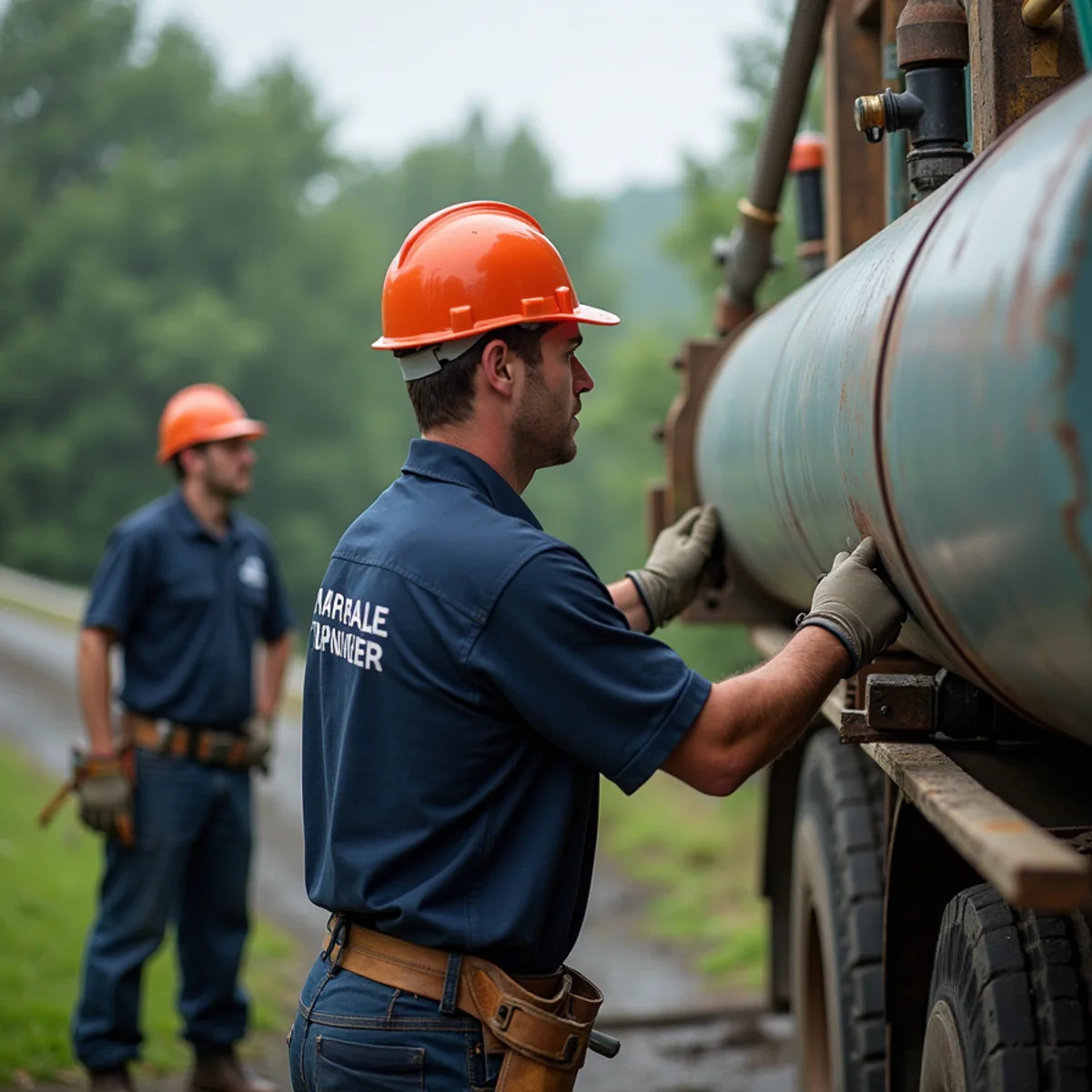
An aboveground basement tank is straightforward: pump out remaining fuel, clean, cut up, remove, cap the fill and vent, and patch the exterior penetrations.
A buried tank is an entirely different project with environmental considerations, and it requires a qualified tank contractor. Soil conditions can turn it into something much larger, and we say so up front rather than discovering it mid-job.
What we will not recommend is leaving an old tank full and forgotten in the basement. It is a liability at sale and a slow seep from a corroded seam is a remediation bill that dwarfs doing it properly now.
Calculating payback with your actual numbers
Bring two or three years of oil delivery tickets. We use your gallons, not a regional average.
From there: convert your consumption to annual heating output, project gas usage at the new equipment’s efficiency, apply current gas rates including the fixed monthly service charge, and compare against your oil spend at a realistic price. Then divide the total project cost by the annual saving.
That is your payback period. Sometimes it is genuinely short. Sometimes, once the utility charge is included, it stretches past the expected life of the equipment — and in that case converting is not a good investment, whatever anyone tells you about gas being cheaper.
The alternative worth pricing alongside it
We quote every conversion against two other options, because it is the only honest way to present the decision.
Option two: replace with a modern high-efficiency oil unit. Far lower project cost, no utility dependency, and modern oil equipment is substantially more efficient than what most people are replacing.
Option three: a cold-climate heat pump in dual-fuel configuration with the existing or a new furnace as backup. No utility construction schedule to wait on, potential federal and utility incentives, and it works in the large parts of the county where gas simply is not available.
For a great many properties through Dickinson, West Pennsboro, and Penn Township, option three wins clearly. We would rather tell you that than sell you a conversion that cannot happen.
Timeline expectations
The mechanical work in your house is typically two to three days. The overall project timeline is set entirely by the utility.
Scheduling a service line and meter set can take weeks to months depending on their queue, the season, and whether a main extension is needed. Utilities do not install service lines in frozen ground on demand.
So do not start a conversion in November hoping to be on gas by Christmas. Start the utility process in spring or summer and schedule the mechanical work around their date.
The costs that appear after the headline quote
Conversion quotes vary widely, and most of the variation is not in the furnace. It is in the work around it, which is easy to leave out of an initial figure and impossible to avoid during the job.
The items below are the ones that most commonly turn an attractive quote into a larger invoice. None of them are unreasonable; the problem is only ever that they were not mentioned. Ask about each explicitly and get the answer in writing before comparing quotes.
- Chimney lining or sidewall venting for the new appliance
- Resolving the water heater if it shared the old flue
- Interior gas piping sized for the total connected load, not just the furnace
- Utility service line and meter charges, which are theirs rather than the contractor's
- Oil tank removal, or professional decommissioning if it stays
- Permit and inspection, plus any electrical work for the new equipment
- Duct modification at the plenum, since a gas furnace cabinet rarely matches an oil one
What happens to your chimney and water heater
This is the most commonly overlooked consequence of a conversion and the one with a genuine safety dimension. An oil furnace and a gas water heater sharing a masonry chimney together produce enough warm flue gas to keep that chimney drafting.
Take the oil furnace out, replace it with a sealed-combustion gas furnace venting through a sidewall, and the water heater is left venting alone into a chimney sized for two appliances and far too large for one. Its flue gases cool, slow, condense, and can spill back into the basement instead of rising.
The remedy is to line the chimney down to a correct size for the water heater alone, or to replace the water heater with a sealed-combustion or electric unit. Either is a real cost, and either is far preferable to discovering the problem through a carbon monoxide alarm. A conversion quotation that does not address it has not been thought through.
Related services and areas
Frequently asked questions
The equipment side tracks a normal furnace or boiler replacement — Pennsylvania planning proxies put a gas furnace around $3,000–$7,500. What separates conversions is the utility charge for the service line and meter, interior gas piping, venting and chimney work, and tank decommissioning. That total varies enormously by address, which is why the utility number comes first.
Weeks to months, depending on the utility’s queue, the season, and whether a main extension is required. Start the process well ahead of the heating season rather than trying to do it in an emergency. The mechanical work itself is only two to three days once the service is in.
Then converting to natural gas is not your project, and no amount of equipment shopping changes that. The realistic options are a modern high-efficiency oil unit or a cold-climate heat pump — often in dual-fuel configuration keeping your existing furnace as backup, which is usually the strongest economics in the rural parts of the county.
You can, and it is sometimes a sensible way to spread cost, but the sequence has a consequence worth understanding. If the water heater converts to a sealed-combustion or electric unit first, the oil furnace is then alone in the chimney, which is generally fine because it produces the larger flue gas volume anyway. Doing it the other way round is the problematic order, because it leaves the water heater orphaned. Whichever way you stage it, have the venting assessed at each step rather than assuming the chimney will simply carry on working.
It tends to help at resale, though more through buyer preference than through a measurable valuation uplift. Gas heat is widely regarded as lower maintenance and more convenient than oil, and the absence of a tank removes a question that buyers and their inspectors routinely raise. An abandoned or ageing oil tank, particularly an underground one, is a genuine negotiating point against a sale. That said, treat resale as a secondary benefit. The decision should rest on the operating cost comparison using your own consumption, because that is the part you experience every year rather than once.
It depends on the utility and the distance, and it is the single largest variable in whether a conversion is worth doing. Utilities commonly cover a certain footage of service line at no charge where the main already runs past the property, and charge for anything beyond that. Where the main is not on your street at all, extending it is usually at the customer expense and can exceed the entire cost of the mechanical work. Get that figure from the utility in writing before you go any further, because it determines whether the rest of the conversation is worth having.
Talk to a licensed Carlisle technician
HVAC Carlisle PA has served Carlisle and Cumberland County since 2007. We test before we recommend, we put options in writing, and we answer the phone at 2 a.m.
HVAC Carlisle PA · 122 Beech St, Carlisle, PA 17013 · +1 (327) 210-5999