Problem-Solving
Banging, Kettling, Gurgling: Carlisle Boiler Noises Decoded
A field guide to boiler noises — what each one means, which are urgent, and which are an afternoon of work.
By HVAC Carlisle PAPublished Updated 8 min read
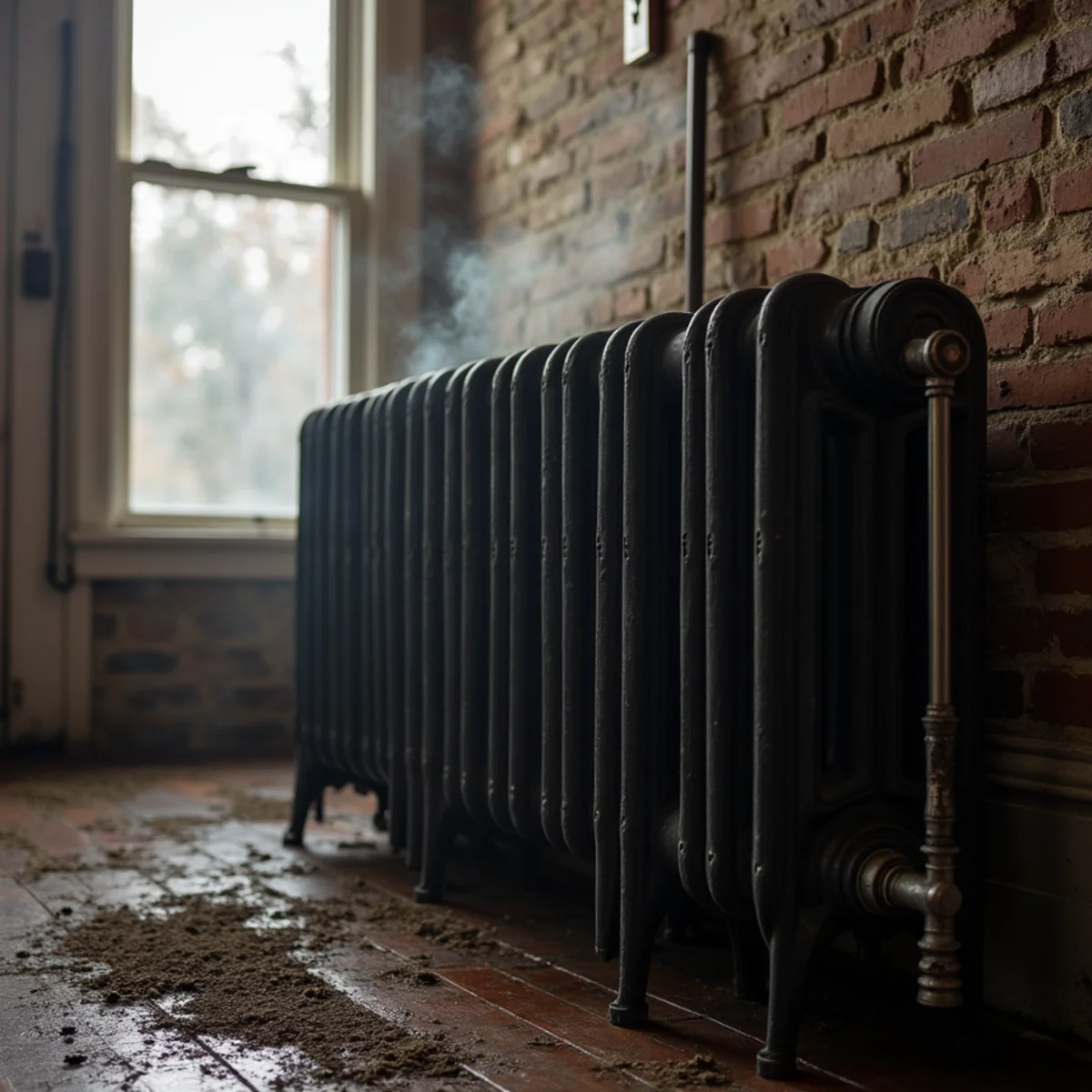
Boilers make noise. Some of it is normal, some is a cheap fix, and a little of it is telling you to stop and call.
This is a field guide for Carlisle’s hydronic housing — the Historic District, Mooreland, the Pomfret Street blocks, and the rowhomes on East South Street where radiators are still doing the work.
Need this handled rather than explained?
Same-day emergency service across Cumberland County. Licensed technicians dispatched from Carlisle, with written options before any work begins.
Banging and hammering
On a steam system, banging is water hammer: condensate sitting in a main or a radiator that steam then slams into at high velocity. It is loud, it is startling, and over time it damages piping.
The causes are almost never the boiler. They are pitch and venting.
- Radiators pitched backward, away from the supply valve, so condensate cannot drain out
- A sagging steam main with a low spot that holds water
- Dead main vents — air cannot leave, so steam and condensate fight in the same pipe
- System pressure far too high, usually because someone raised the pressuretrol chasing a cold radiator
- A partially closed radiator valve on a one-pipe system, which should always be fully open or fully closed
On a hot-water system
Banging is usually trapped air moving through the loop, or thermal expansion knocking piping against a hanger. Purging the system and adjusting a pipe support typically resolves it.
Kettling — a rumble like a boiling kettle
Kettling comes from the boiler itself: a low rumbling or roaring that builds as the burner runs. It is caused by scale or sediment on the heat exchanger surfaces creating localized hot spots where water flashes to steam and collapses.
It is worth addressing rather than living with. Scale insulates the heat exchanger, drops efficiency, and creates thermal stress that shortens the boiler’s life.
The fix depends on severity — a chemical flush and a water-quality review at the mild end, heat exchanger service or replacement at the severe end. Persistent scale usually means a make-up water issue worth investigating.
Gurgling and trickling
On a hot-water system, gurgling is air in the loop. It is the single most common boiler complaint we get, and the most satisfying to fix because the results are immediate.
Air collects at the high points — top-floor radiators, the tops of risers — and blocks circulation. Bleeding individual radiators helps, but if air keeps returning, something is drawing it in: a failed automatic air vent, a leak somewhere in the loop, or an expansion tank that has lost its charge.
A recurring cause we find in Carlisle: a circulator installed pumping toward the expansion tank instead of away from it. That arrangement effectively prevents the upper loops from ever fully purging, no matter how many times you bleed them.
Clicking, humming, and buzzing
- Rhythmic clicking from a zone valve — often a failing motor or end switch, and it usually precedes that zone going cold
- A steady electrical hum from a circulator — could be a seized rotor or a failing capacitor
- Buzzing from the gas valve or transformer, which may be normal at low volume but is worth checking if it changed
- Clicking from an ignition control cycling repeatedly without lighting — that is a lockout in progress, not a noise problem
Noises that mean stop and call now
- A loud bang at ignition — delayed ignition from dirty burners or gas pressure problems. Shut the system off.
- A whistling or hissing at the relief valve, which means pressure is at or near the discharge point
- Any noise accompanied by a burning smell, visible flame outside the burner compartment, or a CO alarm
- Water audibly running inside the system with no obvious source, which can indicate a leak feeding continuously
The Carlisle steam fix that costs a fraction of a boiler
If you have one-pipe steam and someone has quoted you a boiler replacement to solve banging or a cold radiator, get a second opinion first.
Rebalancing a one-pipe system is usually an afternoon: replace the dead main vents, graduate the radiator vents by distance from the boiler so the far ones vent faster than the near ones, correct the pitch on any radiator that has been shimmed wrong, and drop the pressuretrol to where a one-pipe system belongs — ounces, not pounds.
We do this regularly in the Historic District and the results are frequently dramatic. Silent operation, cold radiators back in service, and a lower gas bill, all without touching the boiler.
A noise that changed matters more than a noise that is loud
Older hydronic systems are not silent, and expecting them to be leads people to chase sounds that have been there for decades. The diagnostic signal is change rather than volume.
A system that has always ticked as the pipes warm is doing what metal does when it expands against a joist. A system that has started banging this month, or where a new note has appeared, is telling you something has altered — usually water where steam should be, air where water should be, or scale where neither should be.
The same applies in reverse. A radiator that used to gurgle and has gone quiet may not be fixed; it may simply have stopped receiving flow, which is worth checking before the room gets cold in January.
What to note before you call, so the noise can be identified
Boiler noises are frequently intermittent and almost never obliging enough to perform while a technician is standing there. A short phone video with sound is genuinely diagnostic and costs you nothing.
Alongside the recording, the timing details below narrow the cause substantially. Whether a noise occurs on ignition, during a run, or after shutdown separates entirely different mechanisms.
- A phone video with audio, taken as close to the source as is safe
- When it happens: on start-up, part-way through a cycle, at shutdown, or continuously
- Where it is loudest: at the boiler, in the pipes, or at a specific radiator
- Whether it coincides with hot water being drawn, if the boiler also heats your water
- The system pressure reading on the gauge, both cold and hot
- Anything done recently: a bleed, a top-up, a power cut, or work by another trade
Related services and areas
Frequently asked questions
On a steam system, morning banging is classic water hammer. Overnight the system cools and condensate settles in the mains and radiators; when the boiler fires in the morning, steam hits that standing water. The causes are pitch, dead main vents, or excessive pressure — not the boiler itself.
Yes, on a hot-water system. Use a radiator key or a flat screwdriver depending on the vent, open it slowly with a container underneath, and close it once water flows steadily instead of hissing air. Start with the lowest floor and work up. If air keeps returning within weeks, something is drawing it in and that needs diagnosis.
A residential hot-water system typically runs around 12–15 psi cold for a two- or three-story house, rising modestly when hot. A one-pipe steam system should run at ounces of pressure, not pounds — most residential steam systems we find in Carlisle are set far too high, which causes the problems people are trying to solve by raising it further.
That points at the domestic hot water side rather than the heating circuit. On a combination boiler it usually means scale on the plate heat exchanger, where limescale on a very hot surface causes localised boiling and the characteristic kettling rumble. On a system with an indirect cylinder it more often means the cylinder circuit is calling and either drawing more flow than the piping suits, or the boiler is firing at high output into a small load. Both are common, both are diagnosable, and neither necessarily means a replacement.
Not necessarily. A constant low hum is normal for many circulators, which are electric motors bolted to metal pipe that transmits sound. What is worth attention is a change: a new grinding or rattling note usually means bearing wear, and a loud buzz with no flow can mean the rotor is seized and the motor is stalled. It is also worth ruling out air, since a circulator moving an air pocket sounds dramatic and is cured by proper purging rather than by replacement. A technician can confirm flow in a couple of minutes.
Frequently it can be treated. On a combination boiler with a scaled plate exchanger, chemical descaling is a routine service that costs a small fraction of replacement, and it can restore both the noise and the lost hot water performance. On a system boiler, a chemical flush plus a proper inhibitor dose addresses sludge and scale in the circuit. What determines whether treatment is worthwhile is how far it has gone and whether the underlying water quality issue is addressed afterwards, because descaling without adding inhibitor simply resets the clock on the same problem.
Talk to a licensed Carlisle technician
HVAC Carlisle PA has served Carlisle and Cumberland County since 2007. We test before we recommend, we put options in writing, and we answer the phone at 2 a.m.
HVAC Carlisle PA · 122 Beech St, Carlisle, PA 17013 · +1 (327) 210-5999