Emergency Guides
Carbon Monoxide Warning Signs Every Carlisle Household Should Know
The symptoms, the sources, the alarm mistakes almost everyone makes, and the venting risk created by furnace upgrades.
By HVAC Carlisle PAPublished Updated 8 min read
If your carbon monoxide alarm is sounding right now, stop reading. Get everyone out — people and pets — and call 911 from outside. Do not open windows first, do not go back for anything, and do not try to find the source yourself.
Everything below is for the calmer moment, and it is worth reading before you need it.
Need this handled rather than explained?
Same-day emergency service across Cumberland County. Licensed technicians dispatched from Carlisle, with written options before any work begins.
The symptoms, and the pattern that identifies them
Carbon monoxide poisoning symptoms look like a lot of ordinary illnesses: headache, dizziness, nausea, weakness, confusion, and fatigue. In winter, people routinely dismiss them as flu.
- The distinguishing pattern: symptoms improve when you leave the house and return when you come back
- Multiple people in the household feeling unwell at the same time
- Pets showing symptoms too — they are often affected first because of their size
- Symptoms that appear or worsen when the heating system runs
The dangerous part
CO is colorless and odorless. There is no smell to warn you, and it binds to hemoglobin far more readily than oxygen does. Asleep, most people never wake up. That is why the alarm matters more than your senses do.
Every source in a typical Carlisle house
- Gas, oil, or propane furnace or boiler with a cracked heat exchanger or poor venting
- Gas water heater — including the orphaned-flue problem described below
- Gas range and oven, especially when used for heat, which is never safe
- Fireplace or wood stove with a blocked, deteriorated, or improperly drafting flue
- A vehicle running in an attached garage, even briefly with the door open
- A generator running in a garage, basement, or under a deck during a power outage
- Any unvented combustion appliance — including outdoor propane heaters brought inside
The orphaned water heater: an upgrade that creates a hazard
This is the risk almost nobody warns homeowners about, and it is common in Carlisle’s older housing.
In many of these houses, the furnace and the gas water heater share a masonry chimney. When the furnace is replaced with a 95% condensing model, it moves to PVC sidewall venting. The water heater is now alone in a flue sized for two appliances.
A small water heater cannot generate enough heat to establish draft in an oversized flue. Exhaust cools, condenses, and can spill back into the basement rather than going up — which puts carbon monoxide into your house as a direct result of an energy-efficiency upgrade.
If someone replaced your furnace with a high-efficiency unit and never mentioned the water heater or a chimney liner, get it tested. This is precisely what a combustion and draft inspection is for.
Alarm placement, and the mistake nearly everyone makes
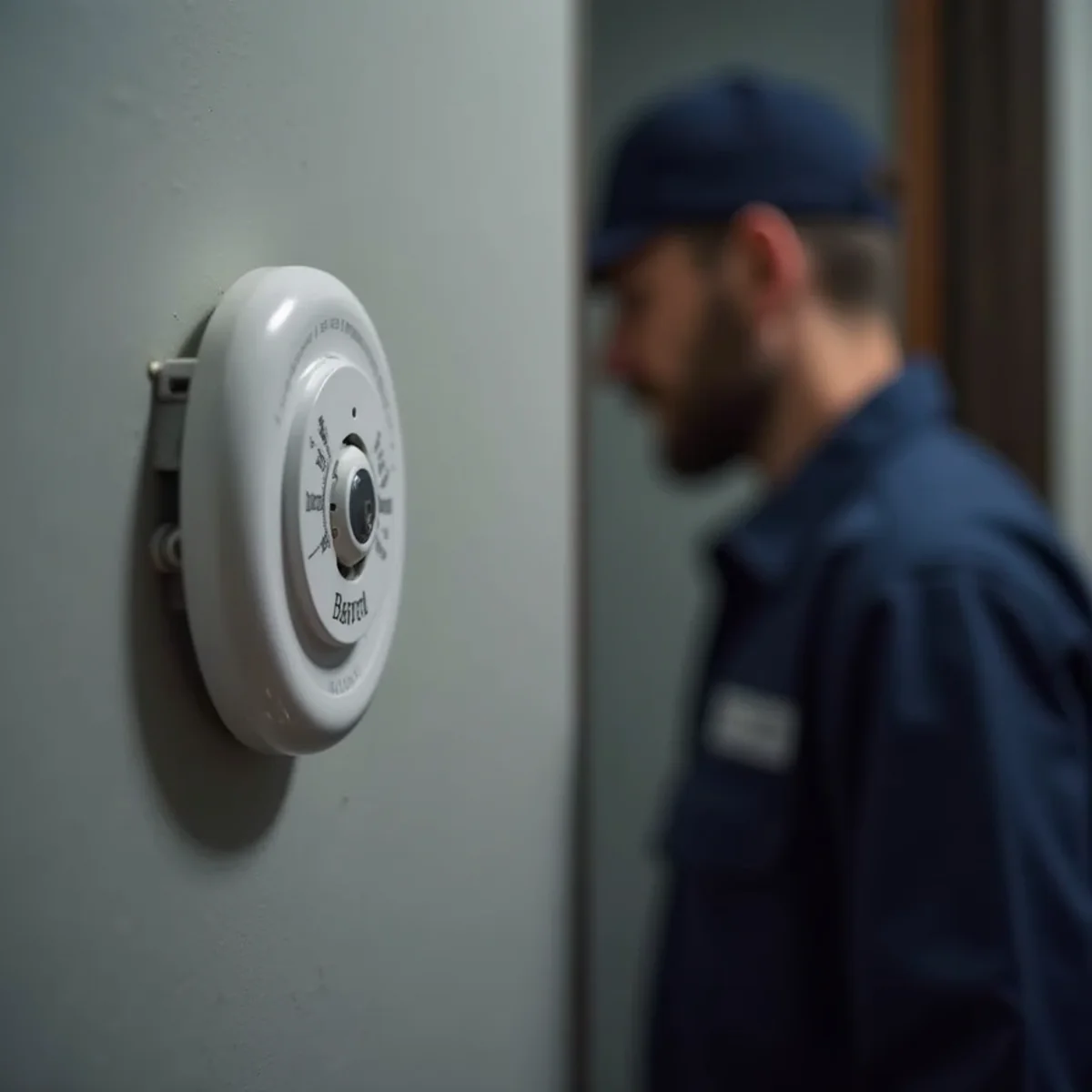
- One alarm on every level, and one outside each sleeping area, at minimum
- Alarms expire — most CO sensors are rated for 7 to 10 years from the manufacture date. Check the date printed on the back of the unit, not the box.
- Test monthly, and replace batteries on schedule, or buy sealed 10-year units
- Do not mount within about 15 feet of a fuel-burning appliance, or nuisance alarms will tempt you to disable it
- Add one near the door from an attached garage
- The mistake: assuming a smoke alarm detects CO. Most do not. Check whether yours is a combination unit — a great many people find out it is not.
Physical warning signs on the equipment itself
- Soot or a sooty film on or near the furnace, water heater, or vent connector
- Rust flakes on the vent pipe or the top of the water heater
- A yellow, lazy, or flickering burner flame where it should be crisp and blue
- Excessive window condensation near fuel-burning appliances
- A vent connector that has come loose, sagged, or corroded through
- Air blowing back down the flue that you can feel with your hand
What a proper safety inspection includes
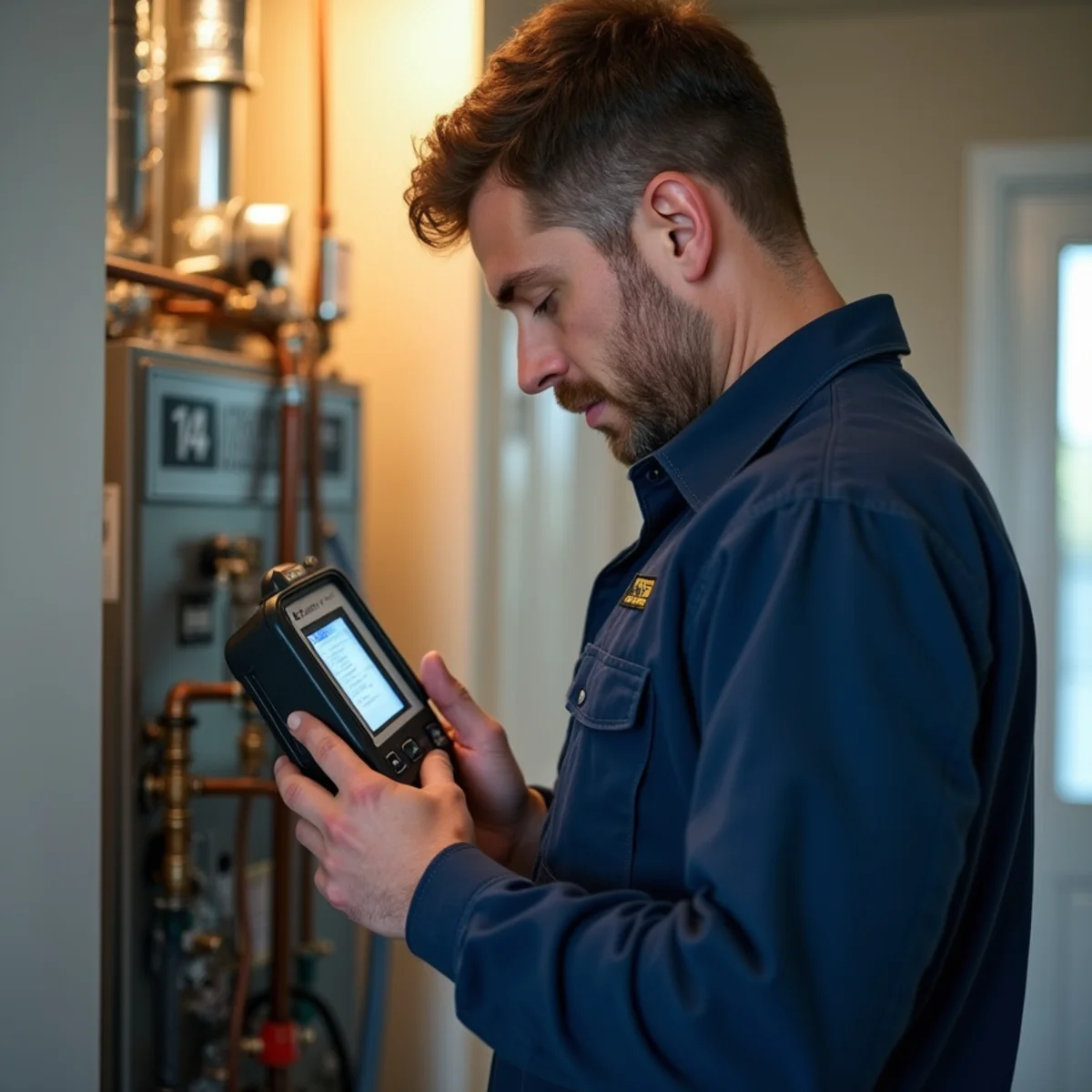
Not every "safety check" is one. A genuine inspection is instrumented and covers every fuel-burning appliance, not just the furnace.
- Ambient CO measurement through the living space with a calibrated instrument
- Combustion analysis at each appliance — CO in the flue, O2, stack temperature, efficiency
- Draft and spillage testing at the draft hood or vent connector
- Worst-case depressurization testing, with exhaust fans and the dryer running simultaneously
- Heat exchanger inspection, visually and by combustion signature
- Gas line leak detection on every accessible joint
- Combustion air verification — a frequent problem in houses that have been tightened up
The first two minutes, in order
If an alarm sounds, the sequence matters and it is not the intuitive one. People instinctively open windows and look for the source, and both of those make the situation worse rather than better.
Get out first. Ventilating before you leave prolongs exposure while you do it, and clearing the air makes it harder for responders to measure what was actually present, which affects whether the source is correctly identified.
- Get everyone outside into fresh air immediately, including pets
- Do not open windows to ventilate on the way out, and do not hunt for the source
- Call 911 from outside, and say if anyone is confused, drowsy or unconscious
- Do not re-enter for any reason until emergency services say it is safe
- Seek medical attention for anyone with symptoms, even if they improve outdoors
- Only once the building is cleared does a combustion inspection become useful
Alarms have an expiry date, and most people miss it
A carbon monoxide alarm is not a smoke alarm with a different label. The sensor inside it degrades chemically whether or not it has ever detected anything, and it stops being reliable on a schedule set by the manufacturer rather than by how the unit looks or whether the test button beeps.
That test button confirms the battery and the sounder. It does not test the sensor. An alarm can pass its own test daily for years after the sensing element has ceased to respond to carbon monoxide.
Check the manufacture date printed on the back of the unit rather than the date you installed it, since units sit in warehouses. Replace at the interval the manufacturer states, and replace the whole alarm rather than the battery when that date arrives.
Related services and areas
Frequently asked questions
A single chirp is usually a low-battery or end-of-life signal rather than a detection, but check the manufacture date on the back — if the unit is past 7 to 10 years, replace it now. If you cannot account for the chirp and anyone in the house has had unexplained headaches, get a combustion inspection.
Not by looking, and neither can a contractor from across the room. Proper confirmation requires combustion analysis showing an abnormal CO signature, a visual or camera inspection, or a documented spillage test. Ask for that evidence in writing before accepting a red tag — a legitimate contractor provides it without hesitation.
Yes, if there is any fuel-burning appliance, a fireplace, a wood stove, or an attached garage. An all-electric house with an attached garage still has a CO risk from a vehicle. Alarms are inexpensive; the alternative is not.
Manufacturers specify a service life for the sensor, commonly somewhere between five and ten years depending on the model, and it is printed on the unit along with a manufacture date. That clock runs from manufacture, not from installation, so an alarm bought after sitting in a warehouse has already used part of its life. The important point is that the test button does not test the sensor, only the battery and the sounder, so an expired alarm will keep passing its own test while being unable to detect anything. Check the date on the back today.
Avoid within about five feet of any fuel-burning appliance, because normal brief start-up emissions cause nuisance alarms that lead people to relocate or disable the unit. Avoid bathrooms and other humid spaces, avoid directly beside vents, windows and doors where moving air dilutes the sample, and avoid dead-air corners at the ceiling apex. Also avoid unheated spaces outside the alarm operating range. The most valuable locations are outside each sleeping area and on every level, because the exposure that matters most happens while people are asleep and unable to notice symptoms.
Do not dismiss it. Carbon monoxide disperses, so an alarm triggered by an intermittent condition can be entirely genuine and yet read zero once the house has been open for an hour. The conditions that produce spillage are intermittent by nature: a flue that only fails to draft on a windy evening, or when a bathroom fan and a dryer run together. That is why the useful follow-up is worst-case depressurisation testing, which recreates those conditions deliberately rather than measuring on a calm afternoon. A single unexplained alarm is a reason for that test, not a false alarm to forget.
Talk to a licensed Carlisle technician
HVAC Carlisle PA has served Carlisle and Cumberland County since 2007. We test before we recommend, we put options in writing, and we answer the phone at 2 a.m.
HVAC Carlisle PA · 122 Beech St, Carlisle, PA 17013 · +1 (327) 210-5999