Emergency Guides
Frozen Pipes in Carlisle: Prevention and Same-Day Response
Frozen pipes are usually the second failure. Here is what caused the first one, and how to stop the chain.
By HVAC Carlisle PAPublished Updated 8 min read
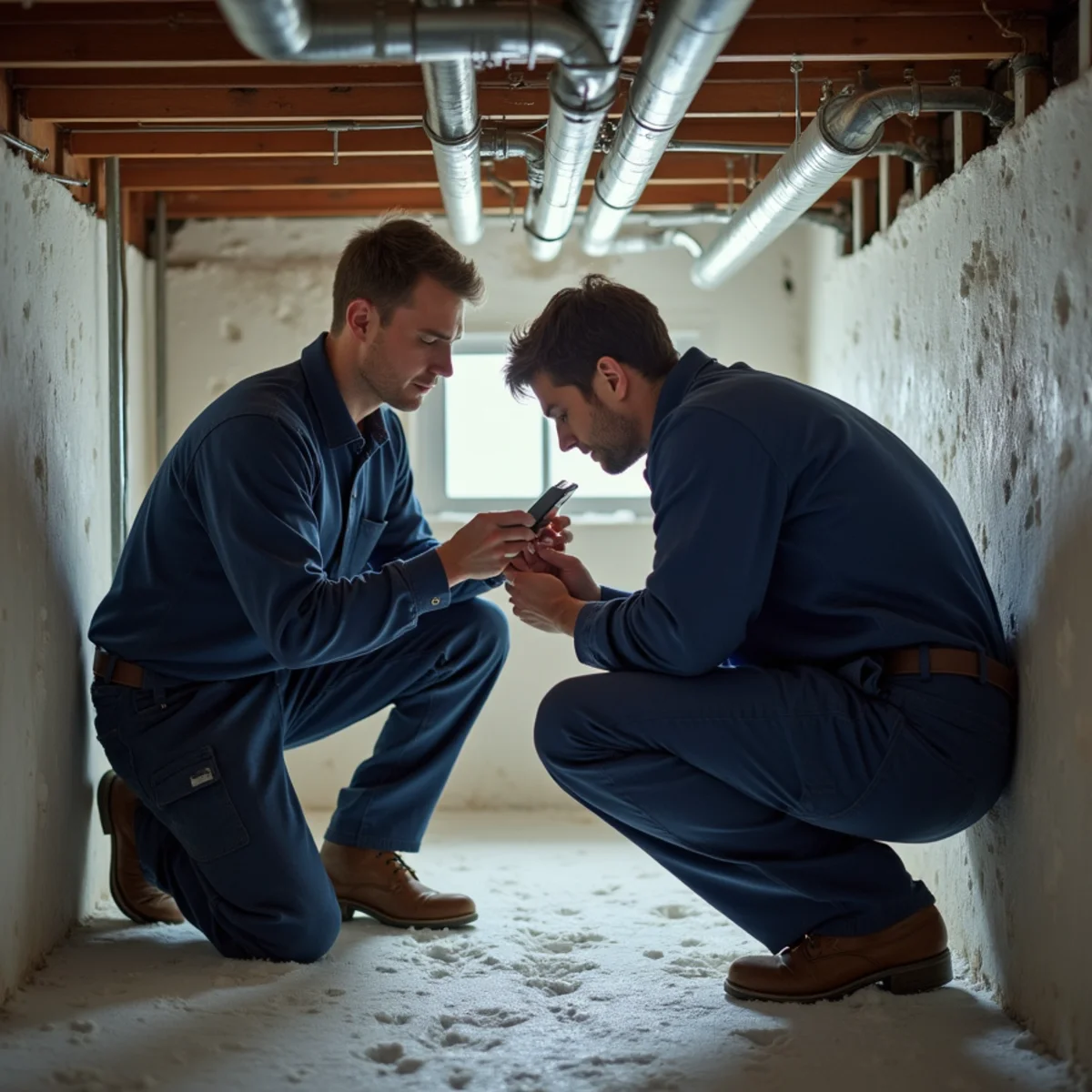
A burst pipe almost never happens to a house with working heat. It happens to a house where the heat failed and nobody noticed — a vacant rental, a second home, a bedroom nobody uses, a crawlspace that has been quietly freezing for three winters.
So this guide covers both halves: how to prevent the freeze, and what to do in the first hour if you find one.
Need this handled rather than explained?
Same-day emergency service across Cumberland County. Licensed technicians dispatched from Carlisle, with written options before any work begins.
Where Carlisle houses actually freeze
- Supply lines in exterior walls, especially on the north and west sides of a house
- Unheated or partially heated crawlspaces — extremely common in older borough homes and rural farmhouses alike
- Garages with plumbing running through them, particularly for a laundry or utility sink
- Rooms closed off to "save heat," where the register was shut and the door kept closed
- Attic runs in houses where a bathroom was added upstairs
- Hose bibs left connected to a hose through the winter — the hose holds water against the valve
Prevention, in the order that matters
- Never set a thermostat below 55°F, in any house, occupied or not. 58–60°F is safer where plumbing runs through exterior walls.
- Insulate or heat-trace any HVAC condensate line running through a crawlspace, garage, or out a sidewall — this is the single most common cold-snap furnace lockout in Carlisle
- Seal rim joists and crawlspace air leaks, which let frigid air wash directly across pipes
- Insulate crawlspace and attic duct runs so the heat gets to the rooms instead of the void
- Disconnect garden hoses and shut off exterior hose bibs at the interior valve
- Know where your main water shutoff is, and confirm it actually turns before you need it
- On a heat pump, verify auxiliary heat works in the fall — not during a January outage
If a pipe is frozen but has not burst
You will usually discover this because one fixture runs and another does not. That localized pattern is the giveaway.
- Open the affected faucet so melting water has somewhere to go and pressure can relieve
- Warm the area with a hair dryer or a space heater kept at a safe distance, working from the faucet end back toward the frozen section
- Never use a torch, a propane heater, or any open flame on plumbing — it is a leading cause of house fires in cold snaps
- Open cabinet doors and interior doors to let room heat reach the space
- Locate your main shutoff before you thaw, in case the pipe has already split and only releases when the ice clears
- If you cannot locate or reach the frozen section, call a plumber before you cause damage looking for it
If a pipe has burst
Shut the main water off first, before anything else. Then shut off electricity to affected areas at the panel if water is near outlets, wiring, or mechanical equipment — but do not stand in water to reach the panel.
Photograph everything before you start cleaning up. Insurance claims go dramatically better with dated photographs of the source, the affected materials, and the equipment.
Then call a plumber for the pipe. EPA moisture guidance generally puts the drying window at 24 to 48 hours before mold risk climbs meaningfully, so drying should start immediately rather than waiting for an adjuster.
Where we fit, and where we do not
We are an HVAC contractor, not a plumbing contractor, and we say so plainly. Frozen or burst domestic water piping is plumbing work.
What we handle is the heating failure that let the house get cold in the first place, the freeze-vulnerable HVAC components — condensate lines above all — and the prevention plan that stops it recurring.
In practice, on a real freeze event, both trades are needed and restoring heat is usually the necessary first step. We will tell you clearly which part is ours.
Vacant properties: the highest-risk category
Student rentals in Shippensburg and Grantham over winter break, houses on the market, properties between tenants, and seasonal cabins up toward Gardners are where the worst outcomes happen — because nobody is there when the heat quits.
The fix is inexpensive: a verified minimum setpoint, a Wi-Fi thermostat with a low-temperature alert to the owner’s phone, protected condensate lines, and a walkthrough during extended cold. Against a burst-pipe restoration bill, it is not close.
Thawing safely: what works, and what starts fires
Frozen pipe thawing causes house fires every winter, almost always from the same short list of improvised heat sources. The safe methods are slower and they are the only ones worth using.
Work from the tap end toward the frozen section rather than the reverse. Opening the tap first gives melt water and expanding steam somewhere to go; heating the middle of a blocked pipe with both ends sealed builds pressure exactly where the pipe is weakest.
- Open the tap served by the frozen line first, then apply heat from that end backwards
- Safe heat: a hair dryer on a low setting, warm towels, a space heater at a proper distance, an electric heating pad
- Never use: a blowtorch, a propane heater aimed at the pipe, a heat gun at close range, or any open flame
- Never leave an improvised heat source unattended, even briefly
- Know where the main shutoff is before you start, not after a pipe splits
- If the frozen section is inside a wall or you cannot reach it, stop and call a plumber
After the thaw: the slow leak nobody looks for
A pipe that froze and did not burst has still been stressed. Freezing forces joints and fittings apart slightly, and the resulting weep can run behind plaster for weeks before it announces itself as a stain, which by then is a much larger repair than the plumbing.
The simplest test costs nothing. Turn every fixture and appliance off, then watch the water meter for fifteen minutes. Any movement at all means water is going somewhere, and the place to look first is whatever froze.
It is also worth checking the heating side. A system that ran flat out through a freeze event may have iced a condensate line, partly blocked a flue, or short-cycled for days on a loaded filter, and none of those fix themselves when the weather turns.
Related services and areas
Frequently asked questions
Water freezes at 32°F, but pipes inside a structure are buffered. The practical risk threshold is generally sustained outdoor temperatures around 20°F or below, and it arrives much sooner for pipes in unheated crawlspaces, garages, or exterior walls with poor insulation. Wind increases the risk substantially.
Yes, for a specific reason: it relieves the pressure that builds between an ice blockage and the closed faucet, and that pressure is what actually splits pipes. A pencil-width trickle from the fixture farthest from the main is the usual recommendation during a hard freeze.
Almost certainly a frozen condensate line on a high-efficiency furnace. The unit makes liquid water that must drain, and where the line runs through unconditioned space or exits a sidewall it can freeze solid, tripping a safety switch. Insulating, re-routing, or heat-tracing the line resolves it permanently.
A hair dryer on a low setting, kept moving and never left unattended, is one of the safer options. A heat gun is not — it produces far higher temperatures in a small area, and at close range it will scorch framing, melt plastic pipe and ignite insulation before you notice. The general rule is that anything which could set a rag alight should not be near a pipe in a wall cavity. Open the tap first, apply gentle heat from the tap end backwards, and stop if you cannot see what you are heating.
Look where the supply enters the building, typically on the wall facing the street, often near the water meter in a basement or crawlspace. There is usually a lever or a round handle within a foot of the meter. Find it now, on a mild day, and make sure it actually turns — valves that have not been operated in years frequently seize, and discovering that while water is coming through a ceiling is the worst possible time. Tag it so anyone in the house can find it, and show whoever else lives there.
No, and that is the source of a good deal of misplaced relief. Whether a pipe splits depends on where the ice forms, how much water is trapped between the ice and a closed tap, and what the pipe is made of. Copper splits more readily than PEX, which can expand somewhat. What is consistent is that a pipe which froze once will freeze again in the same conditions, and that the joints in that run have been stressed whether or not anything failed this time. Treat it as a warning about that specific location rather than a near miss.
Talk to a licensed Carlisle technician
HVAC Carlisle PA has served Carlisle and Cumberland County since 2007. We test before we recommend, we put options in writing, and we answer the phone at 2 a.m.
HVAC Carlisle PA · 122 Beech St, Carlisle, PA 17013 · +1 (327) 210-5999